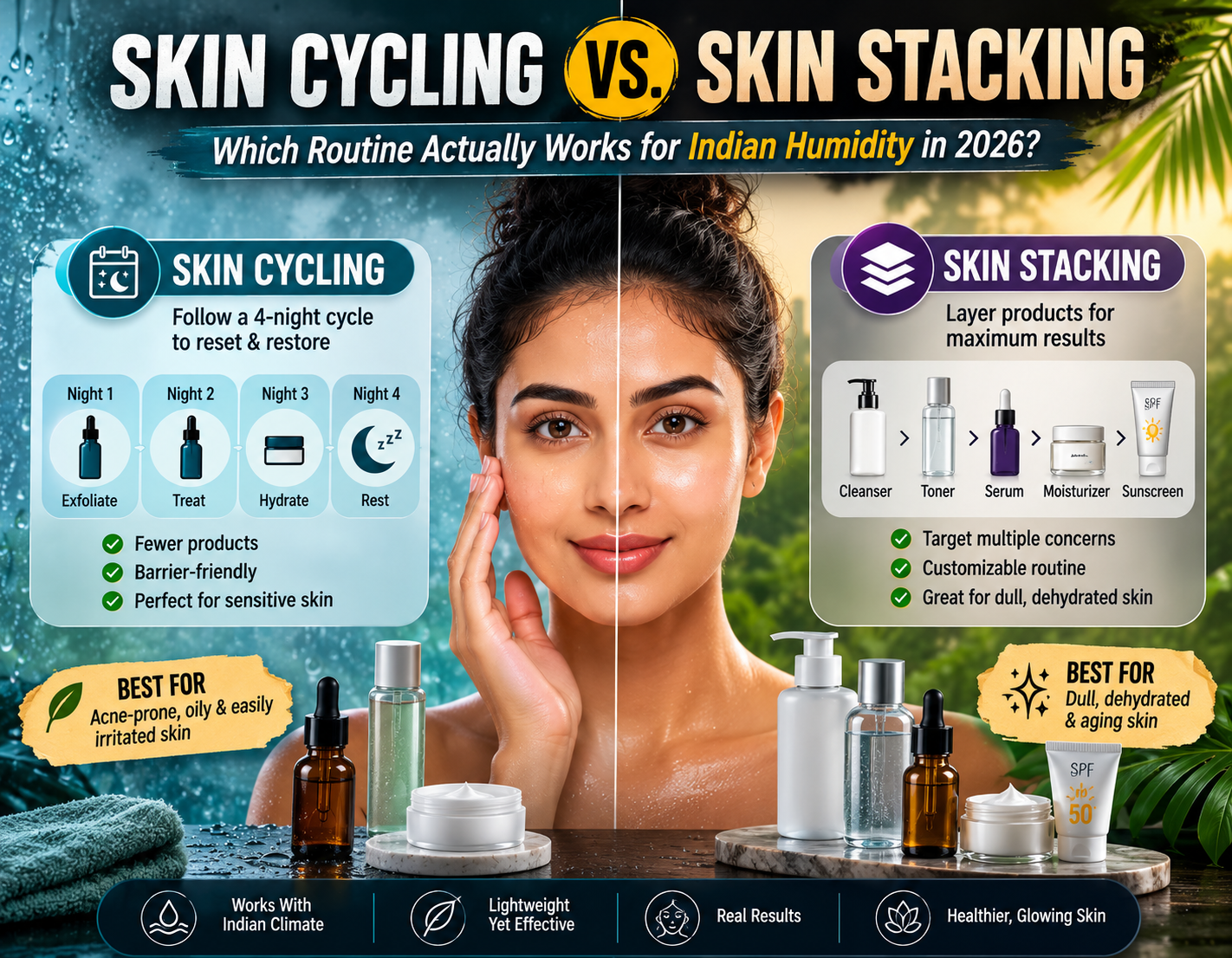
Skin Cycling vs. Skin Stacking – Which Routine Actually Works for Indian Humidity in 2026
If you’ve spent any time on skincare TikTok or Instagram lately, you’ve probably run into two camps arguing past each other. One side swears by skin cycling. The other’s stacking seven serums before bed and calling it self care. Both have a point, sort of, but if you actually live somewhere like Mumbai, Chennai, or Kolkata, the conversation looks completely different than it does for someone in a dry climate scrolling the same videos.
Indian humidity just does things to skin that international skincare trends don’t really account for. More sweat, more oil, pores that clog if you look at them wrong, breakouts that show up out of nowhere, patches of pigmentation that never seem to fully fade. So when people ask about skin cycling vs skin stacking India specifically, what they’re really asking is which one won’t backfire once June’s monsoon humidity hits.
Let’s actually get into it.
What Skin Cycling Actually Means
Skin cycling is basically a rotation system for your nighttime routine instead of throwing every active at your face every single night. You space things out so your skin gets a break, and that break is honestly the whole point.
A basic four night cycle usually goes something like this. Night one you use a chemical exfoliant, an AHA or BHA. Night two is retinol or retinal. Night three backs off entirely and focuses on barrier repair, moisturizer, ceramides, nothing aggressive. Night four is pure hydration and recovery. Then you start over.
The logic here is pretty simple. You still get the benefits of strong actives, better texture, less pigmentation, softer fine lines, but you’re not hammering your skin barrier into the ground every night to get there.
What Skin Stacking Actually Means
Skin stacking is the opposite philosophy. You layer everything, lightest to heaviest, in one sitting. Cleanser, toner, essence, vitamin C, niacinamide, hyaluronic acid, moisturizer, sunscreen if it’s morning. Some people genuinely run eight to ten products in a single routine.
The idea is that each product is handling a different job at the same time, so theoretically you’re covering more ground faster.
Why Climate Changes This Whole Conversation
Here’s the thing people miss when they just copy a routine off a Korean or European skincare account. Indian humidity isn’t a minor variable, it changes the entire equation.
Sweat production goes up. Oil secretion increases. Pores widen slightly and clog more easily. Bacteria grows faster in that warm, damp environment, which means more breakouts. And there’s that specific sticky, unfinished feeling a lot of us know from applying too much product in July and just feeling gross for an hour afterward. Heavy creams that absorb fine in a dry Canadian winter just sit on top of skin in Kochi or Goa without sinking in properly.
So really, this is why skin cycling vs skin stacking India isn’t just a trend debate, it’s a climate specific question with a fairly clear answer for a lot of skin types.
Where Skin Cycling Wins in This Climate
Skin cycling tends to hold up better here mostly because it doesn’t overload the skin in the first place.
The recovery nights actually let your barrier repair itself, which cuts down on redness and irritation that humidity tends to make worse anyway. Fewer products also means your skin can breathe, and in weather that already feels heavy on its own, that matters more than people expect. Alternating between exfoliation and rest also helps keep pores from clogging while still managing the extra oil humidity produces. It’s genuinely easier on beginners too, especially anyone just starting retinol, since jumping in with a full stack of actives is a pretty reliable way to end up with an irritated, peeling mess. And honestly, it’s just cheaper. You need a handful of solid products instead of an entire shelf of serums.
Where Skin Stacking Still Has a Place
Skin stacking isn’t inherently bad, to be fair. Done right, it does hydrate well, brighten skin, layer antioxidant protection, and let you target pigmentation a bit faster since you’re hitting multiple concerns at once. In drier climates it genuinely works great.
The problem is purely the humidity factor.
What Goes Wrong When You Stack in Indian Humidity
A few things show up consistently. Skin gets that sticky, greasy finish once you’ve layered four or five serums in already warm weather. Pilling happens, where product just starts rolling off your face instead of absorbing. Heavy creams combined with sweat clog pores more than people realize. Stacking too many actives at once, retinol, vitamin C, acids, all together, tends to trigger more breakouts rather than fewer. And honestly the biggest issue is barrier damage, mixing strong actives without any real plan behind it wears down the skin’s protective layer over time.
So Which One Fits Your Skin Type?
For oily skin, cycling is usually the better call. Fewer products, better oil control, lower acne risk, an easier routine to actually stick to at night, and less irritation overall. A lot of Indian dermatologists lean toward simpler routines for oily and acne prone skin rather than piling on layers.
For dry skin, a modified stacking approach can work fine. Hydrating ingredients like hyaluronic acid, ceramides, peptides, and squalane layer reasonably well without causing trouble. Just introduce anything active slowly and carefully rather than all at once.
For combination skin, honestly, blending both approaches tends to work best. Mornings can stay simple, gentle cleanser, vitamin C, moisturizer, sunscreen. Nights can follow a cycling pattern with proper recovery days built in. That combo gives you hydration without drowning the oilier parts of your face.
Ingredients Worth Reaching For in This Weather
Skip the trend chasing and look for lightweight ingredients that actually hydrate without leaving that heavy film. Niacinamide, ceramides, hyaluronic acid, panthenol, green tea extract, and centella asiatica all do this well.
Combinations Better Left Alone
A few pairings tend to cause more harm than good, retinol with AHA, retinol with benzoyl peroxide, vitamin C stacked with strong acids, multiple exfoliating acids at once, or just too many active serums crammed into a single routine. Simpler routines just tend to age better over time, no pun intended.
A Sample Cycling Routine Built for Indian Weather
Night one, gentle cleanser, salicylic acid, moisturizer. Night two, cleanser, retinol, ceramide moisturizer. Night three, cleanser, a hydrating serum, moisturizer. Night four, cleanser, barrier repair cream. Then repeat the whole thing.
A Lighter Stacking Routine, If You Prefer That Approach
Mornings, cleanser, vitamin C serum, a lightweight moisturizer, SPF 50 sunscreen. Nights, cleanser, niacinamide, a gel based moisturizer. Just avoid piling five or six serums on top of each other, that’s really where things go wrong.
Mistakes People Keep Making
A lot of skin damage honestly comes from copying routines off influencers without adjusting for climate at all. Using every serum that trends that week. Skipping sunscreen, still shockingly common. Over exfoliating because more felt like it should mean better results. Skipping recovery days entirely. Switching products every week before anything even has a chance to work. Consistency really does matter more than how many products are sitting on your shelf.
So, Which One Actually Wins?
There isn’t one single universal answer when it comes to skin cycling vs skin stacking India, skin is personal, but for most people dealing with genuine humidity, cycling tends to come out ahead. It supports the skin barrier, cuts down irritation, keeps oil in check, prevents clogged pores, and needs a lot fewer products to get there.
Stacking can still work fine if you keep it lightweight, only combine ingredients that actually play well together, and resist the urge to turn it into a ten step production every night.
For most people here, less really does end up being more.
Why Simpler Routines Are Winning in 2026
People are moving away from the whole ten step routine obsession. What’s actually gaining ground now is science backed ingredients, a barrier first mindset, fewer products that actually do their job well, routines built around your specific climate instead of someone else’s, and skincare habits that are sustainable rather than exhausting. Indian skincare in general seems to be shifting toward what actually works locally, rather than chasing whatever’s trending somewhere else entirely.
The Bottom Line
Choosing between skin cycling vs skin stacking India really comes down to your skin type, your daily routine, and the climate you’re actually living in. Both have their place, but Indian humidity generally rewards lightweight, barrier focused skincare over anything that overwhelms the skin.
If you’re oily or acne prone, cycling tends to deliver better results over time by cutting irritation and giving your skin room to actually recover. If you’re dry or combination, stacking can still work well as long as you keep the layers minimal and pick ingredients that actually get along with each other.
At the end of the day, healthy skin isn’t about how many products you own, it’s about using the right ones consistently. Whatever routine you land on, paying attention to how your own skin responds will always beat blindly copying a viral routine built for a completely different climate.
Frequently Asked Questions
What’s the actual difference between skin cycling and skin stacking?
Skin cycling rotates active ingredients across several nights with built in recovery time. Skin stacking layers multiple products together in one sitting.
Which one actually works better for Indian humidity?
For most people, skin cycling tends to win here, it avoids overloading the skin, supports the barrier, and helps prevent the clogged pores humidity makes more likely.
Can oily skin still do skin stacking?
Yes, but keep it to lightweight, non comedogenic products with ingredients that actually work well together, otherwise breakouts and excess oil become likely.
Is skin cycling good for someone just starting out?
Definitely. It introduces actives gradually instead of all at once, which keeps irritation risk much lower for beginners.
Can vitamin C fit into a skin cycling routine?
Yes, since vitamin C is typically a morning product and skin cycling mostly governs the nighttime routine, the two work together without conflict.
Does skin stacking cause breakouts?
It can, especially if too many heavy or incompatible products get layered together, and humidity already raises the odds of clogged pores to begin with.
How often should skin cycling be done each week?
A common pattern is a four night rotation, exfoliation, retinol, then two recovery nights, repeated based on how your skin responds.
Does sunscreen matter for both routines?
Absolutely, daily SPF 30 or higher is non negotiable either way, especially if retinol or exfoliating acids are part of your routine.