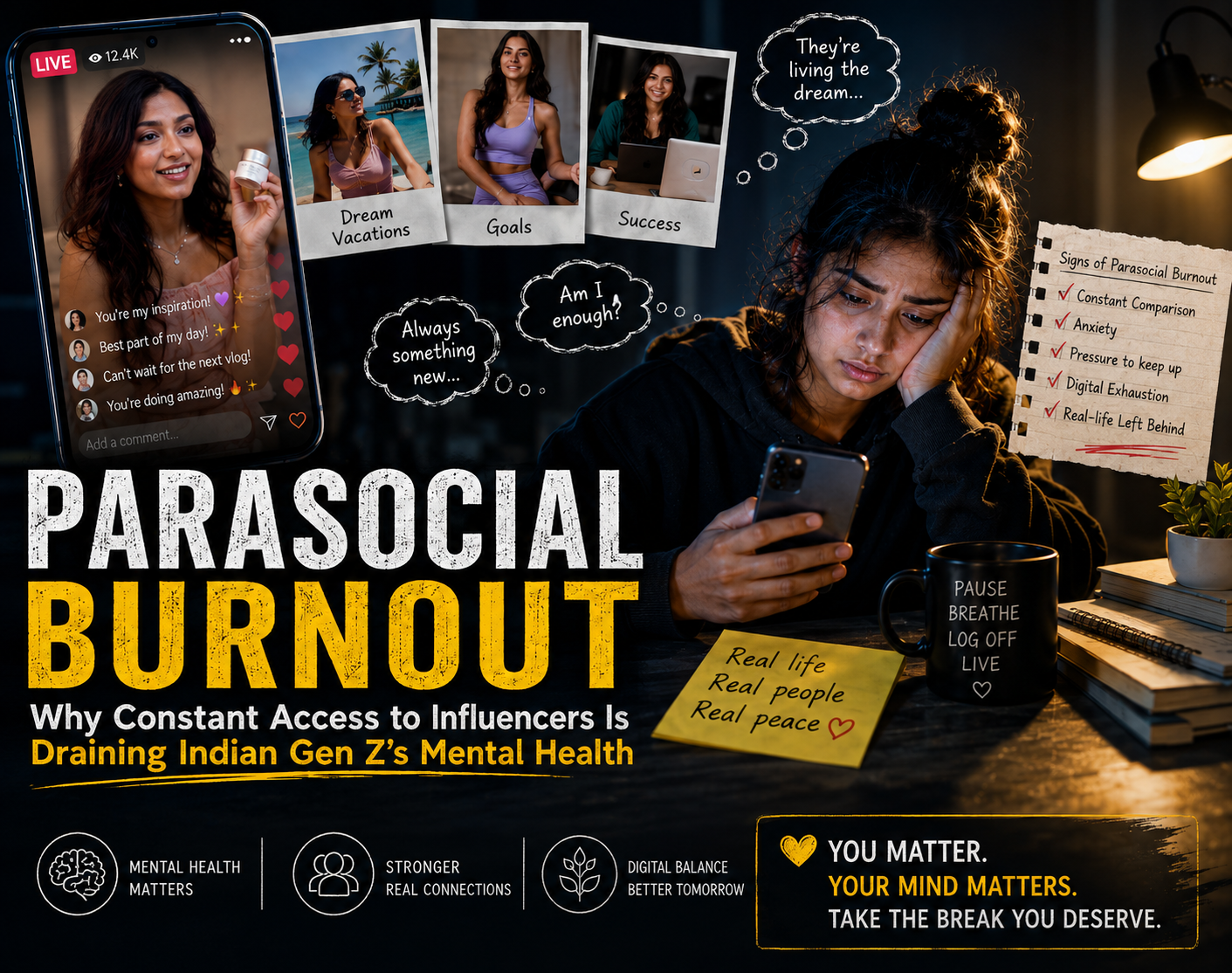
Parasocial Burnout – Why Constant Access to Influencers Is Draining Indian Gen Z’s Mental Health
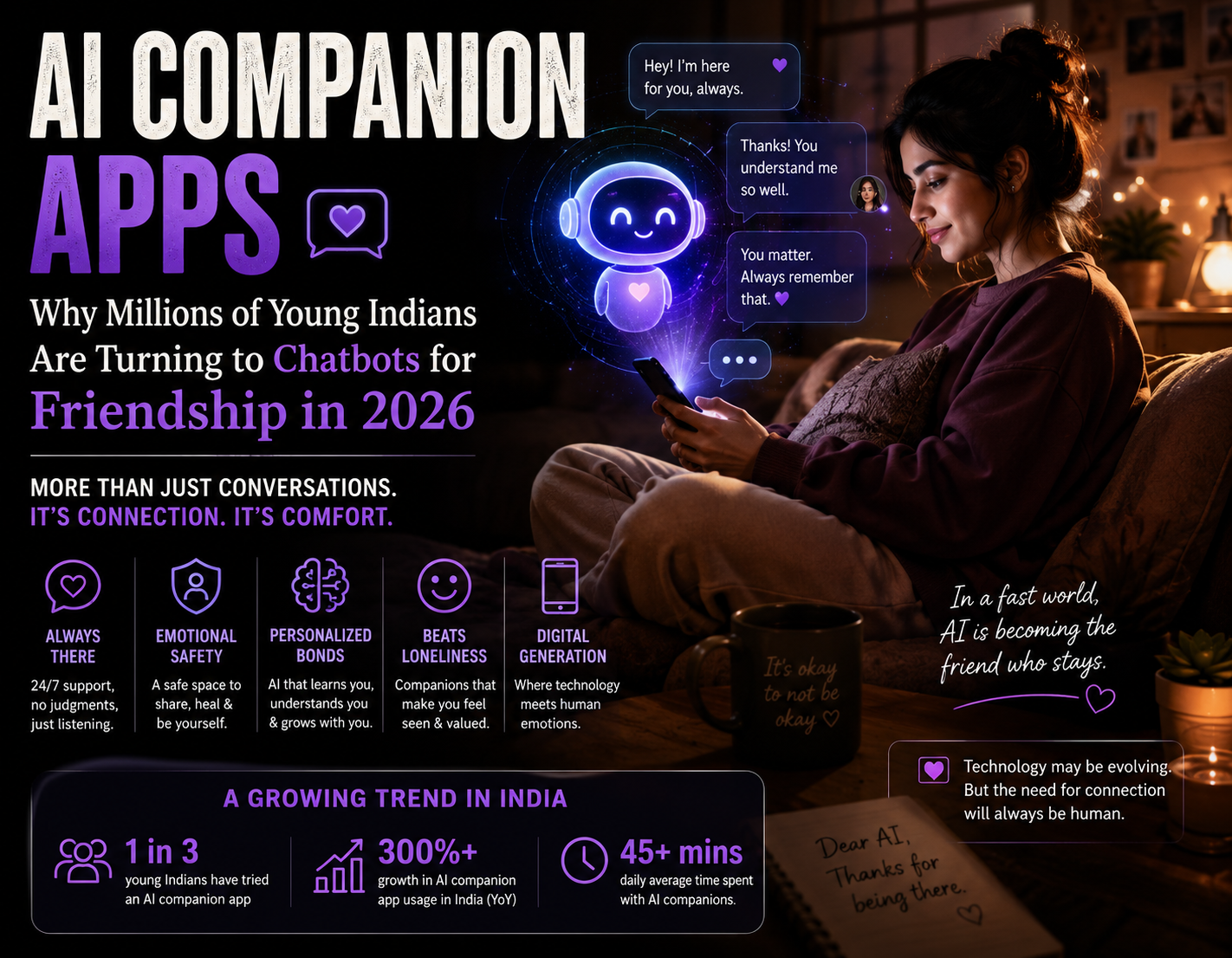
Think about the last time you picked up your phone without actually deciding to. Just… picked it up. Opened Instagram. Scrolled for ten minutes without registering a single thing you saw. That’s not really entertainment anymore, that’s a habit loop, and for a lot of young Indians, it’s built around people they’ve never met but somehow feel very attached to.
Influencers post everything these days, their morning coffee, their breakups, their family functions, their anxiety spirals at 2am. It feels like access. It feels like closeness. But underneath that closeness, something else is building up, and people are only just starting to put a name to it, parasocial burnout.
Gen Z across India is tired in a way that has nothing to do with exams or deadlines. It’s the tired that comes from caring, worrying, defending, and celebrating people who have absolutely no idea you exist. You cheer their wins. You stress during their controversies. And you get nothing back, because that’s not really how the relationship works, is it.
This is the heart of what people mean when they talk about parasocial burnout Gen Z India. It’s not a buzzword anymore. It’s a pattern, and it’s worth actually sitting with.
So What Is Parasocial Burnout, Really?
A parasocial relationship is one-sided by definition, you feel connected to someone who has zero clue who you are. This isn’t new, people felt this about film stars in the 90s too. What’s different now is the sheer volume and intimacy of it.
Old-school celebrities were distant. Influencers are the opposite. They reply to your comment. They go live at odd hours and talk directly to camera like you’re the only one watching. They say things like “I’ve never told anyone this before” to an audience of two million people. It creates this convincing illusion of friendship.
Parasocial burnout is what happens when maintaining that illusion starts costing more than it gives. Your time, your attention, your emotional energy, all flowing one direction, with nothing flowing back.
And here’s the tricky part, most people don’t clock it as it’s happening. They just notice that after an hour of scrolling they feel weirdly empty, and they can’t quite say why.
Why Indian Gen Z Especially
India has one of the largest social media populations anywhere, full stop. Gen Z here lives across Instagram, YouTube, Snapchat, whatever’s trending that particular month. A few things make this group especially exposed to burning out this way.
The phone is never far. Bus, classroom, work break, bed at midnight, doesn’t matter, the feed is always one tap away. Stories vanish in a day, so there’s this low hum of pressure to check constantly or “miss something,” which, let’s be honest, was probably nothing important anyway.
Influencers also talk like your closest friend would. “You guys are my family.” “Let’s spend the whole day together.” That kind of language is warm, sure, but it quietly erases the line between fan and friend. You start to feel like you actually know someone who, in reality, doesn’t know your name.
And then there’s comparison. Influencer feeds are wall to wall vacations, glowing skin, dream jobs, perfect partners. Even when you logically know it’s curated, seeing it daily wears down how you feel about your own, much more ordinary, life.
The Signs, Which Sneak Up on You
Nobody wakes up one morning suddenly burnt out from this. It builds slowly. Some things worth noticing in yourself or people around you:
- Feeling drained rather than entertained after time online.
- Checking one creator’s page multiple times a day, almost automatically.
- Getting anxious when someone hasn’t posted in a while.
- Getting swept into an influencer’s drama like it’s personally yours.
- Comparing your real life against someone’s highlight reel.
- Slowly losing interest in the things and people that used to matter.
- Feeling guilty for missing a livestream, as if you owed someone your attention.
None of these alone mean much. Stacked together over months, they quietly reshape how someone relates to their own feelings, and that’s really the concern behind parasocial burnout Gen Z India, it doesn’t arrive with a bang, it just accumulates.
Algorithms Aren’t Helping
Social platforms are built to keep you watching, that’s just the business. Watch a couple of videos from one creator and suddenly that’s all the app shows you. Same face, same voice, on repeat.
Psychologists have a term for this, the mere exposure effect, basically the more we see someone, the more familiar and trustworthy they feel, whether or not that trust is actually earned. Algorithms don’t invent parasocial attachment. They just pour fuel on it.
The Emotional Labor Side Nobody Mentions
Here’s something people rarely say out loud, followers do actual emotional work for creators they will never meet. Comforting them through hard times. Defending them in the comments. Worrying about their health. Celebrating their milestones like a proud friend would.
Caring is a good instinct. But carrying that weight for a dozen different people at once, with nothing coming back, that’s genuinely draining, even if it doesn’t look like “real” work from the outside.
FOMO That Never Actually Ends
Television used to have a schedule. You watched at 8pm and that was it. Influencer content has no such boundary. Morning routine, afternoon update, behind-the-scenes clip, late night thoughts, weekend vlog, it just keeps coming.
Missing any of it can feel like missing an inside joke everyone else is in on. That pressure to stay caught up quietly fragments people’s attention and adds to the fatigue.
What It Actually Does to Mental Health
Researchers are still working out the full picture here, but a few patterns keep showing up again and again.
More anxiety, from worrying about a creator’s life, their drama, or whether you missed something.
Lower self-esteem, from measuring your real life against someone’s curated highlight reel.
Worse sleep, because late-night scrolling keeps pushing bedtime back.
Emotional dependency, where people start leaning on influencer content for comfort the way they’d normally lean on an actual friend.
These patterns are exactly why parasocial burnout Gen Z India deserves a real conversation at home and in schools, not just somewhere buried in an internet forum.
It’s Not Really the Creators’ Fault
Easy to blame influencers here, but that misses the bigger picture. Most creators genuinely want to inform or entertain people. The real issue is the system pushing them, platforms reward constant visibility, so creators feel pressure to post nonstop just to stay relevant.
Meanwhile, followers feel pressure to keep watching so they don’t fall behind. Both sides are stuck feeding the same machine. Blaming one person misses that it’s a shared dynamic.
Small Changes That Actually Help
- You don’t need to delete every app to fix this. Small changes go further than people expect.
- Set loose screen time limits, even imperfect ones interrupt the automatic scrolling.
- Follow a wider mix of people, artists, educators, local pages, not only influencers.
- Prioritize actual conversations, face-to-face time gives something online content just can’t replicate.
- Remind yourself, often, that what you’re seeing is a highlight reel, not someone’s whole life.
- Take real breaks. Even a weekend off social media noticeably clears the mental fog.
Why This Matters So Much Right Now in India
India’s digital world is expanding at a wild pace. Cheap smartphones, fast data, booming regional content, influencer culture has never been more accessible. As more young Indians build their social lives online, digital wellness deserves the same seriousness as physical health.
Parents, teachers, employers, and creators all have some part to play here. Naming parasocial burnout Gen Z India as a real, growing pattern is the first step to actually addressing it before it just becomes the normal way people feel.
How New Indian Statement Is Driving Meaningful Conversations
At New Indian Statement, we think journalism needs to go beyond just headlines. The biggest stories today aren’t only politics or business, they’re also about how digital life is quietly reshaping how people feel and connect with each other.
As India’s younger generation grows up permanently online, topics like social media addiction, influencer culture, digital privacy, and mental wellness deserve serious, careful coverage.
We’re aiming for balanced, research-backed, human-centered reporting, the kind that actually helps readers understand what’s happening around them instead of chasing whatever’s loud that week. By covering things like parasocial relationships and digital fatigue, we hope to give readers something genuinely useful, insight that supports healthier habits and stronger real connections.
Conclusion
Influencer culture has really changed how people learn, connect, and find motivation. For plenty of young Indians, creators offer real value, entertainment, inspiration, useful information. But when the emotional investment tips too far, that experience stops being fun and starts being exhausting.
Recognizing the signs of parasocial burnout Gen Z India is really the first step toward building healthier digital habits. Social media should add to life, not replace the relationships that actually hold us up.
By setting a few boundaries, cutting back on constant comparison, and making room for real connection, Gen Z can enjoy the digital world without quietly being worn down by it.
As this conversation keeps growing, platforms, creators, families, and readers all carry a bit of the responsibility for a healthier digital future.
Frequently Asked Questions (FAQs)
What is parasocial burnout?
It’s the emotional exhaustion that builds from pouring real time and feeling into a one-sided relationship with an influencer, celebrity, or online creator.
Why is parasocial burnout becoming common among Indian Gen Z?
Constant smartphone access, nonstop influencer content, comparison culture, and algorithm-driven feeds have pushed parasocial burnout Gen Z India into a much bigger conversation.
Is following influencers harmful?
Not by itself. Problems start when these online connections replace real friendships or become an emotional crutch.
How can someone reduce parasocial burnout?
Cutting screen time, taking actual breaks, diversifying who you follow, avoiding constant comparison, and spending more time with real people all genuinely help.
Can influencers help reduce parasocial burnout?
Yes, by keeping expectations realistic, encouraging their audience to log off sometimes, and maintaining healthier boundaries with followers.
Why is New Indian Statement covering topics like digital wellness?
Because modern journalism should cover the real challenges of digital life, not just the headlines, and that includes mental health, technology, and how young people are actually living today.