Indian Ethnic Wear Trends: Tradition Meets Modern Style
Indian Ethnic Wear Trends Blending Tradition With Modern Style
Indian clothing has always carried a story. A sari can remind us of a family celebration, a handwoven dupatta can reflect a regional craft, and a simple kurta can feel just as comfortable at home as it does at a festive gathering. What makes Indian fashion interesting is that it continues to change without losing its connection to tradition.
Today, women and men are experimenting with traditional fabrics, modern silhouettes, relaxed fits, contemporary colours and creative styling. Instead of choosing between ethnic and western clothing, many people are bringing elements of both together.
This changing approach is shaping Indian ethnic wear trends in a way that feels more personal and practical. Traditional clothing is no longer reserved only for weddings and festivals. Many pieces are being adapted for offices, casual outings, dinners, travel and everyday wear.
The result is a style that respects the past while making room for the way people live today.
The Growing Popularity of Modern Ethnic Wear
Ethnic clothing has always had a strong place in Indian wardrobes, but its styling has changed significantly.
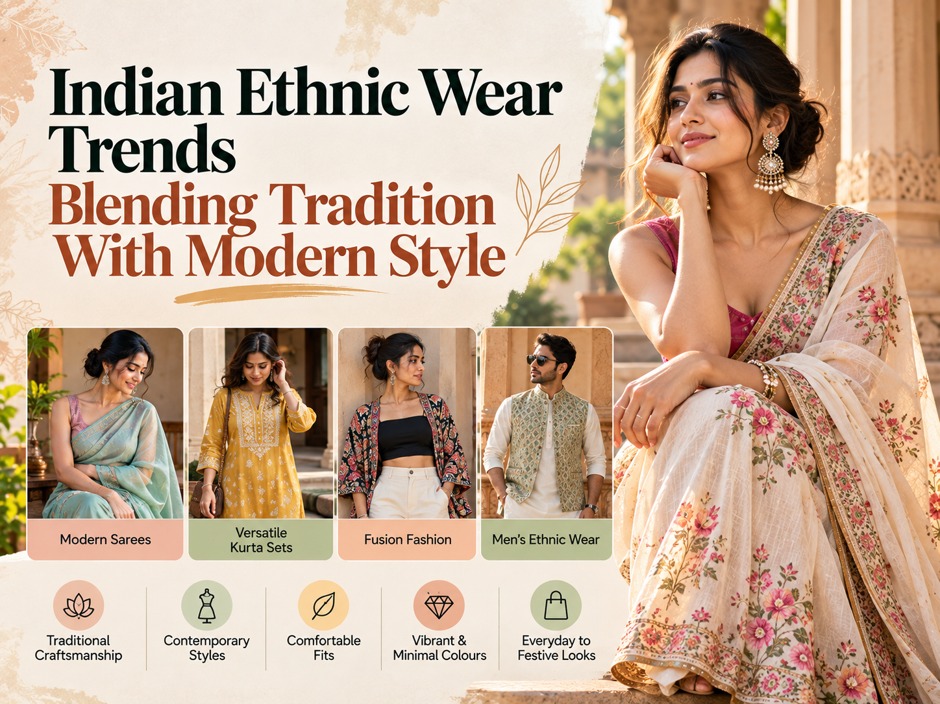
A traditional kurta may now be paired with wide-leg trousers. A sari may be worn with a structured blouse or a contemporary jacket. A lehenga can be styled with a simple shirt instead of a traditional choli.
These combinations make traditional clothes feel less formal and easier to wear.
The shift is also partly about comfort. People want clothing that looks attractive but allows them to move freely and spend several hours without feeling uncomfortable.
This is why relaxed silhouettes, breathable fabrics and versatile pieces are becoming increasingly important.
The Modern Sari Is Here to Stay
The sari remains one of India’s most recognisable garments, but today’s styling is far from limited to the traditional drape.
Pre-draped saris, belt styling, contemporary blouses, jackets and unusual fabric combinations have made the sari appealing to a younger audience.
A plain sari with a statement blouse can create a sophisticated look without requiring heavy embellishment. Similarly, a traditional silk sari can be styled with minimal jewellery and a modern hairstyle for a more understated appearance.
For women who find traditional draping difficult, pre-stitched and pre-draped versions can also make the garment more convenient.
The sari does not need to change completely to feel modern. Sometimes, changing the blouse, footwear or accessories is enough.
Kurta Sets Are Becoming More Versatile
The humble kurta set continues to be one of the most practical choices in Indian fashion.
Straight-cut kurtas, short kurtas, long flowing styles and coordinated sets can be styled for different occasions.
For office wear, a simple cotton or linen kurta with straight trousers can look polished without being overly formal. For an evening gathering, embroidery, silk fabrics or statement jewellery can instantly make the same basic idea more festive.
Matching sets are particularly convenient because the outfit is already coordinated. At the same time, individual pieces can be mixed with other clothes to create new combinations.
This versatility makes kurta sets an important part of contemporary Indian ethnic wear trends.
Fusion Fashion Is Redefining Ethnic Clothing
Fusion wear has become one of the easiest ways to bring traditional and contemporary fashion together.
Instead of wearing an outfit exactly as it was traditionally designed, people are combining different styles.
For example:
- A kurta with denim
- A sari with a structured blazer
- A lehenga skirt with a shirt
- A traditional dupatta with a plain western dress
- A crop top with a printed ethnic skirt
- A Nehru jacket with contemporary trousers
Fusion fashion works because there are no strict rules.
The key is balance. If one part of the outfit is heavily detailed, keeping the other elements relatively simple can prevent the overall look from becoming too busy.
Heritage Fabrics Are Finding New Audiences
Indian fashion has a remarkable textile heritage.
Banarasi silk, Chanderi, Kalamkari, Bandhani, Ajrakh, Ikat, handloom cotton and many other regional traditions continue to inspire contemporary clothing.
What is changing is how these fabrics are being used.
Instead of appearing only in traditional saris or formal outfits, heritage textiles are increasingly being used for shirts, jackets, skirts, dresses, co-ord sets and accessories.
This gives traditional crafts a place in modern wardrobes.
For someone who does not want to wear a complete ethnic outfit, a handwoven dupatta or a printed stole can be an easy way to incorporate Indian craftsmanship into an everyday look.
Minimal Ethnic Wear Is Gaining Attention
Not everyone wants heavily embroidered clothing.
Minimal ethnic fashion focuses on clean cuts, subtle prints, soft colours and simple details.
A simple cotton sari with delicate earrings can look elegant without being elaborate. A solid-colour kurta with a printed dupatta can create a similar effect.
This approach is especially useful for people who prefer understated clothing.
It also makes ethnic wear more practical for everyday situations.
Instead of waiting for a wedding or festival, people can wear these pieces to work, lunch, family gatherings or casual social events.
Statement Blouses Are Changing Traditional Outfits
A blouse can completely change the appearance of a sari.
Contemporary designs include structured silhouettes, interesting necklines, statement sleeves, back details, cropped cuts and modern tailoring.
A simple sari paired with a distinctive blouse can create a fashionable outfit without requiring additional layers of heavy decoration.
The same blouse can also sometimes be paired with a lehenga skirt or another traditional bottom, giving it more than one purpose.
This is an easy way to experiment with Indian ethnic wear trends without purchasing an entirely new wardrobe.
The Return of Comfortable Silhouettes
Fashion is increasingly moving towards comfort.
Oversized kurtas, relaxed pants, flowing dresses, loose shirts and easy-to-wear co-ord sets are becoming useful choices for people who do not want restrictive clothing.
Indian clothing naturally offers many possibilities in this area.
Flowing Anarkalis, palazzos, wide-leg trousers and relaxed kurtas allow movement while still maintaining an ethnic appearance.
For India’s varied climate, fabric choice matters as much as design. Cotton, linen and lightweight blends can be particularly comfortable during warmer months.
Pastels and Earthy Colours Are Joining Traditional Shades
Indian fashion will always have room for bold colours such as red, fuchsia, royal blue, emerald and mustard.
At the same time, softer shades are becoming increasingly popular for everyday ethnic dressing.
Pastel pink, sage green, cream, powder blue, peach, beige and muted yellow can create a softer appearance.
Earthy colours such as terracotta, olive, rust and brown also work beautifully with traditional textiles.
The advantage of these shades is that they can easily move between casual and semi-formal settings.
A pastel kurta may work for the office, while the same colour palette in silk or embroidered fabric can be suitable for a celebration.
Dupattas Are Becoming Style Statements
The dupatta may be one of the easiest ways to refresh an existing outfit.
A simple kurta can look completely different with a colourful Bandhani dupatta, an embroidered piece or a handwoven textile.
Dupattas are also being styled differently. Some people drape them traditionally, while others wear them over one shoulder, around the neck or with a belt.
A statement dupatta allows you to experiment with colour and texture without changing your entire outfit.
It can also be paired with western clothing for an interesting fusion look.
Jewellery Is Becoming More Personal
Traditional jewellery remains an important part of Indian dressing, but there is a growing preference for mixing styles.
A pair of jhumkas can be worn with a contemporary dress. Silver jewellery can be paired with a cotton sari. A delicate necklace can be combined with a simple kurta.
Instead of matching every piece, people are increasingly choosing jewellery according to the mood of the outfit.
Statement earrings can be enough for a minimal outfit, while a heavily embroidered lehenga may only need a few carefully selected pieces.
The idea is to make jewellery complement the outfit rather than compete with it.
Occasion Wear Is Becoming More Practical
Wedding and festive clothing has traditionally involved elaborate embroidery, heavy fabrics and multiple accessories.
While these styles remain popular, many people now look for occasionwear that they can reuse.
A lightweight lehenga can be worn again with a different blouse. A festive sari can be styled differently for another event. An embroidered jacket can be paired with plain trousers or a dress.
This approach makes fashion more practical and encourages people to think beyond wearing an outfit only once.
It also allows personal creativity to become part of the styling process.
Men’s Ethnic Wear Is Changing Too
The evolution of ethnic fashion is not limited to women’s clothing.
Men’s Indian fashion is also becoming more experimental.
Classic kurtas are being paired with trousers, jeans and sneakers. Nehru jackets are being worn over contemporary shirts. Short kurtas and coordinated sets offer alternatives to traditional long styles.
For weddings and festive occasions, men are also experimenting with colours, textured fabrics and modern tailoring.
The focus is increasingly on creating outfits that feel comfortable and personal rather than following one fixed formula.
How to Make Ethnic Wear Work for Everyday Life
You do not need to completely change your wardrobe to embrace modern ethnic fashion.
Start with pieces you already own.
Try wearing a traditional kurta with jeans. Add a colourful dupatta to a neutral outfit. Style a sari with a contemporary blouse. Pair traditional earrings with a western outfit.
Accessories can also make a significant difference.
Footwear, bags, jewellery and hairstyles can completely change the mood of an ethnic outfit.
The best approach is to experiment gradually and notice what feels comfortable.
Choosing the Right Ethnic Wear for Your Lifestyle
Fashion trends are useful, but they should not dictate every purchase.
Think about where you are likely to wear an outfit.
If you work in an office, versatile kurta sets and subtle ethnic pieces may be more useful than heavily embellished clothing.
If you attend many weddings or family celebrations, investing in one or two well-made festive outfits may make more sense.
For everyday wear, prioritise breathable fabrics and comfortable silhouettes.
A good wardrobe should reflect your lifestyle rather than simply copying what is popular on social media.
Why Traditional Craftsmanship Still Matters
One of the most valuable aspects of modern Indian fashion is the continued connection with traditional craftsmanship.
Handloom weaving, embroidery, block printing, tie-dye and regional textile techniques represent skills that have been passed down through generations.
When these crafts are incorporated into contemporary designs, they can reach new audiences without losing their cultural identity.
A modern wardrobe can therefore be both fashionable and connected to India’s rich textile heritage.
This balance between craftsmanship and contemporary design is likely to remain an important part of Indian ethnic wear trends.
About New Indian Statement
New Indian Statement is a digital content platform focused on sharing informative, engaging and accessible stories with modern Indian readers.
The platform explores a variety of subjects connected with contemporary life, including fashion, lifestyle, culture, wellbeing, relationships, technology and personal development.
Fashion is more than clothing. In India, it is closely connected with culture, craftsmanship, regional traditions and changing lifestyles. This makes ethnic fashion an especially interesting subject to explore.
Through articles such as this, New Indian Statement aims to give readers practical ideas and fresh perspectives while keeping the content easy to understand and relevant to everyday life.
The platform provides a space for readers to discover stories and ideas that connect traditional Indian values with the realities of modern living.
Frequently Asked Questions
1. What are the latest Indian ethnic wear trends?
Modern saris, versatile kurta sets, fusion outfits, heritage fabrics, minimal ethnic wear, statement blouses and contemporary jewellery are among the popular directions in modern Indian ethnic fashion.
2. How can I make traditional clothing look modern?
Try combining traditional pieces with contemporary accessories or clothing. A kurta with jeans, a sari with a modern blouse, or a lehenga skirt with a shirt can create an updated look.
3. Are ethnic clothes suitable for everyday wear?
Yes. Lightweight kurtas, cotton saris, relaxed trousers, simple dresses and versatile dupattas can work well for everyday dressing.
4. Which fabrics are comfortable for Indian weather?
Cotton and linen are popular choices for warm weather because they are generally lightweight and breathable. The best fabric also depends on the season, location and personal comfort.
5. Can I wear ethnic jewellery with western clothes?
Absolutely. Jhumkas, bangles, silver jewellery and traditional necklaces can create an interesting contrast when paired with contemporary outfits.
6. How can I reuse festive ethnic outfits?
Try changing the blouse, dupatta, jewellery or footwear. You can also combine a festive skirt with a simple top or wear an embroidered jacket with a more casual outfit.
7. Is fusion wear still popular?
Fusion dressing remains a practical way to combine traditional Indian elements with contemporary silhouettes. It allows people to create outfits that feel both familiar and modern.
8. How can I support Indian craftsmanship through fashion?
Consider choosing handloom fabrics, regional textiles, handcrafted accessories and products made using traditional techniques. Learning about the origin and craftsmanship behind a textile can also make the purchase more meaningful.
Final Thoughts
The beauty of modern Indian fashion lies in its ability to evolve without forgetting where it came from.
Saris are being styled in new ways. Kurtas are becoming more versatile. Heritage textiles are appearing in contemporary silhouettes. Traditional jewellery is being mixed with western clothing, and fusion wear is giving people more freedom to create their own combinations.
The most meaningful Indian ethnic wear trends are not necessarily the ones that disappear after one season. They are the ideas that make traditional clothing easier, more comfortable and more relevant to everyday life.
You do not have to choose between tradition and modern style.
A wardrobe can have both.
The key is to wear what feels natural to you, experiment with different combinations and appreciate the craftsmanship behind the clothes.
Indian fashion has always been diverse. Modern styling simply gives that diversity another way to express itself.