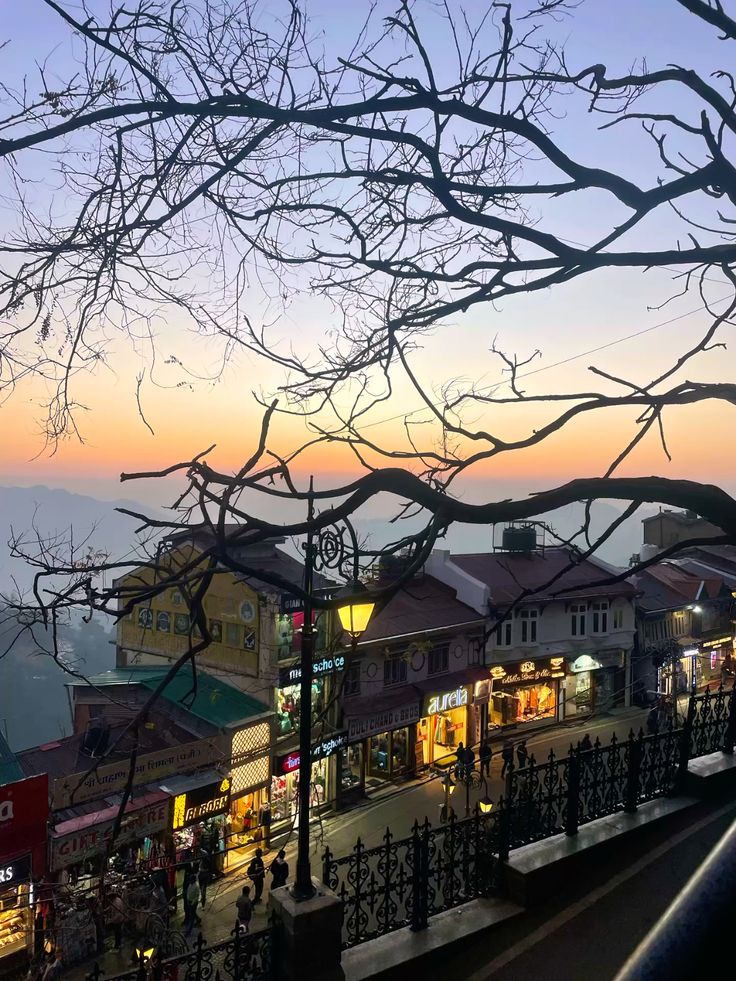
Simla Travelogue
Travel By New_Indian_Statement“Nostalgia hovers gently over the slopes of Shimla, once the proud summer capital of India, where the Himalayas still cradle a city that refuses to let go of its past.”
Summers may have us locked down, but wanderlust has its own way of breaking free and if there’s one hill station that always comes to mind in the Indian summer, it is still Shimla. Today it is a bustling metropolis, its hillsides dotted with buildings that stretch endlessly from Anandale to Summer Hill, Shoja to Mashobra, sometimes appearing more chaotic than charming. Yet look closer, and the city reveals its old-world elegance, a heritage woven deep into its streets, its homes and its stories. To truly feel the heartbeat of the old summer capital, sign up for a walking tour with historian Raja Bhasin. He leads visitors past Bantony Hall, Gorton Castle, and Tendrils Cottage, grand buildings that once housed the British elite. With every step you can almost see the fashionable ladies in their imported gowns, their escorts leading them to picnics and ballroom dances. This was a town alive with music, scandals, and whispered affairs, so much so that the Mall still carries the name of Scandal Point, a place once forbidden to Indians when the sahibs ruled.
A little outside the city lies Mashobra, daisy-dotted and charming, where picnics and palace life once flourished. Here you’ll find the rambling estate of the Maharani of Faridkot, once filled with antique cars, and the Gables Hotel, now a Club Mahindra property, where the ballroom that once hosted grand English dances still stands in silent dignity. A century-old church still watches over the hills, and down in the valley of Sipur, villagers gather each year for a fair that brings weddings, cattle, and community under the shade of deodars. From here, a gentle walk leads to Craignano, once home to the United Services’ Club and later a forest guesthouse, now being restored. Beyond it lies a horticulture college, where the region’s oldest maple tree still spreads its arms, a quiet reminder of time’s endurance.
Shimla’s regal charm is best discovered through the places you stay. The grand Cecil Hotel, now an Oberoi property, still whispers of imperial evenings; Chapslee, a boutique hotel owned by a real Maharaja, gleams with antiques and legacy; Sunnymead, Madhvi Bhatia’s homestay, offers warmth with heritage; and Hotel Springfields just below the Mall is another timeless retreat. These aren’t just hotels, they are windows into Shimla’s soul, the kind of homes from where explorations feel like stepping into history.
And then there is the Mall Road, crowded and noisy yet essential to the Shimla experience. To skip it is to miss the city’s very soul. Here you can dine at Goofa Restaurant, once the Band-Stand where English music floated through cool evenings, or step into the Gaiety Theatre, restored with care, where plays are still performed for those who love the stage. In Maria Brothers, an old bookstore, you may stumble upon priceless antiques from the Raj, each carrying whispers of history. Further along stand the Peterhoff Hotel and the stately Vice Regal Lodge, preserved with guided tours that let you walk where viceroys once held court. Finally, down the winding road from Raj Bhawan, Anandale spreads like a natural meadow, once the playground of polo matches and now alive with helicopter take-offs.
Shimla may wear the marks of modernity, its traffic, its hotels, its urban sprawl but beneath it all lies a city that has held onto its essence. Here time bends, one moment you’re in the rush of the present, the next you’re caught in a scene from the past. Shimla reminds us that history isn’t something to be locked away in museums, it is something that breathes through walls, whispers in trees, and lingers in streets. And that’s why, for Shimla, old is not forgotten, old is truly gold.
Author

Related Posts

The Future of Fashion: Micro Trends of 2026
Over time, fashion has found its voice in many ways we could have never imagined. Earlier, fashion was something decided by big production houses, and it used to trickle down to the common audience. But now, social media plays such a major role that we, the common people, are the new trendsetters. It’s not that […]
Read more →
How to Distinguish Healthy Arguments from Toxic Patterns in Relationships?
Arguments and disagreements are a common part of any relationship. While some arguments strengthen the bond others may break it. The issue is not whether you argue, but how you argue. When handled with respect and maturity, arguments can become opportunities for growth. On the other hand, arguments that involve blame, insults, or silent treatment […]
Read more →
When Did Inner Peace Become a Measure of Success?
Inner peace is often said to come from within. It is believed that if you are at peace internally, you can perform at your best externally. The idea suggests that peace is not materialistic but idealistic, which I believe is only partially true. I am not saying that inner peace comes from external validation or […]
Read more →