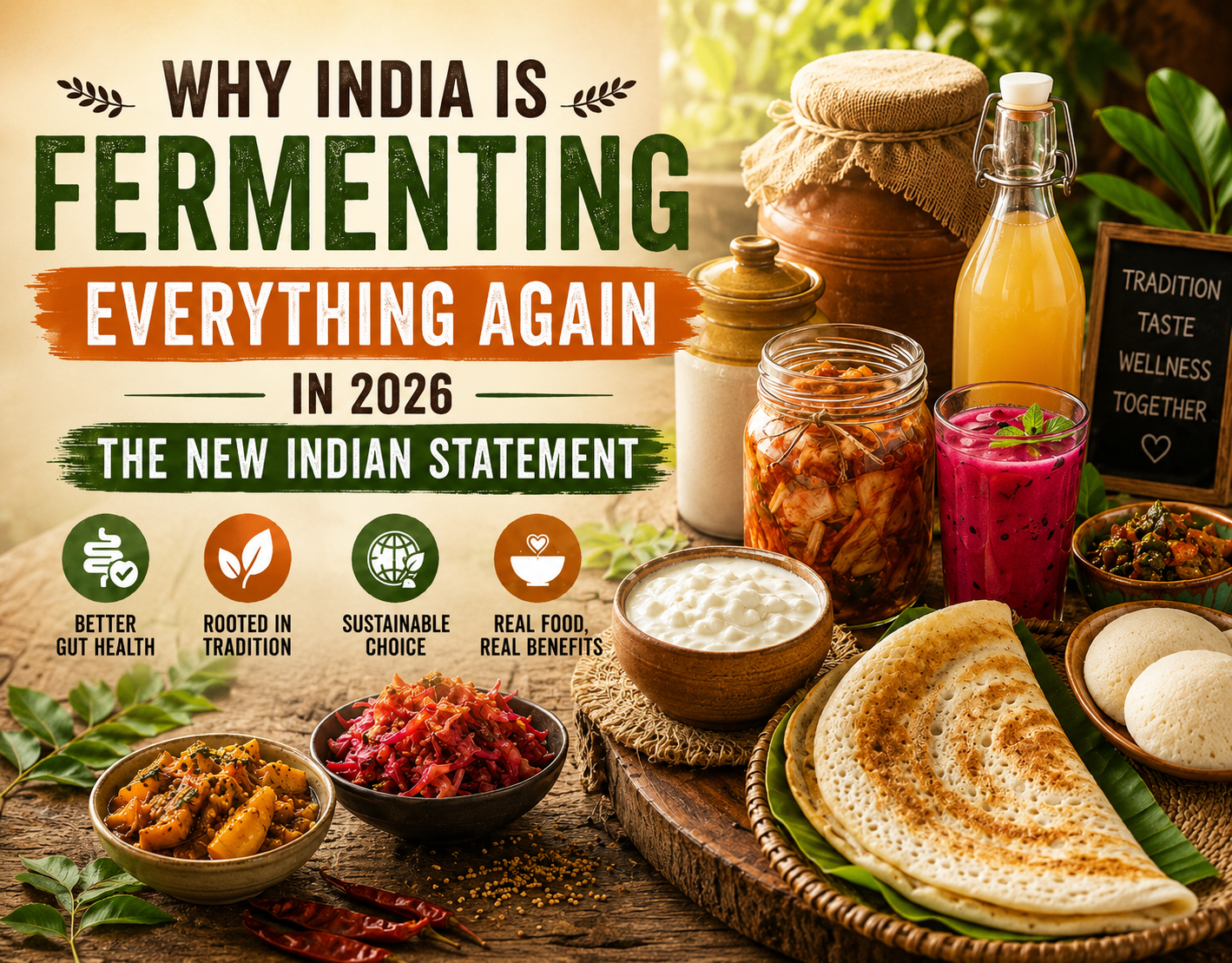
The Rise of “Ferment Everything” – Why Young Indians Are Reviving Lost Fermentation Techniques in 2026
Okay so here’s a thing I’ve noticed. Every second person seems to be fermenting something right now. Someone’s cousin got into kombucha, someone’s mom dug out an old kanji recipe from a notebook nobody had opened in years, and half of Instagram is just people showing off jars sitting near a window like they’re proud parents. At first I thought it was just another random online fad, but it’s not, not really. Fermented foods India 2026 is basically the country remembering something it already knew how to do.
None of this is actually new, that’s the funny part. Curd, idli batter, pickles, bamboo shoots, this was just normal cooking for our grandparents, nobody called it a wellness practice back then, it was just dinner. Somewhere along the line packaged snacks and fast convenience pushed a lot of that out of daily life. Not on purpose, it just kind of happened slowly, the way habits do. And now people are drifting back to it, and honestly it doesn’t feel like a trend so much as remembering an old phone number you thought you’d forgotten.
So Why Now
Part of it, I think, is exhaustion. People are done with ingredient lists they can’t pronounce, done with food that tastes like nothing. And the answer, weirdly, was already sitting in their own kitchen the whole time, they just had to go looking for it again. That’s really the quiet undercurrent of fermented foods India 2026, less “exciting new health trend from somewhere else” and more “wait, we already had this figured out.”
Gut Health, Gut Health, Gut Health
You genuinely cannot escape this conversation anymore, doctors bring it up, nutritionists bring it up, even some random reel with bad lighting brings it up. The general idea floating around is that your gut affects way more than digestion, energy, immunity, mood even, it’s all tangled together somehow. Nobody’s saying one food fixes everything, that would be silly, but naturally fermented stuff does bring in bacteria that genuinely help, assuming the rest of your plate isn’t garbage too.
People are also reading labels more carefully these days instead of just grabbing whatever’s closest on the shelf. That shift alone has pushed fermented foods India 2026 further into regular dinner table conversation, not just among the health obsessed crowd, actual families are picking this up now.
Social Media, Weirdly, Gets Some Credit
Say what you want about Instagram reels, but food creators actually did something useful here. Nothing fancy, just someone in their kitchen showing how they make pickles or millet batter, and suddenly it feels doable instead of intimidating. Funny thing is, most of these “trending” recipes aren’t new inventions at all, they just vanished from everyday cooking for twenty, thirty years and now they’re back, filmed on someone’s phone, camera shaking a bit, and somehow that makes it feel more believable.
The Regional Spread Of This Is Honestly Kind Of Wild Once You Look
Down south you’ve got idli, dosa, appam, paniyaram, and fermentation is literally what makes those grains soft and easy on the stomach in the first place.
Up in the Northeast, fermentation was never optional, it was survival, preservation. Fermented bamboo shoots, axone, ngari, hentak, stuff that used to stay pretty local but now shows up on restaurant menus in cities that have no connection to the Northeast at all.
North India has kanji, gajar gobhi shalgam pickle, homemade curd, fermented mustard, and winter especially brings a wave of pickle making in most homes.
And out west there’s dhokla, khaman, handvo, which honestly were never treated like some separate health food category, they were just regular Tuesday dinner in a lot of Gujarati households.
This spread across regions is a big reason fermented foods India 2026 doesn’t feel like one niche group’s thing, it’s happening in kitchens all over the country at once, mostly without anyone coordinating it.
Millets Got Pulled Into This Too, Kind Of Naturally
With the whole millet push happening across India lately, fermentation slid right back into the picture alongside it. Fermenting millet batter softens it, makes it taste better, easier on digestion too. People are messing around with ragi dosa, jowar idli, bajra pancakes, mixing old grains with old methods, and it just happens to line up with everything nutritionists were already saying anyway.
Homemade Is Winning, Partly Out Of Necessity
There’s a real wariness building around packaged food with those endless ingredient lists, and honestly, fair enough. More people are making their own yogurt, pickles, batters, fruit ferments, partly because it tastes better, partly because they know exactly what went into it. There’s also something nice, low key, about a grandmother teaching someone how she’s always made her pickles, it stops being just food at that point, it becomes a small thing passed down. That emotional bit is probably why fermented foods India 2026 has actual legs instead of disappearing in six months like most food trends do.
Sustainability Sneaks Into This Without Anyone Really Trying
Fermentation is basically a built in way to stop wasting food. Extra vegetables going soft in the fridge? Ferment them instead of tossing them out. It stretches shelf life, keeps people eating seasonally, cuts down how much processed stuff people rely on. As sustainability becomes more of an everyday thing people actually think about, fermentation just slots in naturally, nobody has to force it.
Restaurants Are Leaning In Hard Too
It’s not just home kitchens anymore. Restaurants, cafes, even street vendors are putting fermented ingredients front and center, house made chili paste, kombucha showing up on drink menus, naturally fermented bread, traditional pickles with a slight modern twist. Chefs like it because it adds real depth without needing artificial shortcuts, and diners get to try authentic regional flavors a lot of them never grew up eating.
Small Farmers Are Catching A Break Here Too
All this demand for naturally fermented stuff has actually opened doors for small farmers and local food makers. A lot of them now sell handmade pickles, fermented drinks, traditional batters directly, and people are choosing to support these smaller producers over the big mass produced brands. It’s a decent little cycle, better quality for the consumer, an actual shot for small businesses, regional food traditions staying alive instead of quietly dying out.
Science Is Catching Up To What Grandmothers Already Knew
Researchers are digging into why fermentation works the way it does, how it breaks down complex carbs, boosts flavor, helps with preservation, encourages good microbial activity. The research is still evolving, nobody’s claiming it’s fully settled science, but it’s adding some backing to what people trusted through pure experience for generations. That’s part of why fermented foods India 2026 isn’t just some passing internet moment, it’s got tradition and a bit of emerging science behind it now.
New Small Brands Are Jumping In Too
There’s a growing wave of small food brands offering ready to cook fermented batters, craft kombucha, naturally fermented pickles, probiotic drinks. Unlike a lot of older packaged food companies, these newer ones tend to focus on short ingredient lists, small batch production, sourcing things locally. People genuinely seem to like that mix, getting convenience without losing the authentic feel.
It Fits Into Normal Life, Not Just Wellness Culture
What makes this different from most diet fads is how ordinary it actually is. Nobody needs expensive supplements or some hard to find imported ingredient shipped from somewhere far away. A bowl of curd, some homemade pickle, a bit of kanji, that’s really it. It slots into breakfast, lunch, dinner without anyone needing to overhaul their whole life around it, which is probably exactly why fermented foods India 2026 is reaching regular families and not just the already wellness obsessed crowd.
A Few Basic Things If You’re Trying This At Home
If you’re going to try fermenting something yourself, a few simple habits go a long way. Keep your jars and utensils properly clean, don’t skip that part. Wash your vegetables well before starting. Stick to a recipe you actually trust, especially with salt ratios, that matters more than people realize. Keep containers somewhere with a steady, reasonable room temperature. And if something ever smells off or looks weird or grows mold, just toss it, it’s genuinely not worth the risk.
Where This Is Probably Heading
This doesn’t feel like a fad that fades out next year. It’s tied to something bigger, people wanting food that’s traditional, actually nutritious, sustainable, not coming out of some factory. India already has one of the richest fermentation traditions on the planet, so really, nobody’s adopting anything new here, they’re just circling back to what their own kitchens always knew.
As more schools, chefs, home cooks, and small entrepreneurs get involved, fermented foods India 2026 will probably keep growing, not because it’s trendy right now, but because it genuinely fits how people want to eat going forward.
To Wrap It Up
India’s fermentation revival isn’t really about chasing some global wellness wave. It’s about culture, health, and doing a bit better by the environment along the way. What used to be considered plain, ordinary household cooking has turned into something people are actually proud of now, tied as much to heritage as to taste. From idlis and curd to regional pickles and homemade kombucha, people are rediscovering food that nourishes them and connects them back to where they come from.
The whole fermented foods India 2026 story, boiled down, is really just people going back to basics, supporting small local producers, wasting less food, and actually taking the time to prepare things properly instead of grabbing whatever’s fastest. If it keeps going the way it’s going, fermentation isn’t going anywhere anytime soon, it’s just going to keep quietly becoming a bigger part of how India eats every day.
Frequently Asked Questions
What exactly are fermented foods?
Foods and drinks made through a natural process where good microorganisms transform the ingredients, changing flavor, texture, and how long they last.
Why is this becoming such a big deal in India again?
A mix of things really, more awareness around gut health, people wanting to reconnect with older recipes, growing interest in sustainable eating, and regional food finally getting attention outside its own area.
What are some popular fermented foods in India?
Idli, dosa, curd, dhokla, appam, kanji, fermented bamboo shoots, handvo, and all kinds of regional pickles.
Do fermented foods actually help with digestion?
A lot of naturally fermented foods can support digestion as part of a decent overall diet, mainly because they bring in good microorganisms and can make certain ingredients easier for your body to break down.
Can I make fermented foods safely at home?
Yes. Things like curd, dosa batter, kanji, and pickles can all be made at home as long as you keep things clean and stick to a recipe you actually trust.
Does fermenting food really cut down on waste?
Yes, it’s one of the oldest tricks around for preserving seasonal produce so it lasts longer instead of ending up in the bin.
Is fermented food fine for vegetarians?
Completely fine. Most traditional Indian fermented foods are vegetarian to begin with, made from grains, pulses, vegetables, milk, or fruit.
Why is 2026 specifically being called a turning point for this?
Between growing demand for clean label food, more interest in gut health, the millet movement gaining steam, and people appreciating regional cooking again, 2026 just happens to be the year it all came together at once.
Author

Related Posts

Digital Detox Tips to Reduce Stress and Anxiety
Phones, laptops, tablets, social media, it’s all just there now, woven into basically every hour of the day whether we invite it in or not. Which is probably why switching off feels strangely hard, harder than it should, honestly. Notifications are already waiting when we wake up. Messages get checked mid-breakfast, without really deciding to check them. Scrolling eats into breaks that were meant to actually be breaks. And there’s that last look at the phone before sleep, the one everyone knows they shouldn’t take and takes anyway. Technology makes a lot of life easier, no argument there, but staying constantly plugged in has this way of leaving the mind tired in a way that’s hard to point to exactly. That’s really the space good Digital Detox Tips for Mental Health live in. It’s not about giving up the phone entirely, or disappearing off the internet for a week, nothing that extreme. It’s just being a bit more intentional about how, when, and why you’re actually reaching for a device, instead of it happening automatically, over and over, without a single conscious decision behind it. Mental health research keeps circling back to the same point. Compulsive or excessive tech use can mess with sleep, concentration, relationships, and general emotional wellbeing over time, quietly, in the background. Regular breaks, fewer unnecessary notifications, and a few screen-free stretches through the day tend to help people rebuild a relationship with technology that doesn’t feel like a constant low-level tug-of-war. What a Digital Detox Actually Means It’s a planned stretch of cutting back, or stepping away entirely, from digital devices and online activity. Depending on your life, that could mean less time on social media, keeping the phone off the table at meals, no screens before bed, or just a few hours a day free of the usual digital noise pulling at your attention every few minutes. None of this is about rejecting technology outright, that’s not really the point. Phones and computers are genuinely essential, for work, for staying close to people, for learning, for entertainment, all of it. It’s about building some boundaries so the technology ends up working for you, instead of constantly demanding something back. How Technology Actually Feeds Into Stress and Anxiety Not every minute spent online is doing damage, worth saying that upfront. There’s real entertainment in it, real education, real connection, useful information too. The trouble tends to start once the usage stops being a choice and just becomes automatic, something happening without you noticing it’s happening. Constant notifications interrupt whatever you’re focused on and leave a nagging sense that you owe someone an instant reply. Social media adds its own layer on top, especially with the endless stream of carefully curated glimpses into other people’s lives, which somehow always looks better than whatever’s actually going on in your own day. Night-time phone use tends to be its own separate issue entirely. Messages, videos, news, social media, it all keeps the brain switched on right when it’s supposed to be winding down. The American Psychological Association points to cutting screen use before bed and keeping a consistent wind-down routine as genuinely effective for protecting sleep. Research reviewed by the American Academy of Pediatrics has also found digital-detox efforts generally reduce smartphone or app use overall, with some studies showing real improvement in depressive symptoms too. Worth flagging though, researchers themselves say the evidence varies a fair amount, and a detox shouldn’t get treated as some universal fix for mental health struggles. Digital Detox Tips for Mental Health Worth Actually Trying Start with your actual habits, not the version you’d like to believe. Before changing anything major, just notice how you’re really using your devices right now, no judgment attached, just honest observation. Pull up the screen-time report and see which apps are eating up most of the day. There’s a decent chance a few quick scrolling sessions have quietly stacked into several hours without you ever clocking it happening in real time. Instead of beating yourself up over the number, use it to actually spot patterns. Do you reach for the phone the second boredom hits? Check messages before you’re even properly awake? Scroll specifically when stress shows up, almost like a reflex you didn’t choose? Once a habit’s actually visible, it gets a lot easier to shift. Turning off notifications you genuinely don’t need matters more than it sounds like it should. A single ping can yank your attention completely away from whatever you were doing a second ago. Not every app needs to interrupt you the instant something happens somewhere in it. Keep notifications on for calls or messages that actually matter, and silence the rest, the social media pings, the promotional alerts, all the background noise that quietly adds up over a day. The APA’s flagged notification management specifically as one of the more practical ways to cut digital interruptions and genuinely improve focus. Building in some phone-free windows helps too, and you don’t need to go fully offline all day, that’s not realistic for most people anyway. Start small. Breakfast phone-free. No phone at the dinner table. The first twenty or thirty minutes after waking spent without touching social media at all. These small boundaries add up more than they seem like they should, mostly because they carve out little pockets where attention isn’t being pulled six directions at once. Keeping the bedroom mostly screen-free is another one worth taking seriously. Ideally, the phone shouldn’t be the very last thing anyone looks at before falling asleep, even though for a lot of people, it is, every single night. Scrolling news, watching short clips, replying to messages, all of it makes switching off mentally a lot harder than it needs to be. Keeping the phone away from the bed also cuts the temptation to check it repeatedly through the night, which happens more than most people admit out loud. Swapping late-night scrolling for reading, some gentle stretching, calm music, or just quietly prepping for
Read more →
Healthy Morning Habits That Can Improve Your Life in 2026
A good morning doesn’t need to start at 5am with an hour-long workout, some pricey health drink, or a routine that looks like it belongs on a productivity influencer’s feed. By 2026 the whole idea’s actually gotten a lot simpler than that. Sleep decently. Get a little natural light. Drink some water. Move around, even briefly. Eat something that actually holds you over. And give yourself a few quiet minutes before the day starts pulling in six directions at once. How the first part of your day goes tends to color everything after it, how you feel, how you work, choices you make without really noticing you’re making them. That’s the whole idea behind healthy morning habits really, not perfection, just consistency around a handful of basic things, some light, water, a bit of movement, food that doesn’t leave you hungry an hour later. Here’s what nobody on social media mentions though. Indian mornings rarely look like the aesthetic routines floating around online. There’s office prep. School runs. Household things that need sorting. Traffic that eats into everything. Chai that’s non-negotiable for most people. A commute nobody enjoys. So the best routine isn’t the most impressive-looking one, it’s the one you can actually keep doing on an ordinary Tuesday when nothing’s going particularly well. Why This Actually Matters in 2026 Modern life’s made a lot of people more attached to screens and less consistent with sleep, meals, basic movement, all the stuff that used to just happen without much thought. Checking notifications the moment you wake up. Skipping breakfast because there’s no time, or telling yourself there isn’t. Sitting for hours without moving. Rushing through mornings like they’re a problem to get past rather than time you actually have. All of it’s become fairly normal, which is kind of the issue. A simple routine gives you a bit of structure before work and everything else kicks in. It also tends to nudge better choices later on, in a way that’s hard to pin down exactly but easy enough to notice once you start paying attention to it. There’s no single perfect morning that works for everyone, whatever anyone’s selling you online. Consistency matters far more than copying someone else’s rigid schedule off a reel. This is really where healthy morning habits start making a genuine difference, not through some dramatic overhaul, just two or three small things done consistently. Start there. Build outward from whatever actually sticks. Waking Up at a Roughly Consistent Time You don’t need to be up at dawn to live a healthy life, whatever the internet keeps insisting. What matters more, honestly, is getting enough sleep and keeping your wake time reasonably steady from day to day. A regular sleep schedule supports your body’s internal clock. That tends to make it easier to feel alert during the day, and easier to actually fall asleep at night too, which people don’t always connect the way they should. If your wake-up time’s been all over the place, pick something realistic and start there instead of swinging to some dramatic new hour that just leaves you wrecked for a week. The goal was never becoming a “5am person.” It’s waking up feeling rested, with some kind of predictable rhythm your body can settle into without a fight. Drinking Water After Waking Up After several hours with no water at all, a glass first thing is a genuinely simple way to start the day. No need for lemon, salt, powders, or expensive supplements unless a doctor’s told you specifically to add something. Water supports normal body function and keeps you hydrated through the day, that part’s real. But there’s no need to believe drinking it at some exact minute magically detoxes anything or melts weight away on its own. Your liver and kidneys already handle waste removal, they’ve been doing that job long before morning water rituals turned into a trend worth posting about. Keep a bottle or glass somewhere obvious. A simple habit you actually repeat beats an elaborate ritual you abandon after a week of trying too hard at it. Getting Some Natural Light in the Morning Opening the curtains, or just stepping outside for a couple minutes, might be the easiest thing to add to any morning, genuinely. Morning light signals your circadian rhythm, the internal system regulating your sleep-wake cycle. Getting some after waking also tends to boost alertness across the day, in a way that’s noticeable once you actually try it for a week or two. Fold this into something you’re already doing. Take your chai out on the balcony. Walk outside for a few minutes before things get busy. Just spend a little time outdoors before work takes over completely. No need to stare at the sun, regular daylight outdoors is enough, and direct sun-gazing should actually be avoided. Moving Your Body for Ten or Fifteen Minutes Exercise doesn’t have to mean a gym session, not even close to it. A brisk walk, some gentle stretching, yoga, basic mobility work, or a short bodyweight routine gets you moving without much fuss. If you sit at a desk all day, even a short movement break becomes genuinely useful against all that sitting piling up. A lot of current guidance leans toward gentle movement specifically here, since it tends to support alertness, mood, and general activity levels without demanding anything intense from you. New to this? Start slow. Five to ten minutes is completely fine, more than fine actually. Build from there as fitness improves, no rush needed. The workout that actually works is the one you keep doing, not the one that looks impressive for a week before quietly disappearing from your life. Not Letting Your Phone Run the Morning For a lot of people, the first five minutes after waking now means WhatsApp, Instagram, email, or news, before feet even hit the floor properly. One notification turns into thirty minutes of scrolling faster than anyone expects, every single time, without fail. Try keeping
Read more →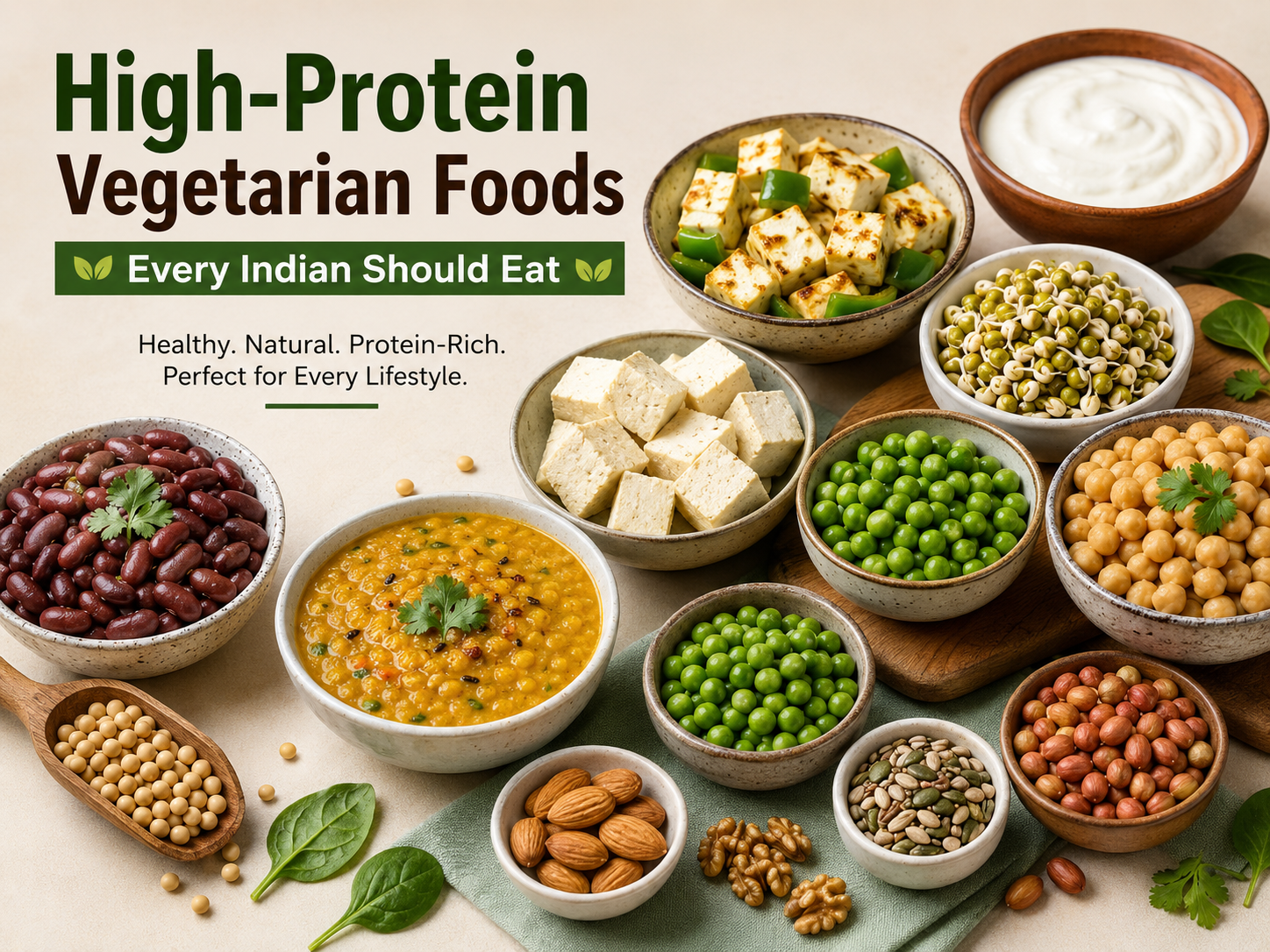
High-Protein Vegetarian Foods Every Indian Should Eat
Open up most Indian kitchens and the protein’s already there, sitting in the pantry, waiting. Dal. Paneer. Soy. Chickpeas. Curd. Nuts. Seeds. None of this is exotic or hard to find, it’s just a matter of whether meals actually get built around it or whether it sits there half-used while rice and roti take up the whole plate. That’s really what this comes down to. High Protein Vegetarian Foods India already has in abundance don’t require meat or expensive supplement tubs to make a real difference. It’s not about piling more food onto the plate either. It’s about making sure something protein-solid shows up in each main meal, on purpose, instead of by accident. Why Protein Actually Matters Protein does a lot of quiet, unglamorous work. Muscles need it to stay maintained. Tissue repair leans on it. Hair and skin depend on it more than people realize. It’s tangled into a bunch of bodily functions nobody thinks about until something starts feeling a bit off. There’s this idea floating around that vegetarian diets just can’t deliver enough protein. Not really true though. The real issue is usually meal planning, not the diet itself. A plate that’s mostly rice, roti, vegetables, and maybe some potatoes will have a bit of protein in it, sure, but probably not enough to actually call the meal protein-focused in any meaningful sense. Throw dal, beans, paneer, curd, soy, or seeds into that same plate and suddenly things shift. For vegetarians across India, the traditional stuff already does most of the heavy lifting. Dal-roti. Rajma-rice. Chole. Paneer sabzi. Curd with meals. None of it’s fancy, and none of it needs to be, it’s already contributing real protein to the day. Best High Protein Vegetarian Foods India Has to Offer Dal and Lentils Dal is probably the easiest protein win going, honestly. Moong dal, masoor dal, toor dal, chana dal, urad dal, each one shows up in different dishes, and none of them ask much effort in return. A bowl of dal with roti or rice is cheap, filling, and doesn’t demand much from anyone. Switching between different dals through the week keeps things from getting repetitive too, which matters more than people give it credit for. Moong dal tends to be the favorite in a lot of households, mostly because it’s light and works in so many forms, as dal, khichdi, chilla, even sprouted for something different. Paneer Paneer’s a genuinely convenient protein source, especially on days that call for something more substantial than a plain vegetable dish. Curries, wraps, salads, sandwiches, bhurji, grilled on its own, paneer slots into all of it. Calcium and other nutrients come along for the ride too, not just protein. Preparation makes a real difference though. Paneer cooked with vegetables and a moderate amount of oil is a smarter everyday choice than the heavily fried versions, even if those show up occasionally and taste great doing it. Soybeans and Soy Products Soy might be the strongest plant-based protein option available to vegetarians, full stop. Soy chunks, tofu, soybeans, and other lightly processed soy foods work into Indian cooking without much fuss. Soy chunks do well in pulao, curries, or mixed vegetable dishes. Tofu can often replace paneer directly in a recipe without needing much adjustment at all. Because soy delivers a solid protein punch in fairly small portions, it’s especially useful for anyone trying to raise their intake without every meal turning into a mountain of food. Chickpeas Chickpeas, or chana, are already deeply woven into Indian cooking. Chole. Salads. Chaat. Mixed vegetable dishes. Chana shows up basically everywhere once you start looking. Kabuli chana and kala chana both pull their weight here. Kala chana especially tends to get eaten simply, as a snack or breakfast, once it’s soaked and cooked properly. There’s fibre in there too, and that’s a big part of why chickpeas are so satisfying, meals built around them tend to keep people full for a lot longer than the rice-and-roti equivalent. Rajma Rajma deserves real credit in a protein-focused vegetarian diet, not just a reputation as weekend comfort food. It works well with rice, roti, or vegetables. Since it’s carrying fibre and carbohydrates alongside the protein, it can genuinely stand as a complete meal on its own, not just a side dish tagging along behind something else. The classic rajma-chawal combination gets even more balanced with a vegetable dish and some curd or salad added in. Greek Yogurt and Curd Dairy makes hitting protein goals a lot easier for most vegetarians. Greek yogurt generally carries more protein than regular curd, though the exact numbers shift depending on the brand and how it’s made. Curd’s an easy, low-effort addition to lunch or dinner, and it works fine with rice, roti-based meals, or stuffed parathas. For anyone eating dairy regularly, unsweetened varieties tend to be the more practical everyday pick over the flavored ones carrying a lot of added sugar. Peanuts Peanuts are cheap, everywhere, and simple to fold into Indian meals. Protein, healthy fats, calories, all in one small handful, which makes them genuinely useful when something nutrient-dense is needed without much effort. Roasted plain, mixed into poha or upma, blended into chutneys, or tossed into homemade snacks, peanuts move around a plate pretty easily. They’re calorie-dense though, so portion size still matters, particularly for anyone keeping an eye on overall calorie intake for the day. Green Peas Green peas don’t get nearly the credit dal or paneer do, but they’re still pulling real weight in a lot of everyday meals. Pulao, matar paneer, vegetable curries, poha, soups, salads, peas fit into all of it without needing much extra thought. Pairing peas with other protein-rich ingredients turns a fairly ordinary dish into something a lot more nutritious and satisfying. Sprouts Sprouted moong and other legumes tend to be popular with anyone chasing lighter, protein-forward meals. They work well in salads, chaats, sandwiches, or breakfast bowls. A squeeze of lemon, some tomatoes, onions, coriander, and a bit
Read more →