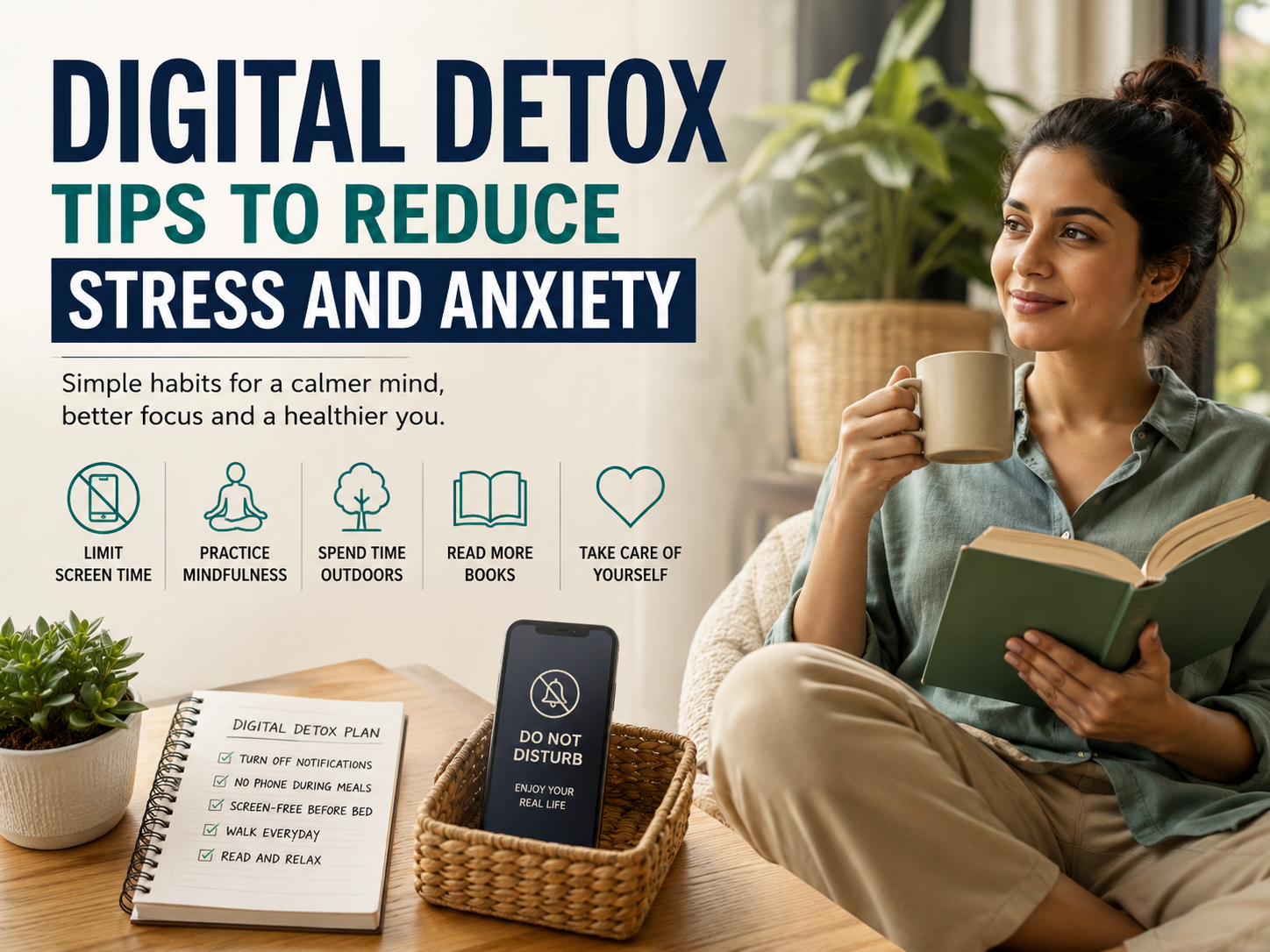
Phones, laptops, tablets, social media, it’s all just there now, woven into basically every hour of the day whether we invite it in or not. Which is probably why switching off feels strangely hard, harder than it should, honestly. Notifications are already waiting when we wake up. Messages get checked mid-breakfast, without really deciding to check them. Scrolling eats into breaks that were meant to actually be breaks. And there’s that last look at the phone before sleep, the one everyone knows they shouldn’t take and takes anyway. Technology makes a lot of life easier, no argument there, but staying constantly plugged in has this way of leaving the mind tired in a way that’s hard to point to exactly.
That’s really the space good Digital Detox Tips for Mental Health live in. It’s not about giving up the phone entirely, or disappearing off the internet for a week, nothing that extreme. It’s just being a bit more intentional about how, when, and why you’re actually reaching for a device, instead of it happening automatically, over and over, without a single conscious decision behind it.
Mental health research keeps circling back to the same point. Compulsive or excessive tech use can mess with sleep, concentration, relationships, and general emotional wellbeing over time, quietly, in the background. Regular breaks, fewer unnecessary notifications, and a few screen-free stretches through the day tend to help people rebuild a relationship with technology that doesn’t feel like a constant low-level tug-of-war.
What a Digital Detox Actually Means
It’s a planned stretch of cutting back, or stepping away entirely, from digital devices and online activity. Depending on your life, that could mean less time on social media, keeping the phone off the table at meals, no screens before bed, or just a few hours a day free of the usual digital noise pulling at your attention every few minutes.
None of this is about rejecting technology outright, that’s not really the point. Phones and computers are genuinely essential, for work, for staying close to people, for learning, for entertainment, all of it. It’s about building some boundaries so the technology ends up working for you, instead of constantly demanding something back.
How Technology Actually Feeds Into Stress and Anxiety
Not every minute spent online is doing damage, worth saying that upfront. There’s real entertainment in it, real education, real connection, useful information too. The trouble tends to start once the usage stops being a choice and just becomes automatic, something happening without you noticing it’s happening.
Constant notifications interrupt whatever you’re focused on and leave a nagging sense that you owe someone an instant reply. Social media adds its own layer on top, especially with the endless stream of carefully curated glimpses into other people’s lives, which somehow always looks better than whatever’s actually going on in your own day.
Night-time phone use tends to be its own separate issue entirely. Messages, videos, news, social media, it all keeps the brain switched on right when it’s supposed to be winding down. The American Psychological Association points to cutting screen use before bed and keeping a consistent wind-down routine as genuinely effective for protecting sleep.
Research reviewed by the American Academy of Pediatrics has also found digital-detox efforts generally reduce smartphone or app use overall, with some studies showing real improvement in depressive symptoms too. Worth flagging though, researchers themselves say the evidence varies a fair amount, and a detox shouldn’t get treated as some universal fix for mental health struggles.
Digital Detox Tips for Mental Health Worth Actually Trying
Start with your actual habits, not the version you’d like to believe. Before changing anything major, just notice how you’re really using your devices right now, no judgment attached, just honest observation.
Pull up the screen-time report and see which apps are eating up most of the day. There’s a decent chance a few quick scrolling sessions have quietly stacked into several hours without you ever clocking it happening in real time. Instead of beating yourself up over the number, use it to actually spot patterns. Do you reach for the phone the second boredom hits? Check messages before you’re even properly awake? Scroll specifically when stress shows up, almost like a reflex you didn’t choose?
Once a habit’s actually visible, it gets a lot easier to shift.
Turning off notifications you genuinely don’t need matters more than it sounds like it should. A single ping can yank your attention completely away from whatever you were doing a second ago. Not every app needs to interrupt you the instant something happens somewhere in it. Keep notifications on for calls or messages that actually matter, and silence the rest, the social media pings, the promotional alerts, all the background noise that quietly adds up over a day. The APA’s flagged notification management specifically as one of the more practical ways to cut digital interruptions and genuinely improve focus.
Building in some phone-free windows helps too, and you don’t need to go fully offline all day, that’s not realistic for most people anyway. Start small. Breakfast phone-free. No phone at the dinner table. The first twenty or thirty minutes after waking spent without touching social media at all. These small boundaries add up more than they seem like they should, mostly because they carve out little pockets where attention isn’t being pulled six directions at once.
Keeping the bedroom mostly screen-free is another one worth taking seriously. Ideally, the phone shouldn’t be the very last thing anyone looks at before falling asleep, even though for a lot of people, it is, every single night. Scrolling news, watching short clips, replying to messages, all of it makes switching off mentally a lot harder than it needs to be. Keeping the phone away from the bed also cuts the temptation to check it repeatedly through the night, which happens more than most people admit out loud. Swapping late-night scrolling for reading, some gentle stretching, calm music, or just quietly prepping for tomorrow tends to help. Protecting sleep matters here specifically, since poor sleep bleeds into mood and focus the next day in ways that are easy to underestimate until it’s already happened.
Replacing scrolling with something real is honestly one of the bigger pieces of this whole thing. A lot of people’s biggest mistake with a detox is just removing the phone habit without putting anything in its place. If thirty minutes usually disappears into scrolling after work, decide ahead of time what fills that space instead. A walk. Making tea. Cooking something. A few pages of a book. Watering the plants. Talking to whoever’s actually around at home. Replacing the habit gives the brain something to look forward to, rather than leaving a gap that just fills itself back up with the same old scroll out of habit. The American Psychiatric Association points in a similar direction, suggesting compulsive digital habits get replaced with something that genuinely shifts your physical or mental state, walking, stretching, music, whatever actually works for the specific person.
Taking real breaks from social media doesn’t require deleting every account either, that’s a bigger step than most people actually need to take. A short break from whichever platform leaves you feeling distracted, overwhelmed, irritated, or somehow not enough, that’s usually plenty to start. One evening first. Then maybe a weekend. Then a set number of hours a day if that ends up feeling sustainable. Pay attention to how things actually feel during the break. Calmer? More focused? Sleeping a bit better? More present in conversations happening right in front of you? Those observations are honestly the clearest signal for which habits are actually worth changing for good.
Making meals screen-free is an easy, low-effort place to disconnect for a bit. Put the phone away while eating and actually pay attention to the food and whoever’s at the table. Small habit, but it turns an ordinary meal into a genuine pause in an otherwise packed day. Face-to-face interaction matters more than people give it credit for these days. Digital communication’s genuinely useful, but it was never meant to fully stand in for real conversation with people actually in the room.
Watching out for doomscrolling specifically matters too, because sometimes the issue isn’t screen time itself, it’s what’s actually being consumed during it. Reading bad news, arguments, alarming headlines, upsetting posts, on repeat, that leaves the mind feeling overloaded in a way that’s genuinely hard to shake off afterward. A reasonable window for catching up on news beats checking constantly all day long. And if certain accounts keep spiking stress every time they show up, it’s fine to just mute or unfollow, staying informed doesn’t mean staying constantly exposed to whatever’s distressing that particular week.
Spending more time outdoors makes the whole detox easier, mostly because it changes the actual environment rather than just asking for willpower in the same old setting. A walk without checking the phone every few minutes. Sitting outside for a bit. A trip to the park. Time in nature, even briefly, gives a real break from notifications and the general noise of being online constantly. The APA notes time in nature specifically tends to support mood and helps people genuinely recover from stress, not just distract from it for a moment before it comes back.
And don’t aim for perfect with any of this, because a digital detox was never a competition, least of all with yourself. Checked Instagram during a supposedly phone-free evening? That doesn’t mean the whole thing failed. The point’s building healthier habits over time, not manufacturing a fresh source of guilt to carry around. Start small, and pick changes that actually fit your work, your family, your real social life, not some idealized version of a life with zero screens anywhere in it.
A Simple Digital Detox Routine
Something workable doesn’t need to overcomplicate the whole day. Mornings can skip social media right after waking. Workdays can mean unnecessary notifications off and the phone tucked away during focused stretches. Evenings get a specific point where recreational scrolling stops for the night. Dinner stays phone-free at the table. Before bed gets a proper screen-free wind-down. Weekends might carve out a few hours away from social media or other non-essential digital stuff altogether.
Consistency’s really the piece that matters most here. A manageable routine actually followed beats some extreme one-day detox that looks impressive on paper but doesn’t shift anything long term.
What to Actually Expect Along the Way
Some people notice a difference fairly fast, others need more time before anything really shifts, and that’s fine either way. Feeling a bit bored or restless at first, when the automatic reach for the phone gets interrupted, that’s completely normal, it’s part of the adjustment, not a sign anything’s going wrong.
Over time, a lot of people find more uninterrupted space for sleep, hobbies, actual conversations, exercise, or just sitting and doing absolutely nothing, which turns out to be harder than it sounds and somehow restorative at the same time.
A 2026 piece from the American Psychiatric Association looking at recent social-media detox research noted that cutting down on problematic social media use may help with anxiety and depression symptoms in some young adults specifically. It also stressed that the quality and purpose behind digital use matters just as much, maybe more, than the raw number of minutes logged.
That distinction actually matters a lot, honestly. This was never really about counting every second spent online. It’s about noticing whether the digital habits in place are helping, or quietly working against you without you fully realizing it.
When a Detox Alone Isn’t Enough
Good Digital Detox Tips for Mental Health are a genuinely useful shift, but they were never meant to stand in for actual mental health care when that’s what’s actually needed.
If stress or anxiety’s persistent, overwhelming, messing with sleep, or getting in the way of work and relationships, talking to a qualified mental health professional matters more than fine-tuning screen time alone. The APA itself recommends reaching out for professional support once stress starts feeling like more than self-help strategies can hold.
About New Indian Statement
New Indian Statement is a lifestyle-focused platform covering everything from travel and cinema to photography, literature, startups, and stories about interesting people doing interesting things. The approach leans on genuine storytelling paired with a focus on experiences that actually mean something to readers, not just headlines.
Through content like this, the goal is helping readers think through the everyday choices quietly shaping how we live, work, communicate, and take care of ourselves, often without noticing any of it happening in real time.
As digital technology keeps embedding itself deeper into daily life, conversations around mindful tech use feel more relevant now, not less. A digital detox was never about abandoning modern life altogether. Sometimes it’s just putting the phone down long enough to actually notice the life happening around you while you weren’t looking at a screen.
Final Thoughts
Technology isn’t really the enemy in any of this. The actual challenge is letting digital habits slide onto autopilot without ever pausing to question them.
A handful of small changes, cutting unnecessary notifications, keeping meals screen-free, protecting sleep, taking real breaks from social media, spending time outdoors, swapping scrolling for something more meaningful, all of it opens up more actual room in a day than most people expect going in.
The best approach, honestly, is whichever set of Digital Detox Tips for Mental Health someone can actually keep doing. There’s no need to vanish from the internet for a week to notice a difference. Pick one small boundary today and build outward slowly from there, without turning the whole thing into another project to stress over.
Sometimes the healthiest thing anyone can do with their phone really is just put it down for a bit.
Frequently Asked Questions
What is a digital detox?
A planned reduction, or short break, from non-essential digital activity, particularly smartphone use, social media, and constant online communication, aimed at building healthier boundaries around technology.
How long should a digital detox actually last?
There’s no universal length. An hour, an evening, a weekend, or specific screen-free stretches during the day all work. Whatever fits the person’s actual life and can realistically be kept up is the right approach.
Can cutting screen time genuinely help with stress?
Reducing unnecessary digital interruptions tends to open up more time for sleep, physical activity, relaxation, and real face-to-face connection. Research suggests some digital-detox approaches improve aspects of wellbeing, though results vary quite a bit person to person.
Should social media get cut out completely?
Not necessarily. It genuinely helps people stay connected and find useful information. Cutting down on passive scrolling, and stepping away from whichever accounts consistently leave someone feeling stressed, tends to work better than quitting entirely.
Is using a phone before bed actually bad for sleep?
Late-night phone use can make winding down harder, and both the screen and whatever’s being consumed on it can interfere with falling asleep properly. A screen-free stretch before bed tends to support a healthier sleep routine overall.
What’s worth doing instead of scrolling?
Walking, reading, exercising, cooking, journaling, listening to music, spending time with family, picking up a hobby, or just sitting quietly for a while. The key’s replacing the automatic scroll with something that actually feels restorative, not just another distraction wearing a different face.
Can a digital detox cure anxiety on its own?
No, and it shouldn’t be treated as one. It can help some people manage digital habits and cut certain sources of stress, but persistent or severe anxiety usually needs real professional support alongside anything else being tried.
What are the first Digital Detox Tips for Mental Health worth trying?
Three simple changes to start, turn off unnecessary notifications, keep the phone away during meals, and build a screen-free stretch before bed. Once those feel natural, gradually stretch out the offline periods from there.
Why should people bother with Digital Detox Tips for Mental Health at all if technology feels so normal now?
Because normal doesn’t always mean harmless. Even everyday tech habits can quietly chip away at sleep, focus, and mood over time, which is exactly why small, deliberate boundaries tend to help more than people expect.
Are Digital Detox Tips for Mental Health different for teenagers versus adults?
The core ideas stay the same, fewer unnecessary notifications, more screen-free time, real activities to replace scrolling, but the specific boundaries and support needed can look different depending on age, routine, and how much independence someone has over their own device use.
New Indian Statement believes in bringing genuinely meaningful lifestyle stories and conversations to readers. In that spirit, Digital Detox Tips for Mental Health remain a simple but genuinely relevant topic for anyone trying to build a calmer, more balanced everyday life.