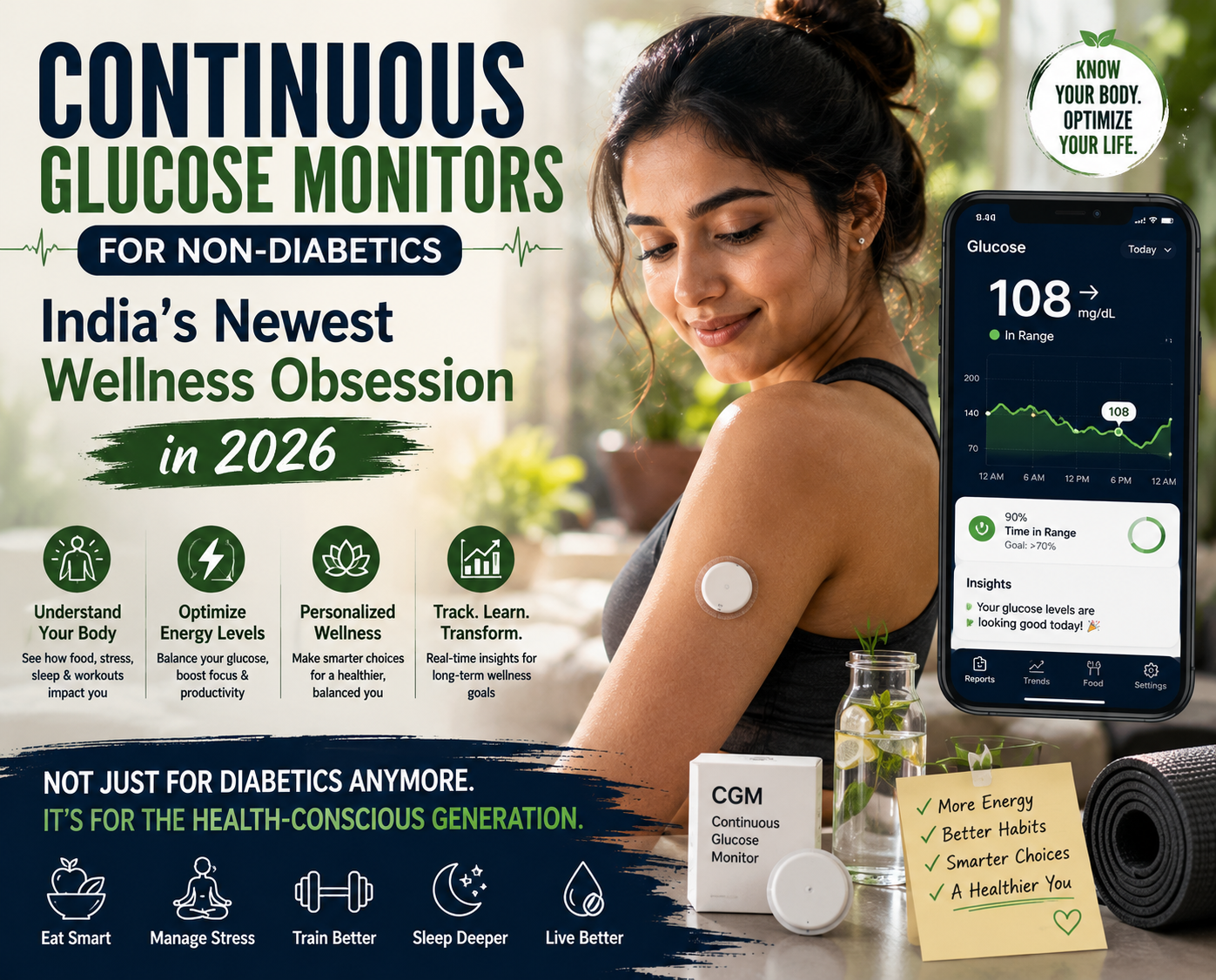
Continuous Glucose Monitors for Non-Diabetics – India’s Newest Wellness Obsession in 2026
A few years back, if you saw someone with a small round patch stuck to their arm, you’d assume they had diabetes. Not anymore. Walk into any decent gym in Mumbai or Bangalore today and you’ll spot at least one person checking their phone mid-workout, not for messages, but for their glucose graph.
That’s the CGM, or continuous glucose monitor, and it’s quietly become one of India’s most talked-about wellness gadgets in 2026. What started as a medical tool for diabetics has turned into something fitness coaches, nutritionists, and regular working professionals are strapping on just to see what’s actually happening inside their bodies.
If you’ve typed “continuous glucose monitor non-diabetics India” into Google recently, you’re part of a much bigger wave than you might think.
So What Does a CGM Actually Do?
It’s a tiny sensor, usually stuck on the back of your arm or your belly, that tracks glucose in the fluid just under your skin. No more finger pricks. It just sits there and reads your sugar levels every few minutes, day and night, and sends everything straight to an app on your phone.
You end up with a real picture of things like:
- How your glucose moves right after you eat
- Whether your evening chai is spiking you more than you’d think
- What your body does overnight
- How workouts and recovery affect your numbers
Basically, instead of guessing, you’re seeing.
Why Are Non-Diabetics Even Bothering With This?
Honestly, because people are tired of guessing. Indians are getting more serious about catching problems before they start, not after. And a lot of everyday questions just don’t have obvious answers without data:
Why does that 4pm slump hit so hard? Is it the lunch, or something else? Does that evening walk actually do anything? Is stress from work messing with your sugar more than your diet is?
A CGM doesn’t guess. It just shows you.
India’s Sugar Problem Isn’t Going Away
Here’s the uncomfortable bit. India already has one of the highest diabetes and prediabetes populations on the planet. And it’s not just older people anymore. Younger adults with desk jobs, poor sleep, and phone-in-hand lifestyles are quietly building insulin resistance without any symptoms showing up yet.
That’s really the whole pitch behind wearing a CGM even if you’re perfectly healthy: catch the pattern before it becomes a diagnosis.
Not All Glucose Spikes Are Equal
Every single thing you eat bumps your blood sugar up. That’s normal. The real question is how fast and how high.
Take a typical Indian breakfast of sugary chai and white bread toast. That combination tends to send glucose up fast, and then crash it back down just as quickly, which is usually why people feel hungry again by 11am.
Compare that to eggs or paneer with a whole wheat roti, some vegetables, maybe a few nuts. Same meal-sized portion, completely different glucose curve. Slower rise, steadier energy, less of a crash later.
Wearing a CGM is really the first time most people get to see this difference in black and white instead of just reading about it in some health blog.
What Fitness Folks Are Doing With the Data
Athletes and serious gym-goers are using CGMs to fine-tune things that used to be pure guesswork, like when to eat before a workout, what to eat for recovery, and how much carb intake actually helps versus just adds fat. It’s less about following a generic diet plan off Instagram and more about learning what your own body specifically does.
Can It Help With Weight Loss?
Sort of, indirectly. A lot of people trying to lose weight notice that sharp glucose spikes are usually followed by intense hunger an hour or two later. It’s not really willpower failing, it’s blood sugar crashing and your body demanding more fuel.
Once people start eating in a way that keeps glucose steadier, plenty report feeling less hungry between meals, snacking less, and just having more consistent energy through the day. That said, and this is worth being upfront about, a CGM alone won’t make you lose weight. Calories, activity, and consistency still matter more than any single gadget.
Sleep Affects Your Sugar More Than You’d Guess
This one surprises almost everyone who tries it. Sleep four or five hours and your glucose the next day tends to run higher for longer after meals, even if you eat the exact same thing you always do. Insulin sensitivity just takes a hit when sleep is short, and it shows up clearly on the graph.
Stress Does Too
Big presentation at work? Exam coming up? Stuck in brutal traffic before an important meeting? A lot of people watching their CGM data are shocked to see their glucose climb during moments like these, with no food involved at all. That’s cortisol doing its job, telling your liver to dump stored sugar into your blood. It’s a good reminder that blood sugar isn’t only about food.
Why Everyone’s Glucose Response Is Different
This is probably the most useful thing a CGM teaches people. One person can eat a banana and barely notice a blip. Someone else eats the exact same banana and gets a noticeable spike. Same goes for rice, oats, bread, smoothies, even coffee.
That’s exactly why continuous glucose monitor non-diabetics India searches have been climbing, people are realizing generic nutrition advice doesn’t account for how different everyone’s body actually responds.
Who’s Actually Using These in India Right Now
It’s a wider crowd than you’d expect. Marathon runners, corporate employees stuck at desks all day, nutrition clients working with coaches, wellness professionals themselves, doctors who lean toward preventive care, parents trying to build better habits early, and the whole biohacking crowd experimenting on themselves. None of them are replacing their doctor visits with this. It’s just an extra layer of information.
What People Actually Get Out of Wearing One
Most users report a handful of real, practical shifts:
- They start noticing which meals actually keep them energized versus which ones crash them
- Portion sizes become more intuitive once you can see the effect visually
- A short walk after eating suddenly makes a lot more sense once you watch it flatten your glucose curve in real time
- Meal timing starts feeling less random and more intentional
- Overall health awareness just goes up
Does Everyone Actually Need One?
Not really, no. If your diet’s already solid, you exercise regularly, and your last checkup came back clean, you’re probably not going to learn anything life-changing from wearing a CGM full-time. Most people who try it just wear one for two or three weeks, learn their patterns, and move on with that knowledge in hand. It’s rarely something people need to wear forever.
What CGMs Don’t Do Well
They’re impressive tech, but not flawless. A few honest limitations worth knowing:
- Readings lag slightly behind actual blood glucose
- Sensor accuracy can shift a bit from device to device
- They’re not cheap
- Watching every tiny fluctuation can genuinely create anxiety in some people
- The numbers need context, a single spike doesn’t mean something’s wrong
It’s easy to spiral over normal, harmless fluctuations if you don’t know what you’re looking at.
Should You Talk to a Doctor First?
Yes, honestly, this is worth taking seriously. Before starting, it’s worth a quick conversation with a physician, an endocrinologist, a certified nutritionist, or a diabetes educator. They’ll help you actually interpret what the numbers mean instead of over-restricting your diet based on a misread graph.
Where This Is All Heading
Preventive health tech in India isn’t slowing down anytime soon. Smartwatches, AI-driven health apps, wearable ECGs, sleep trackers, and now CGMs are all part of the same shift, people wanting to understand their bodies before something goes wrong, not after.
As these devices get cheaper, wearing one probably won’t feel unusual much longer. It’ll just be another normal part of taking care of yourself.
Is It Worth Trying?
Depends what you’re after. If you’re genuinely curious how your own body handles food, workouts, stress, and sleep, a CGM gives you insight a regular blood test just can’t. But no wearable replaces the actual basics: eating well, moving your body, sleeping enough, managing stress, and getting checked regularly by an actual doctor.
The tech works best as a support system, not a substitute. And that’s really the story behind why continuous glucose monitor non-diabetics India remains one of the biggest wellness conversations of 2026, not because people are chasing perfect numbers, but because they’re finally learning how their daily choices actually add up.
Frequently Asked Questions
What is a continuous glucose monitor?
It’s a small wearable sensor that tracks your glucose levels continuously throughout the day and night, without needing finger-prick blood tests.
Can someone without diabetes use a CGM?
Yes. Plenty of healthy people use CGMs to understand how food, sleep, stress, and exercise affect their glucose, ideally with some guidance from a health professional.
Is continuous glucose monitor non-diabetics India actually a growing trend?
Yes, in 2026 it’s become increasingly popular among fitness enthusiasts, nutrition-focused individuals, and wellness professionals across India as preventive health awareness grows.
Does a CGM help you lose weight?
Not directly, but it can help you spot eating patterns that lead to sugar spikes, cravings, and overeating, which indirectly supports weight management.
Does stress really raise glucose levels?
Yes. Stress hormones like cortisol trigger your liver to release stored glucose, which can raise your blood sugar even without eating anything.
How long should someone without diabetes wear a CGM?
Most people wear one for 10 to 14 days, sometimes a few weeks, just enough to learn their patterns. It’s best to discuss the ideal duration with a healthcare professional.
Can a CGM replace regular health checkups?
No. It’s a helpful monitoring tool, but it should never replace routine blood tests, medical exams, or advice from your doctor.