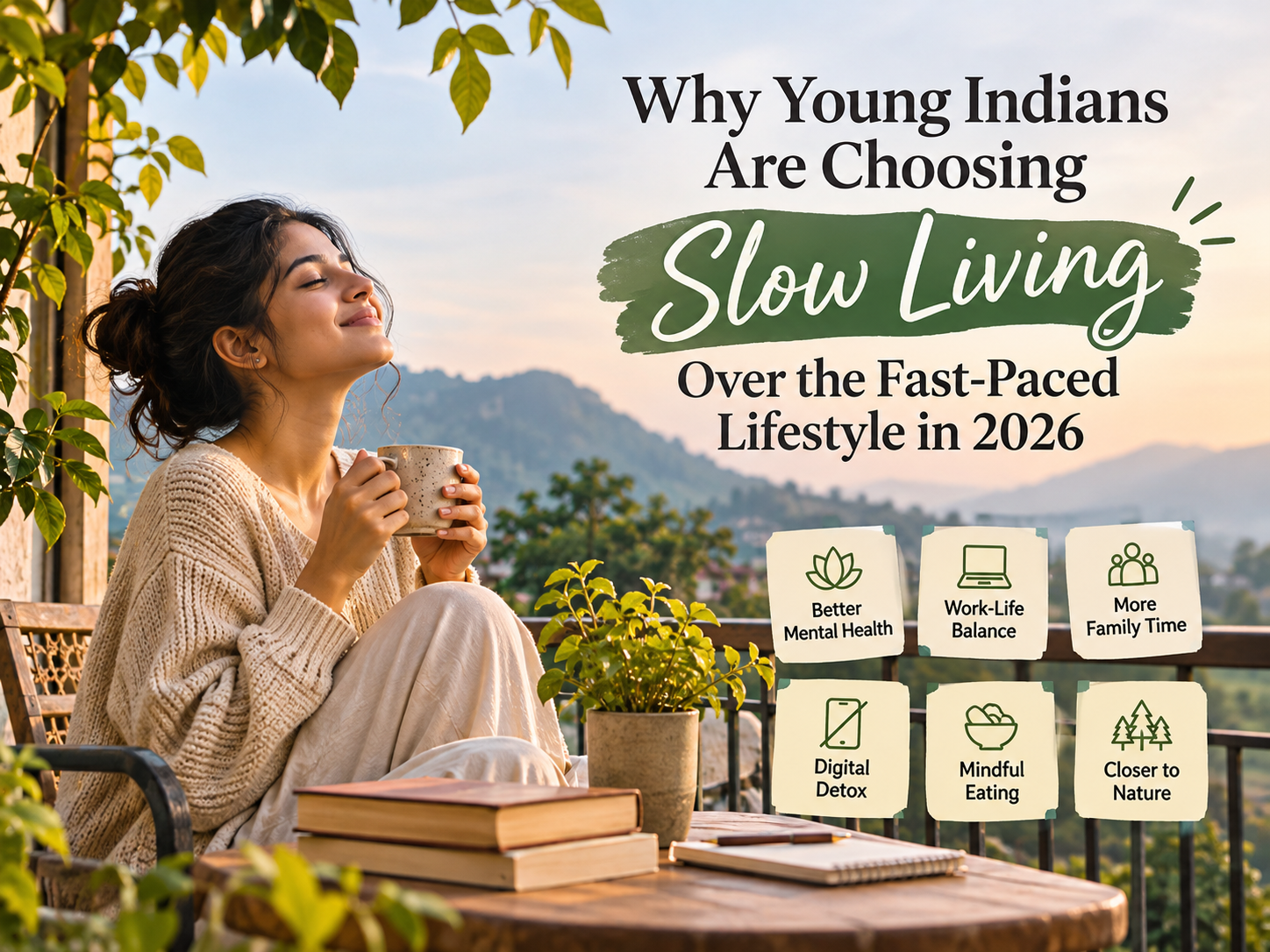
Why Young Indians Are Choosing Slow Living Over the Fast-Paced Lifestyle in 2026
For years, young Indians have grown up believing that success means doing more, earning more, travelling more and constantly moving ahead. A busy schedule was considered a sign of ambition, while taking a break often felt like falling behind. From early morning office commutes to late-night work calls, the modern lifestyle has made people accustomed to being busy almost every minute of the day.
However, something is changing in 2026. Many young professionals, entrepreneurs and working individuals are beginning to question whether a fast-paced lifestyle is really making them happier. Instead of chasing every opportunity, they are looking for a better balance between professional growth and personal happiness.
This shift has brought the Slow living lifestyle in India into everyday conversations. People are becoming more interested in peaceful mornings, home-cooked meals, meaningful relationships, outdoor activities and spending time away from their phones.
The idea is not to stop working or give up ambitions. It is about creating a life where professional success does not come at the cost of personal well-being.
1. Growing Awareness About Mental Health and Burnout
One of the biggest reasons behind this lifestyle change is the growing awareness of mental health. Young professionals are realising that constantly working under pressure can affect their mood, sleep, relationships and overall quality of life.
Think about someone who spends eight to ten hours working, checks emails during dinner and continues scrolling through professional updates before going to bed. Even when the working day ends, the mind rarely gets a proper break.
This pattern has encouraged people to reconsider their daily habits. They are learning that taking breaks, spending time outdoors and maintaining personal boundaries are not signs of laziness.
The growing popularity of the Slow living lifestyle in India reflects this desire to create a healthier relationship with work and everyday responsibilities.
Young people are also becoming more comfortable discussing stress, emotional exhaustion and the importance of taking time for themselves.
2. Work-Life Balance Is Becoming More Important Than Job Titles
Earlier, having a high-paying job, a senior designation or working for a recognised company was often considered the ultimate professional achievement.
These things still matter, but the definition of career success is changing.
Many young Indians now consider other factors before accepting a job, including flexible working hours, supportive management, learning opportunities and enough personal time.
According to Deloitte’s 2025 Gen Z and Millennial Survey, Indian Gen Z and millennials place importance on work-life balance, meaningful work and personal development alongside financial growth.
Remote and hybrid working arrangements have also changed how people organise their days. Although working from home comes with its own challenges, it can reduce commuting time and create opportunities for personal activities.
For some, a successful career now means having enough time to enjoy life outside the office rather than spending every available hour working.
3. Social Media Detox Is Becoming a Personal Priority
Social media has made communication easier, but it has also created a constant comparison culture.
People regularly see pictures of expensive holidays, luxury homes, successful businesses, fitness transformations and seemingly perfect relationships. Without realising it, they may begin comparing their everyday lives with carefully selected moments from someone else’s life.
This constant exposure can make ordinary experiences feel less valuable.
In 2026, more young people are trying to reduce unnecessary screen time. Some are turning off notifications, avoiding their phones during meals or keeping their devices away before bedtime.
The Slow living lifestyle in India encourages people to enjoy experiences without feeling the need to photograph, record or share everything online.
A simple evening walk, a conversation with family or a cup of tea on the balcony can be enjoyable without becoming social media content.
4. Spending More Time With Family and Friends
Modern working culture often leaves very little time for personal relationships. People may live with their families but remain occupied with office calls, deadlines and phone notifications.
Over time, this can create emotional distance even when everyone lives under the same roof.
Young Indians are increasingly recognising the importance of meaningful relationships. Spending time with parents, meeting friends, enjoying family meals and participating in small celebrations are becoming important parts of a balanced lifestyle.
Not every weekend needs an elaborate plan. Sometimes, sitting together over dinner or having a long conversation with an old friend can provide more satisfaction than an expensive outing.
This shift also highlights an important reality: personal relationships need time and attention, just like professional responsibilities.
5. Small Cities and Nature Are Becoming More Attractive
Another interesting change is the growing interest in quieter destinations and less crowded surroundings.
For years, metropolitan cities such as Mumbai, Delhi and Bengaluru have attracted young professionals looking for better career opportunities. However, traffic, expensive housing, long commutes and demanding schedules can make everyday life exhausting.
With remote and hybrid work becoming more accessible in certain industries, some professionals are exploring smaller cities and quieter locations.
Places in Himachal Pradesh, Uttarakhand and Goa attract people who want to experience a closer connection with nature. Others are choosing cities such as Dehradun, Jaipur and Pune because they offer different lifestyle possibilities.
Of course, relocating is not practical for everyone. Career opportunities, family responsibilities and financial stability still influence such decisions.
Nevertheless, the growing interest in nature-based living shows that people are thinking beyond just the location of their workplace.
6. Mindful Eating and Traditional Indian Habits Are Returning
Interestingly, many young Indians are finding value in habits that were already part of traditional Indian households.
Eating freshly prepared meals, following regular meal timings, enjoying seasonal fruits and spending time cooking at home are receiving renewed attention.
Instead of depending entirely on packaged food and quick deliveries, some people are making an effort to prepare simple meals.
Traditional practices such as yoga, meditation and morning walks are also becoming part of modern wellness routines.
The attraction is understandable. These activities do not necessarily require expensive equipment or complicated schedules. They can be adapted to different lifestyles.
The Slow living lifestyle in India is also about recognising the value of ordinary daily activities instead of constantly looking for something new or exciting.
It does not mean following a perfect diet or strict wellness routine. Even small, consistent changes can make everyday life feel more manageable.
7. Travelling for Experiences Rather Than Social Media Pictures
Travel has traditionally been associated with visiting famous attractions, covering multiple destinations and making the most of every holiday.
However, some young travellers are moving away from packed itineraries.
Instead of visiting five places in three days, they prefer spending more time in one destination, exploring local markets, trying regional food and understanding the culture.
A peaceful weekend in the mountains, a village homestay or a quiet beach holiday can be more appealing than a rushed trip filled with activities.
This approach also encourages travellers to support local businesses, interact with communities and experience destinations more thoughtfully.
The idea is simple: a holiday should help people enjoy their time rather than create another demanding schedule.
8. Minimalism and Conscious Spending Are Influencing Lifestyle Choices
Another reason behind this change is the growing interest in mindful spending.
Online shopping, advertisements and influencer recommendations often encourage people to purchase things they may not actually need.
Young consumers are becoming more conscious about how they spend their money. Some are choosing quality over quantity, avoiding unnecessary purchases and focusing on experiences that provide lasting value.
Minimalism does not mean owning only a few clothes or living in an empty house. It means understanding what adds genuine value to everyday life.
For example, someone might prefer investing in a comfortable home, useful furniture or a memorable family holiday instead of regularly buying products simply because they are trending.
This change reflects a wider shift towards intentional living and financial awareness.
9. Is Slow Living Really Possible in Modern India?
Although the idea sounds appealing, adopting a slower lifestyle is not equally easy for everyone.
Young professionals managing rent, education loans, family responsibilities and career goals cannot simply leave their jobs or move to the mountains.
There is also a misconception that slow living requires financial freedom, a large house, a beautiful garden or the ability to travel whenever someone wants.
In reality, it can begin with small decisions.
Someone working in a busy city can still enjoy a peaceful morning, eat meals without distractions, take regular breaks and spend time with loved ones.
Similarly, a person managing a business can create better boundaries around working hours without reducing their professional ambitions.
It is important to remember that the Slow living lifestyle in India should not become another social media trend that people feel pressured to follow.
The purpose is to make life more meaningful, not to create another unrealistic standard.
10. A New Definition of Success for Young Indians in 2026
Perhaps the biggest change is happening in the way young Indians define success.
A good salary and professional growth remain important, but they are no longer the only things people consider when evaluating their lives.
Having good relationships, enough rest, financial stability, personal freedom and time for hobbies are also becoming meaningful measures of achievement.
Some people want to build successful businesses without sacrificing every weekend. Others want to pursue creative interests alongside their regular jobs. Many simply want to enjoy their daily lives without constantly feeling rushed.
The Slow living lifestyle in India represents this changing mindset.
It is not about choosing a less ambitious life. It is about choosing an ambition that leaves enough room for happiness, health and personal fulfilment.
Frequently Asked Questions (FAQs)
1. What is slow living, and why is it becoming popular in India?
Slow living is an approach to life that focuses on being more mindful about time, daily activities and personal priorities. It is becoming popular because many young Indians want better work-life balance, less digital distraction and more meaningful experiences.
2. Why are young Indians moving away from hustle culture?
Many young people are reconsidering the pressure to remain constantly productive. Career growth is still important, but they are also prioritising mental well-being, personal relationships, flexibility and financial stability.
3. How can someone start slow living while working a full-time job?
Start with simple changes such as avoiding phone usage immediately after waking up, taking proper lunch breaks, maintaining fixed working hours, going for evening walks and spending quality time with family.
4. Does slow living mean giving up career ambitions?
No. It does not mean avoiding professional growth. It means pursuing career goals while maintaining a healthy balance between work, personal responsibilities and leisure.
5. Is slow living expensive?
Not necessarily. It does not require expensive holidays, luxury homes or costly wellness products. Cooking at home, reading, walking, gardening and spending time with loved ones are affordable ways to enjoy a simpler lifestyle.
6. What are the biggest examples of slow living in everyday Indian life?
Some common examples include enjoying morning tea without distractions, preparing home-cooked meals, practising yoga, spending time with family, visiting local markets, reading books and reducing unnecessary screen time.
Final Thoughts
The fast-paced lifestyle has brought many opportunities to young Indians, but it has also encouraged people to question how they want to spend their time.
In 2026, the conversation is gradually moving from doing everything to choosing what genuinely matters. Young people are learning that professional achievements, financial growth and personal happiness do not have to compete with one another.
The real beauty of a balanced life may be found in ordinary moments: a peaceful morning, a home-cooked meal, an evening walk or an uninterrupted conversation with someone you love.
At New Indian Statement, we believe that lifestyle trends are not just about what people wear, buy or follow. They also reflect how society thinks, feels and changes over time.
Through our lifestyle stories, we aim to explore the evolving choices, interests and everyday experiences of modern India. Because sometimes, moving forward does not mean moving faster. It simply means understanding what makes life worth living.