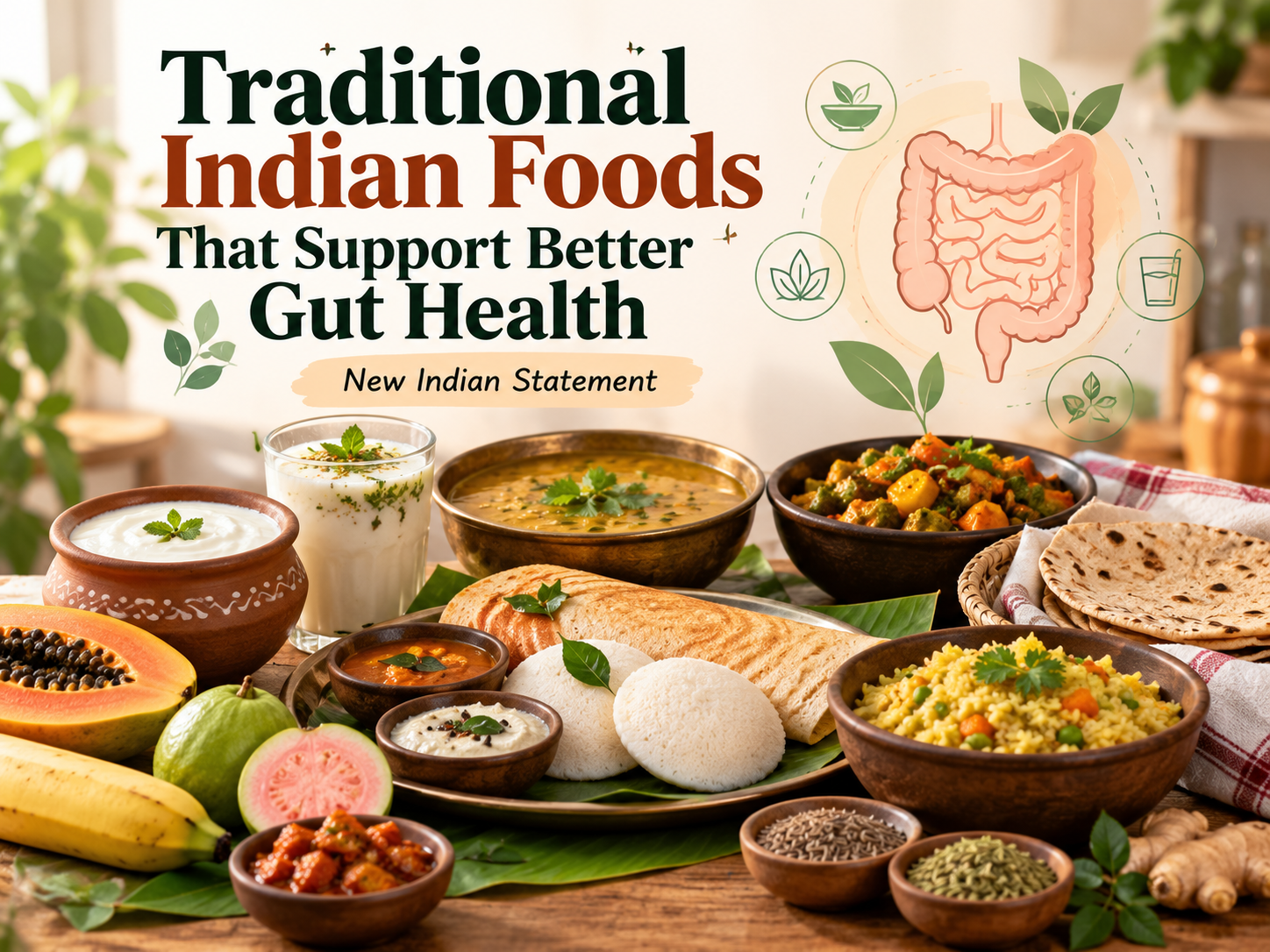
Traditional Indian Foods That Support Better Gut Health
Indian cuisine is known for its variety of flavours, regional ingredients, and cooking traditions passed down through generations. From a simple bowl of dal and rice to homemade curd, fermented idli, and freshly prepared vegetables, many everyday Indian meals contain ingredients that can support healthy digestion.
Yet, with busy schedules, irregular meal timings, frequent takeaways, and increasing dependence on packaged foods, maintaining good digestive health can sometimes become challenging. Bloating, constipation, acidity, and irregular bowel movements are common concerns, although they can have different causes and may require individual attention.
One practical way to support digestive health is to look at the food we already eat. Instead of relying on expensive products or complicated diets, many people can begin by improving the variety of foods in their regular meals.
Several traditional Indian foods for gut health provide dietary fibre, beneficial live microorganisms, or nutrients that help support normal digestive function. The benefits depend on how these foods are prepared, how much is eaten, and whether they suit an individual’s digestive system.
In this article, New Indian Statement explores familiar Indian foods that can be part of a balanced, digestion-friendly diet, along with simple ways to include them in everyday meals.
1. Homemade Curd: A Familiar Source of Beneficial Bacteria
Curd, commonly known as dahi, is a regular part of meals in many Indian households. It is prepared by fermenting milk with bacterial cultures, creating a food that may contain live microorganisms when consumed fresh and stored properly.
Certain live cultures in curd can support digestion and help maintain a balanced gut microbial community. Curd also provides protein and calcium, making it a useful addition to a balanced diet.
One of the easiest ways to enjoy curd is to serve a small bowl alongside lunch. It can also be combined with rice, vegetables, or roasted cumin to make a simple side dish.
However, not every curd product contains the same microorganisms, and the presence of live cultures depends on preparation and storage. Homemade curd should be handled hygienically and refrigerated appropriately.
People who are lactose intolerant may tolerate curd better than milk, but this varies. Anyone who experiences discomfort should adjust their intake according to their tolerance.
2. Buttermilk: A Light Addition to Everyday Meals
Chaas, or Indian buttermilk, is another familiar drink often served with lunch, particularly during warmer months.
Traditional chaas is commonly prepared by diluting curd with water and adding ingredients such as roasted cumin, coriander leaves, or a little ginger. It provides fluid and may contain live cultures if prepared from curd that contains them.
For many people, a glass of plain chaas alongside a meal can be a refreshing alternative to sugary drinks.
The spices added to chaas can enhance its flavour, but there is no need to add large quantities or treat the drink as a cure for digestive problems. Its main benefits come from its nutritional value and contribution to fluid intake.
People who need to limit sodium should be mindful of the amount of salt added. Those who are sensitive to dairy should also consider their individual tolerance.
3. Idli and Dosa: Fermented Foods with Everyday Appeal
Idli and dosa are popular South Indian foods made from fermented batter, traditionally containing rice and urad dal.
During fermentation, microorganisms transform parts of the batter and contribute to its flavour, texture, and acidity. Fermentation may also improve the availability of certain nutrients.
Idli is steamed, while dosa is cooked on a hot pan. Both can form part of a balanced meal, especially when served with sambar and vegetable-based chutneys.
Sambar contributes lentils and vegetables, providing fibre and other nutrients that support normal digestive function. This makes the complete meal more nutritionally varied than eating the fermented item alone.
One important distinction is that cooking reduces or eliminates many live microorganisms. Therefore, idli and dosa should not automatically be considered sources of live probiotics after cooking.
Nevertheless, their combination of grains, pulses, and accompanying vegetables can make them useful choices in a varied diet.
4. Dal: A Daily Source of Dietary Fibre
Dal is one of the most familiar foods in Indian kitchens, and its nutritional value extends well beyond providing protein.
Lentils and other pulses contain dietary fibre, including types that intestinal bacteria can ferment. This process produces substances called short-chain fatty acids, which play important roles in supporting the intestinal environment.
Regularly including pulses in meals can also help improve overall fibre intake, which is important for normal bowel movements.
Moong dal, masoor dal, toor dal, and chana dal offer different textures and flavours, making it easy to add variety to weekly meals.
For people who experience gas or bloating after eating pulses, starting with smaller portions may help. Thorough cooking, soaking certain pulses when appropriate, and increasing intake gradually can also improve tolerance.
A simple combination of dal, rice, and cooked vegetables provides a practical foundation for a balanced Indian meal.
5. Whole-Wheat Roti and Other Whole Grains
Whole grains are valuable sources of dietary fibre, which helps support bowel regularity and provides nourishment for certain gut microorganisms.
Whole-wheat atta is commonly used to prepare chapati or roti. Other traditional options include millets, barley, and whole-grain preparations made with locally available ingredients.
Different grains contain different combinations of fibres and nutrients. Rotating between suitable options can help increase dietary variety without making everyday meals complicated.
For example, a meal of whole-wheat roti, dal, and cooked seasonal vegetables provides fibre from several sources. A millet-based dish can offer another option, depending on individual preference and tolerance.
People who are not accustomed to eating much fibre should increase their intake gradually and drink enough fluids. A sudden increase in whole grains and pulses may temporarily cause gas or abdominal discomfort.
Those with coeliac disease must avoid wheat, barley, and rye. Others with specific digestive conditions may need personalised advice about the types and amounts of fibre they tolerate.
6. Seasonal Vegetables: Essential for a Diverse Gut Diet
Vegetables contribute fibre, vitamins, minerals, and a range of plant compounds to everyday meals. Different types of fibre are used by gut microorganisms in different ways, making dietary variety particularly useful.
Indian cooking offers many options, including lauki, tori, carrots, beans, bhindi, pumpkin, spinach, and other leafy greens.
Cooked vegetables can be especially helpful for people who find large amounts of raw produce difficult to tolerate. Simple preparations using moderate amounts of oil and familiar spices are often enough.
Adding vegetables to dal, making mixed sabzi, or serving cooked greens with roti can gradually improve the variety of a person’s diet.
There is no single vegetable that guarantees better gut health. The goal is to eat a range of vegetables regularly, adjusting the selection and preparation according to personal needs.
People with certain digestive disorders may need to limit specific vegetables temporarily or follow a medically supervised dietary plan.
7. Fruits Such as Papaya, Guava, and Bananas
Fresh fruits provide fibre, water, vitamins, and plant compounds that contribute to a balanced diet.
Papaya is popular in many Indian households and can be eaten fresh as part of breakfast or as a snack. Guava provides dietary fibre, while bananas offer a convenient source of energy and contain varying amounts of resistant starch depending on their ripeness.
These foods can help increase daily fibre intake when included alongside vegetables, pulses, and whole grains.
For example, a person could have a banana with breakfast, guava as an afternoon snack, or papaya after a meal if it feels comfortable.
Individual responses can vary. Some people find certain fruits worsen bloating, while others tolerate them well. Portion sizes and ripeness may influence how a fruit feels after eating.
Fresh, whole fruit is generally a useful everyday choice. Fruit juice is less filling and usually contains less fibre than eating the whole fruit.
8. Homemade Pickles and Other Fermented Foods
Fermentation has long been used in Indian food preparation. Traditional pickles, fermented batters, and certain regional preparations are examples of how microorganisms and time can transform ingredients.
However, not every fermented food provides the same benefits. Some pickles are preserved mainly through salt, oil, acidity, or a combination of methods. Their microbial content depends on the ingredients, fermentation process, and storage conditions.
Fermented foods that contain live microorganisms may contribute to dietary variety, but the effect depends on the particular food and microorganisms involved.
Pickles should generally be eaten in moderation because they can contain substantial amounts of salt and oil. Homemade preparations must also be made and stored safely to reduce the risk of contamination.
Rather than adding large quantities of pickle to every meal, consider it a flavourful accompaniment alongside vegetables, pulses, and whole grains.
9. Khichdi: A Simple Meal When You Want Something Gentle
Khichdi, usually prepared with rice and dal, is a familiar comfort food across many Indian households. It is easy to adapt with different pulses, vegetables, and spices.
A basic preparation offers carbohydrates and some protein, while adding vegetables can increase its fibre and micronutrient content.
Many people prefer soft khichdi when they have a reduced appetite or want a simple meal. However, its suitability depends on the reason for the digestive discomfort and the ingredients used.
For everyday meals, a balanced khichdi can include moong dal, rice, carrots, beans, or other vegetables that are well tolerated. A small serving of curd may accompany it if dairy is suitable.
Khichdi is not a treatment for intestinal disease, and persistent diarrhoea, vomiting, severe abdominal pain, or dehydration should not be managed through diet alone.
10. Ginger, Cumin, and Ajwain in Traditional Cooking
Indian cooking frequently uses spices such as ginger, cumin, fennel, and ajwain to add aroma and flavour.
Ginger has been studied for its effects on nausea, while cumin, fennel, and ajwain have long histories of traditional use for digestive discomfort. However, evidence for treating particular digestive conditions varies, and traditional use does not establish that a spice can cure a problem.
Using moderate amounts of these spices in everyday cooking can make meals more enjoyable without relying on excessive salt, heavy sauces, or rich preparations.
For example, cumin can be added to dal, ginger can flavour vegetable dishes, and fennel can be used in cooking or as a seasoning.
People who experience acidity or reflux may find that certain spicy preparations aggravate their symptoms. It is better to pay attention to individual tolerance rather than assuming that every traditional ingredient suits everyone.
Practical Ways to Improve Gut Health Through Everyday Eating
Choosing nourishing foods is only one part of supporting digestion. Daily habits also influence how comfortably the digestive system functions.
Here are a few practical steps to consider:
- Eat a variety of plant foods: Include different vegetables, fruits, pulses, and whole grains across the week.
- Increase fibre gradually: A sudden change in diet may cause bloating, especially if your usual fibre intake is low.
- Drink enough water: Adequate fluid intake helps fibre function effectively and supports normal bowel movements.
- Eat at regular times when possible: A consistent routine may help some people manage their digestive symptoms.
- Pay attention to portion sizes: Very large meals can cause discomfort for some individuals.
- Include suitable fermented foods: Fresh curd and traditionally fermented foods can add variety, provided they are safe and well tolerated.
- Limit excessive ultra-processed foods: Frequent consumption of foods high in added sugar, salt, or unhealthy fats can make a balanced eating pattern harder to maintain.
There is no need to change your entire diet overnight. Small, sustainable adjustments are often easier to maintain than strict food rules.
If symptoms are persistent, severe, or accompanied by blood in the stool, unexplained weight loss, fever, or ongoing vomiting, seek medical advice rather than relying on dietary changes alone.
How New Indian Statement Connects with Traditional Food and Wellness
New Indian Statement can help readers explore the connection between India’s food traditions and modern everyday life. Traditional meals are not simply part of cultural identity; they also provide opportunities to discuss nutrition, cooking habits, changing lifestyles, and practical approaches to well-being.
By covering subjects such as regional cuisines, everyday ingredients, food habits, and evidence-based wellness information, New Indian Statement can make health-related conversations more accessible to a broad audience.
The aim is not to label every traditional food as healthy or suggest that modern nutrition has all the answers. Instead, it is to look at familiar foods thoughtfully, recognise their nutritional qualities, and understand how preparation and portion sizes influence their place in a balanced diet.
From homemade curd and dal to seasonal vegetables and fermented foods, Indian cuisine offers plenty of options worth exploring. Readers can use this information to make practical choices that respect their food preferences and individual needs.
Conclusion
Gut health does not depend on one special ingredient, an expensive supplement, or a complicated eating plan. It is influenced by the overall quality of the diet, the variety of foods consumed, hydration, physical activity, and individual health conditions.
Many traditional Indian meals already contain useful combinations of fibre-rich grains, pulses, vegetables, fruit, and fermented foods. Including these ingredients regularly can help support normal digestion and contribute to a balanced diet.
The most useful approach is to focus on variety, moderation, and consistency. What works for one person may not work for another, so it is important to recognise individual tolerance and seek professional guidance when digestive symptoms continue.
Through practical food and wellness coverage, New Indian Statement can encourage readers to rediscover familiar Indian ingredients while making informed choices for everyday health.
Frequently Asked Questions (FAQs)
1. Which traditional Indian foods are good for gut health?
Homemade curd, dal, whole grains, seasonal vegetables, fruits, idli, dosa, and suitable fermented foods can contribute to a balanced diet that supports digestive health. Their benefits depend on preparation, portion sizes, and individual tolerance.
2. Is homemade curd good for digestion?
Curd may contain live bacterial cultures and provides protein and calcium. Some people find it easy to digest, but tolerance varies. Freshness, storage, and the cultures present also influence its properties.
3. Can dal help improve bowel movements?
Dal contains dietary fibre, which can support regular bowel movements. People who are not used to eating pulses should increase portions gradually because larger amounts may initially cause gas or bloating.
4. Are idli and dosa beneficial for gut health?
Idli and dosa are made from fermented batter, and fermentation changes the batter’s characteristics. They can contribute to a balanced diet, especially when served with sambar and vegetables. Cooking means they should not automatically be considered sources of live probiotics.
5. What foods should I eat daily for better digestion?
A balanced daily diet can include vegetables, fruits, whole grains, pulses, adequate fluids, and suitable sources of protein. The right combination depends on personal needs, health conditions, and food tolerance.
6. Do Indian spices improve gut health?
Ginger, cumin, fennel, and ajwain are traditionally used in Indian cooking and for digestive comfort. Evidence varies by ingredient and condition, so they should be viewed as culinary additions rather than guaranteed treatments.
7. Can traditional foods cure acidity or bloating?
No single food can reliably cure acidity or bloating. Symptoms may have several causes, and some foods that suit one person may trigger symptoms in another. Persistent or severe discomfort should be evaluated by a healthcare professional.
8. What is the role of New Indian Statement in food and wellness awareness?
New Indian Statement can publish accessible articles about traditional Indian cuisine, nutrition, food culture, and everyday wellness. Such content can help readers understand familiar ingredients and make informed choices without exaggerated health claims.