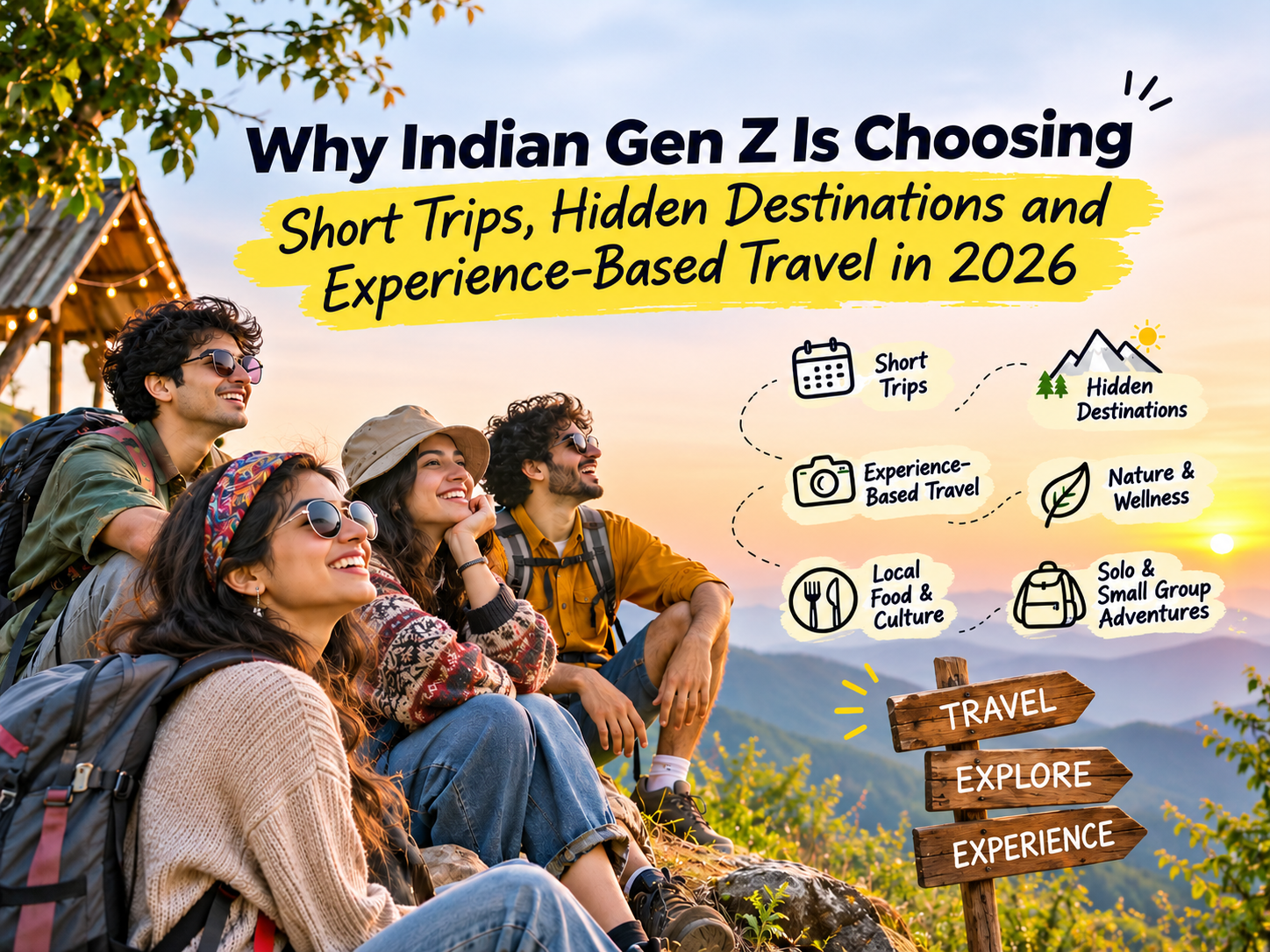
Why Indian Gen Z Is Choosing Short Trips, Hidden Destinations and Experience-Based Travel in 2026
Travel in India is changing, and the younger generation is playing a big part in it. Gone are the days when people waited for an entire year to plan one long family vacation. Today’s young travellers are more interested in taking frequent breaks, exploring places that are not crowded and collecting experiences that stay with them long after the journey ends.
For many young Indians, travelling is no longer just about visiting famous monuments, staying in luxury hotels or taking photographs at popular tourist attractions. It is about finding a peaceful mountain village, trying food from a local street market, attending a music festival in another city or spending an entire weekend somewhere surrounded by nature.
These changing preferences are shaping Gen Z travel trends India in 2026. The focus is shifting towards flexibility, affordability, personal interests and meaningful experiences. Instead of following traditional holiday plans, young travellers are creating their own ways of exploring the country.
But what is driving this change, and why are short trips and lesser-known destinations becoming so popular?
Let’s take a closer look.
1. Short Trips Are Becoming More Popular Than Long Vacations
One of the biggest changes in Indian travel culture is the growing preference for shorter and more frequent trips. Young professionals and students often have limited holidays, busy schedules and other financial responsibilities. Taking a week-long vacation is not always practical.
A two-day weekend getaway or a three-day break offers an easier alternative. Travellers can visit a nearby hill station, explore a different city or enjoy a quiet stay without taking too many days off work.
According to Airbnb’s 2026 report, Never the Same: The New Rules of Gen Z Travel in India, seven out of ten Gen Z respondents prefer three short trips over one long annual holiday. The report also highlights that 87% prefer trips lasting less than a week.
This explains why weekend escapes, spontaneous road trips and short domestic holidays are becoming increasingly attractive.
For example, someone living in Chandigarh might choose a weekend in Bir Billing, Tirthan Valley or a peaceful village near Shimla instead of planning an expensive international holiday.
The growing popularity of short breaks is an important part of Gen Z travel trends India, where travel is becoming a regular lifestyle choice rather than an occasional event.
2. Hidden Destinations Are Getting More Attention
Popular tourist destinations will always attract visitors, but younger travellers are increasingly interested in places that offer something different.
Instead of visiting the same crowded locations repeatedly, they are searching for peaceful villages, lesser-known beaches, unexplored mountain regions and small towns with interesting local cultures.
Social media has played a role in this discovery process. Instagram reels, travel vlogs and recommendations from other travellers introduce young Indians to destinations they might never have considered before.
Places such as Ziro in Arunachal Pradesh, Gandikota in Andhra Pradesh, Tirthan Valley in Himachal Pradesh and Gokarna in Karnataka appeal to travellers looking for a different experience.
However, discovering a hidden destination is not simply about finding a location with fewer tourists. It is also about understanding the local lifestyle, respecting the environment and supporting small businesses.
Interestingly, Airbnb’s 2026 research found that 90% of surveyed Gen Z travellers are likely to seek places that have not been widely recommended online or become viral.
This growing interest in less-commercialised destinations reflects how Gen Z travel trends India are moving beyond conventional sightseeing.
3. Experiences Matter More Than Expensive Hotels
For today’s young travellers, the value of a holiday is not always measured by the quality of the hotel or the number of attractions visited.
They want stories worth remembering.
It could be learning to cook a traditional regional dish, watching a sunrise from a mountain campsite, participating in a local festival or spending an evening listening to live music.
These experiences make a trip feel personal.
For example, a visit to Rajasthan might become more memorable through a village food experience, a local handicraft workshop or an evening of folk music than through a routine sightseeing tour.
Similarly, visiting Kerala could mean spending time with local communities, exploring traditional food and experiencing village life rather than simply moving between popular tourist spots.
Young travellers are also becoming more interested in concerts, sporting events, cultural festivals and adventure activities. Airbnb’s January 2026 insights reported that 62% of Indian Gen Z respondents planned to travel for concerts and music festivals during the year.
The popularity of experience-led travel shows that young Indians increasingly want their holidays to offer something beyond photographs.
4. Budget-Friendly Travel Is a Major Priority
Although young Indians want to travel more often, that does not mean everyone has an unlimited holiday budget.
Students, freelancers and young professionals often need to manage travel expenses alongside rent, education, savings and everyday costs.
As a result, affordable travel options are becoming increasingly important.
Travellers are choosing overnight buses, trains, shared accommodation, budget homestays and group road trips to reduce expenses. Some are also travelling during off-season periods when accommodation and transportation can be more affordable.
A carefully planned weekend trip can offer a refreshing experience without putting unnecessary pressure on personal finances.
Group travel is another popular option. Sharing accommodation, splitting cab expenses and planning meals together can make a destination more accessible.
However, affordable travel does not mean compromising on safety or basic comfort. Checking accommodation reviews, transportation options and cancellation policies remains important.
The financial side of Gen Z travel trends India is about making travel more accessible and finding better value rather than simply spending less.
5. Local Food and Culture Are Becoming Travel Highlights
Food is often one of the most memorable parts of exploring a new place.
Young travellers are increasingly interested in trying regional dishes, visiting local markets, discovering small cafés and understanding the food culture of different communities.
A trip to Amritsar might include tasting traditional kulcha and visiting local food markets. In Himachal Pradesh, travellers may want to try siddu, dham and other regional dishes. A visit to Kolkata could become an opportunity to explore its street-food culture and traditional sweets.
Local markets also offer a glimpse into everyday life. They reveal what people eat, how local businesses operate and which traditions are important to the community.
Rather than relying entirely on restaurant recommendations from travel apps, many young visitors prefer asking local residents for suggestions.
This interest in everyday experiences is making travel more connected to the destination itself.
For Gen Z, understanding a place through its food, traditions and people can be just as exciting as visiting its famous attractions.
6. Solo Travel and Small Group Adventures Are Growing
Travel preferences are also changing when it comes to choosing travel companions.
Some young Indians enjoy travelling with friends or partners, while others are becoming more comfortable exploring destinations independently.
Solo travel offers flexibility. Travellers can decide their own schedules, spend more time at places they enjoy and discover new interests without adjusting every decision to a group.
Small group adventures are equally appealing. A group of three or four friends can plan a road trip, book a homestay or explore a new destination together.
According to Agoda’s 2026 Travel Outlook findings, 22% of Indian Gen Z respondents preferred solo trips, while 57% preferred travelling with partners.
The important point is that there is no single preferred way to travel. Young people are choosing experiences based on their comfort, interests and circumstances.
7. Nature, Wellness and Slow Travel Are Finding Their Place
Not every holiday needs to be full of activities.
Sometimes, the biggest reason to travel is simply to take a break from everyday responsibilities.
Long working hours, screen time, academic pressure and busy city life can make people feel exhausted. Spending a few days in a quiet natural environment offers an opportunity to slow down.
This is one reason why mountain stays, riverside cottages, forest retreats and peaceful village homestays are attracting younger travellers.
Destinations in Himachal Pradesh, Uttarakhand, Kerala and the Northeast offer opportunities for hiking, nature walks, camping and relaxation.
Slow travel is also gaining attention. Instead of visiting five places in three days, travellers may choose to spend their entire weekend exploring one destination properly.
They can enjoy a relaxed breakfast, walk through nearby villages, talk to local residents and spend an evening without checking their phones every few minutes.
This more relaxed approach is another defining feature of Gen Z travel trends India in 2026.
8. Social Media Inspires Travel, but Authenticity Matters
Social media has become one of the biggest sources of travel inspiration.
A short video of a beautiful waterfall, an interesting café or a quiet mountain road can encourage someone to plan their next trip. Travel creators also make it easier to discover accommodation, transportation options and local attractions.
However, there is a growing difference between travelling to create content and travelling to enjoy the experience.
Young travellers are becoming more interested in authentic recommendations rather than visiting a destination simply because it is trending.
They want to know whether a place is genuinely worth visiting, what the journey is like and whether the experience matches what they see online.
This also creates an opportunity for responsible travel creators to share honest information about destinations, including local costs, seasonal conditions and environmental concerns.
Social media may inspire the journey, but the actual experience determines whether it becomes memorable.
9. What This Travel Shift Means for India’s Tourism Industry
The changing preferences of young travellers are creating new opportunities for India’s tourism industry.
Hotels, homestays, local tour operators, travel planners and destination marketing companies need to understand that younger customers are not necessarily looking for traditional holiday packages.
They are interested in flexible itineraries, personalised recommendations, affordable accommodation and activities that connect them with local communities.
Smaller destinations can also benefit from this shift. With responsible promotion and better infrastructure, lesser-known locations can attract visitors and generate income for local businesses.
At the same time, tourism development must be handled carefully. Increased visitor numbers can create waste, put pressure on natural resources and affect local communities.
Promoting sustainable tourism, supporting local businesses and educating visitors about responsible behaviour will be important for long-term growth.
The future of Indian tourism will not depend only on how many people visit a destination. The quality of their experiences and the impact they leave behind will matter just as much.
10. How New Indian Statement Views the Future of Travel
At New Indian Statement, conversations about changing Indian lifestyles, emerging interests and new-generation choices are an important part of understanding modern India.
Travel is one of the clearest examples of how these preferences are evolving. Young Indians are questioning traditional ideas about holidays and choosing journeys that reflect their personalities, interests and priorities.
A weekend in a quiet mountain village, an independent trip to a new city or an experience centred around local food can hold more value than an expensive holiday planned only for appearances.
New Indian Statement believes that these lifestyle changes deserve attention because they reveal something bigger about the way people live today.
The growing interest in short escapes, unexplored destinations and experience-based tourism is not simply a passing trend. It reflects a generation that wants more freedom in making personal choices and more meaningful ways to spend its time.
As India continues to develop as a travel destination, these changing expectations could influence how destinations are promoted, how accommodation is designed and how travel experiences are created.
For young Indians, the best journey may not always be the longest or the most expensive one. Sometimes, it is simply the trip that gives them a fresh perspective.
Conclusion
Indian Gen Z is changing the way the country travels. Shorter holidays, hidden destinations, local food, solo adventures and meaningful experiences are becoming important parts of modern travel culture.
The shift is not about abandoning traditional tourism. It is about creating more flexible ways to explore India and making travel fit naturally into everyday life.
As Gen Z travel trends India continue to evolve, destinations that offer authenticity, affordability, flexibility and memorable experiences are likely to attract greater interest.
Ultimately, travel is becoming less about how many places someone visits and more about what they experience along the way.
For New Indian Statement, this changing travel culture represents an interesting picture of modern India: curious, independent, experience-driven and always ready to discover something new.
Frequently Asked Questions (FAQs)
1. What are the biggest Gen Z travel trends in India in 2026?
The biggest trends include short weekend trips, solo travel, hidden destinations, budget-friendly holidays, local food experiences, music festivals and nature-based getaways. Personalised experiences are becoming more important than traditional sightseeing.
2. Why does Gen Z prefer short trips over long vacations?
Young travellers often have busy work or study schedules and limited budgets. Short trips are easier to organise, require fewer days off and allow them to explore multiple destinations throughout the year.
3. Which hidden destinations are popular among young travellers in India?
Some interesting destinations include Tirthan Valley in Himachal Pradesh, Ziro in Arunachal Pradesh, Gandikota in Andhra Pradesh, Gokarna in Karnataka and lesser-explored villages across Uttarakhand.
4. Is solo travel becoming popular among Indian Gen Z?
Yes. Solo travel is attracting young Indians who want independence, flexibility and opportunities to explore destinations at their own pace. Safety planning and reliable accommodation remain essential.
5. What is experience-based travel?
Experience-based travel focuses on activities and meaningful interactions rather than simply visiting tourist attractions. Examples include local cooking classes, village walks, cultural festivals, adventure activities and regional food exploration.
6. How can Gen Z travel on a limited budget?
Young travellers can save money by booking transportation early, choosing budget homestays, travelling in groups, using public transport and exploring destinations during off-season periods.
7. How is social media influencing travel decisions among Gen Z?
Instagram, YouTube and travel blogs help young people discover destinations, accommodation and local activities. However, many travellers are also looking for genuine recommendations rather than blindly following viral travel trends.
8. What role does New Indian Statement play in highlighting changing travel trends?
New Indian Statement highlights changing interests, lifestyle preferences and emerging choices among modern Indians. Exploring travel trends helps its readers understand how younger generations are reshaping tourism, leisure and everyday experiences.