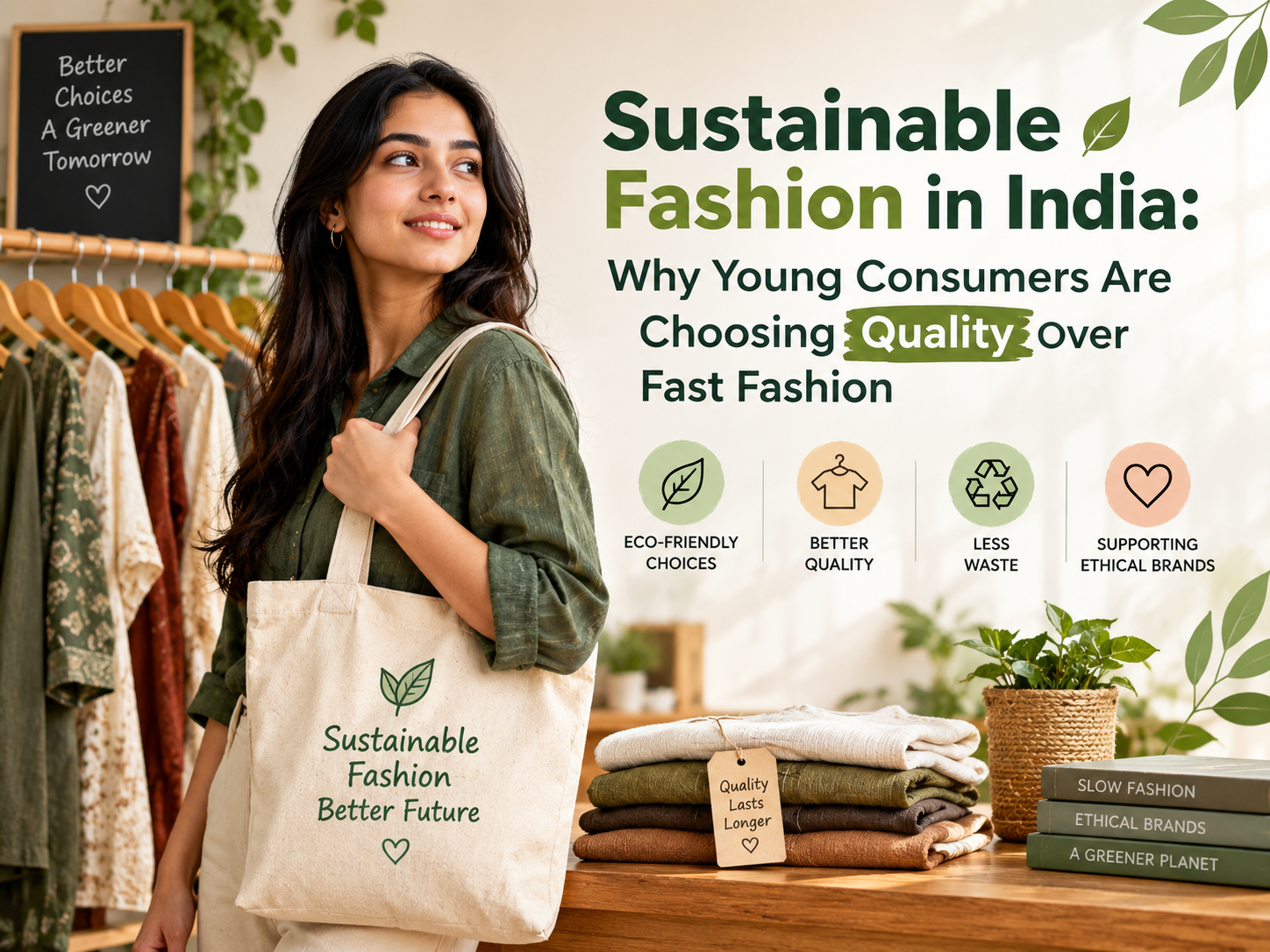
Sustainable Fashion in India: Why Young Consumers Are Choosing Quality Over Fast Fashion
Fashion has always been a way for people to express their personality, but the way we think about clothing is slowly changing. Earlier, buying new clothes every season and following the latest trends was considered exciting. Today, however, many young consumers are beginning to question how often they shop, where their clothes come from and how long those clothes will actually last.
This shift has brought Sustainable fashion in India into the spotlight. From choosing better-quality fabrics to supporting local designers and exploring second-hand clothing, young shoppers are becoming more conscious of their fashion decisions.
The growing interest is not simply about wearing environmentally friendly clothes. It is also about making thoughtful purchases, avoiding unnecessary spending and building a wardrobe that reflects personal style rather than temporary trends.
With social media influencing shopping habits and conversations around environmental responsibility becoming more visible, the Indian fashion industry is experiencing an interesting change. Let’s understand why quality is becoming more important than quantity and how young consumers are contributing to this movement.
What Is Sustainable Fashion?
Sustainable fashion refers to an approach to clothing that considers its environmental and social impact throughout its lifecycle. It includes how raw materials are produced, how garments are manufactured, how workers are treated, how clothes are transported and what happens to them after use.
The idea is to reduce unnecessary waste, encourage responsible production and make clothing that can be worn for longer.
For example, purchasing a well-made cotton shirt that remains in good condition for several years can be a more thoughtful decision than repeatedly buying inexpensive garments that quickly lose their shape.
Similarly, repairing old clothes, reusing fabrics, buying from responsible brands and choosing timeless designs are all ways of making fashion more conscious.
In India, this approach also connects with traditional practices such as repairing garments, reusing fabrics and passing clothes between family members. These habits existed long before sustainability became a popular fashion term.
Why Are Young Consumers Choosing Quality Over Fast Fashion?
The popularity of fast fashion has made trendy clothing more accessible than ever. New collections appear regularly, online stores offer attractive discounts and social media constantly introduces new styles.
However, some young shoppers are beginning to look beyond low prices and quick trends.
1. Growing Awareness About Environmental Impact
Clothing production requires natural resources, energy and water. Textile dyeing, manufacturing and transportation can also contribute to pollution and greenhouse gas emissions.
Many young consumers are becoming more aware of these issues through documentaries, online discussions and sustainability campaigns.
They are beginning to understand that buying more clothes than necessary can contribute to textile waste. As a result, some shoppers are choosing fewer garments that offer better durability and versatility.
This growing awareness is one of the reasons Sustainable fashion in India is attracting attention among environmentally conscious consumers.
2. Better Quality Offers Long-Term Value
Affordable clothing may appear economical at first, but frequently replacing poorly made garments can become expensive over time.
Young consumers are increasingly considering stitching, fabric quality, colour retention and overall comfort before making a purchase.
A durable pair of jeans, a well-fitted jacket or a classic kurta can remain useful for several years when properly maintained.
Rather than buying something simply because it is inexpensive, shoppers are learning to consider how often they will wear it and whether it deserves a place in their wardrobe.
3. Social Media Is Changing Fashion Conversations
Instagram, YouTube and fashion blogs have made it easier to discover independent designers, thrift stores and clothing labels that focus on responsible production.
Fashion influencers are also introducing concepts such as capsule wardrobes, outfit repeating, clothing swaps and slow fashion.
Interestingly, repeating outfits is gradually becoming less of a concern for many style-conscious individuals. Instead of constantly purchasing new clothes for photographs or social occasions, people are experimenting with different ways to style the same pieces.
This shift is helping make conscious fashion more relatable to younger audiences.
4. Interest in Indian Handloom and Traditional Clothing
Another interesting development is the renewed appreciation for Indian textiles and traditional craftsmanship.
Handloom sarees, khadi fabrics, block-printed clothing, cotton kurtas and naturally dyed garments are receiving attention from shoppers who appreciate their individuality and craftsmanship.
India has a rich textile heritage, with different regions known for distinctive weaving and printing techniques. Supporting artisans and small-scale textile businesses can help preserve these traditional skills while giving consumers access to clothing with a story behind it.
For many shoppers, choosing traditional fabrics is not about giving up modern fashion. It is about combining contemporary designs with the craftsmanship that makes Indian clothing unique.
5. A More Thoughtful Approach to Spending
Young consumers are also becoming more selective about where their money goes. With rising living expenses and other financial priorities, purchasing clothes simply because they are trending may not always make sense.
A wardrobe filled with clothes that are rarely worn can feel wasteful, regardless of how affordable each item was.
Some shoppers now prefer investing in versatile pieces that can be styled for different occasions. A neutral shirt, comfortable trousers or a classic ethnic outfit can offer more value than several trend-driven purchases.
This practical approach is helping make conscious shopping a lifestyle choice rather than just an environmental statement.
Sustainable Fashion Really Becoming Popular Among Young Indians?
There is growing interest, but the change is not happening equally among all consumers.
A 2026 study of 147 young consumers aged 18–30 in Pune found that around 80% of respondents recognised the environmental and ethical importance of sustainable fashion. However, only 24% selected sustainability as a key factor influencing their purchase decisions. Price, comfort, style and brand familiarity continued to influence actual shopping choices.
journals.mriindia.com
This reveals an interesting reality. Many young people support the idea of responsible fashion, but choosing it consistently can be difficult.
A sustainable outfit may cost more than a mass-produced alternative. Some consumers may also struggle to find attractive designs, suitable sizes or easily accessible brands.
Therefore, the future of Sustainable fashion in India depends on making responsible clothing more affordable, fashionable and accessible.
The responsibility does not belong to consumers alone. Fashion brands, manufacturers and retailers also need to make better choices and communicate their practices honestly.
How Can Young Consumers Build a Sustainable Wardrobe?
Making your wardrobe more responsible does not require replacing every item you own. In fact, buying an entirely new wardrobe in the name of sustainability would defeat the purpose.
A few simple habits can make a meaningful difference.
Buy clothes you genuinely need: Before purchasing something, consider whether it will fit into your existing wardrobe and whether you will wear it regularly.
Choose durable fabrics: Pay attention to fabric quality, stitching, comfort and care requirements rather than focusing only on the appearance.
Repeat your outfits: There is nothing wrong with wearing the same clothes multiple times. Experiment with accessories, layering and different combinations.
Explore thrift shopping: Pre-owned clothing can give usable garments another life and reduce the need for new production.
Repair instead of replacing: A missing button, loose seam or minor tear does not mean a garment has become useless. Basic repairs can extend its life.
Support local artisans: Buying from independent designers, handloom producers and local businesses can help support traditional craftsmanship.
Read brand information: Look for clear details about fabric composition, sourcing, manufacturing and working conditions. Avoid relying entirely on vague labels such as green, natural or eco-friendly.
These small decisions can gradually change shopping habits without making fashion feel restrictive.
The Role of Indian Fashion Brands in Promoting Sustainability
Consumers can influence the market, but brands have an equally important role to play.
Fashion companies need to think about the complete journey of a garment, starting from the selection of raw materials to manufacturing, packaging, transportation and disposal.
Some important practices include using responsibly sourced materials, reducing production waste, improving working conditions and offering repair or recycling programmes.
Made-to-order clothing is another approach worth exploring. Instead of manufacturing large quantities that may remain unsold, brands can produce garments according to actual customer demand.
Transparency is equally important. Consumers should be able to understand what makes a product sustainable rather than having to trust attractive marketing claims.
For Sustainable fashion in India to grow beyond a niche market, responsible clothing must offer the same things shoppers expect from any fashion brand: attractive designs, comfortable fabrics, good quality and reasonable prices.
Brands that manage to combine these expectations have an opportunity to build stronger relationships with the next generation of consumers.
Challenges That Still Need Attention
Despite growing awareness, the transition towards responsible clothing is not always easy.
Higher Prices
Sustainable garments can sometimes be more expensive because of material costs, smaller production quantities and ethical manufacturing practices. For students and young professionals with limited budgets, paying extra for clothing may not be practical.
Limited Availability
Not every city has easy access to responsible fashion labels, thrift stores or specialised clothing options. Online shopping helps, but consumers still need reliable information about products.
Greenwashing by Fashion Brands
Some brands use sustainability-related words in their advertisements without providing enough evidence to support their claims. This makes it difficult for shoppers to distinguish genuine efforts from marketing strategies.
Changing Shopping Habits
Fast fashion has made frequent shopping feel normal. Breaking this habit requires a change in mindset. Consumers need to become comfortable with repeating outfits, repairing garments and avoiding unnecessary purchases.
Addressing these challenges will be essential for the long-term growth of Sustainable fashion in India.
How New Indian Statement Connects Fashion with Modern Lifestyle
Fashion is more than clothing. It reflects culture, identity, personal choices and the way society changes over time.
This is why conversations around conscious shopping, traditional craftsmanship and modern style deserve attention beyond the fashion industry.
New Indian Statement is an Indian lifestyle and culture magazine that explores subjects such as fashion and style, travel, beauty, wellness, literature, cinema, food and inspiring personalities.
The publication brings together stories and perspectives that reflect the interests of contemporary Indian readers. Its fashion and lifestyle coverage provides space for conversations about changing preferences, cultural influences and the evolving relationship between tradition and modern living.
The discussion around Sustainable fashion in India is particularly relevant to this changing lifestyle landscape. Young consumers are not simply following new clothing trends; they are also reconsidering how their purchases reflect their values and everyday priorities.
By exploring subjects connected to fashion, culture and personal expression, New Indian Statement gives readers an opportunity to discover fresh ideas and understand the lifestyle changes shaping modern India.
Readers interested in fashion, culture and contemporary lifestyle stories can explore the publication through its official website: New Indian Statement – Indian Lifestyle and Culture Magazine.
What Does the Future of Sustainable Fashion Look Like in India?
The future of fashion in India will likely involve a combination of traditional craftsmanship, modern technology and more responsible production methods.
Indian textile heritage provides a strong foundation for this change. Handloom weaving, natural fibres, regional prints and traditional embroidery can offer distinctive alternatives to mass-produced clothing.
At the same time, digital platforms are making it easier for independent designers and smaller businesses to reach customers across the country.
Second-hand shopping, clothing rentals, upcycling and garment recycling may also become more visible as consumers explore different ways to extend the life of clothing.
However, the biggest change will happen when responsible fashion becomes an everyday choice rather than something available only to people with larger budgets.
The future of Sustainable fashion in India will depend on whether brands can make quality, affordability and environmental responsibility work together.
Young consumers will continue to influence this transition through their shopping habits, but manufacturers and retailers must also take meaningful steps.
Fashion does not need to become less creative or exciting to become more responsible. It simply needs a more thoughtful approach to production and consumption.
Frequently Asked Questions (FAQs)
What is sustainable fashion in India?
It refers to clothing choices and production practices that aim to reduce environmental impact, minimise textile waste, support ethical manufacturing and encourage longer-lasting garments.
Why are young consumers moving away from fast fashion?
Many young shoppers are becoming more aware of textile waste, environmental pollution and clothing quality. They are increasingly interested in durable garments, responsible brands and more thoughtful shopping habits.
Is sustainable clothing more expensive than regular fashion?
It can be more expensive because of material selection, manufacturing processes and smaller production quantities. However, durable clothing may offer better long-term value because it does not need frequent replacement.
Which Indian fabrics are suitable for sustainable fashion?
Khadi, organic cotton, linen, handloom cotton and other responsibly sourced natural fibres are popular options. The environmental impact also depends on how these materials are cultivated, processed and manufactured.
How can students follow sustainable fashion on a limited budget?
Students can shop second-hand, reuse existing clothes, repair damaged garments, exchange outfits with friends and purchase versatile clothing during planned shopping trips.
What is the difference between slow fashion and fast fashion?
Fast fashion focuses on producing affordable clothing quickly to follow changing trends. Slow fashion emphasises thoughtful production, durability, quality and longer garment life.
How does thrift shopping support sustainable fashion?
Thrift shopping gives pre-owned garments another opportunity to be used. It can reduce demand for newly manufactured clothing and help minimise textile waste.
Can traditional Indian clothing be part of sustainable fashion?
Yes. Handloom garments, locally produced textiles and traditional clothing can support regional craftsmanship. Their overall sustainability depends on sourcing, production and garment longevity.
How can consumers identify genuinely sustainable fashion brands?
Consumers should look for transparent information about materials, manufacturing processes, sourcing, worker conditions and environmental initiatives. Specific evidence is more useful than general eco-friendly marketing claims.
What role does New Indian Statement play in promoting lifestyle awareness?
New Indian Statement covers fashion, culture, travel, wellness and other lifestyle subjects. Its editorial content gives readers an opportunity to explore modern trends, cultural influences and changing consumer interests.
Final Thoughts
Fashion should make people feel confident, comfortable and expressive. But that does not mean we need to purchase something new every time a trend changes.
The growing interest in Sustainable fashion in India reflects a gradual shift towards more thoughtful shopping. Young consumers are learning to appreciate good-quality clothing, traditional craftsmanship and versatile wardrobe choices.
There is still a long way to go. Affordable options, transparent manufacturing and wider availability will be important if responsible fashion is to reach more people.
The best place to start is with simple decisions: buy what you need, choose what lasts, take care of what you own and support businesses that value quality.
As New Indian Statement continues to explore fashion, culture and modern lifestyle conversations, the changing relationship between clothing and conscious living remains an interesting subject for today’s Indian readers.
Because good fashion is not always about having more clothes. Sometimes, it is about making better choices with the ones we already have.