How India’s Gen Z Is Combining Traditional Spirituality with Modern Lifestyle in 2026
Spirituality in India has always been closely connected to everyday life. From morning prayers and temple visits to yoga, meditation and traditional festivals, spiritual practices have been part of Indian culture for generations. However, the way younger Indians connect with spirituality is changing.
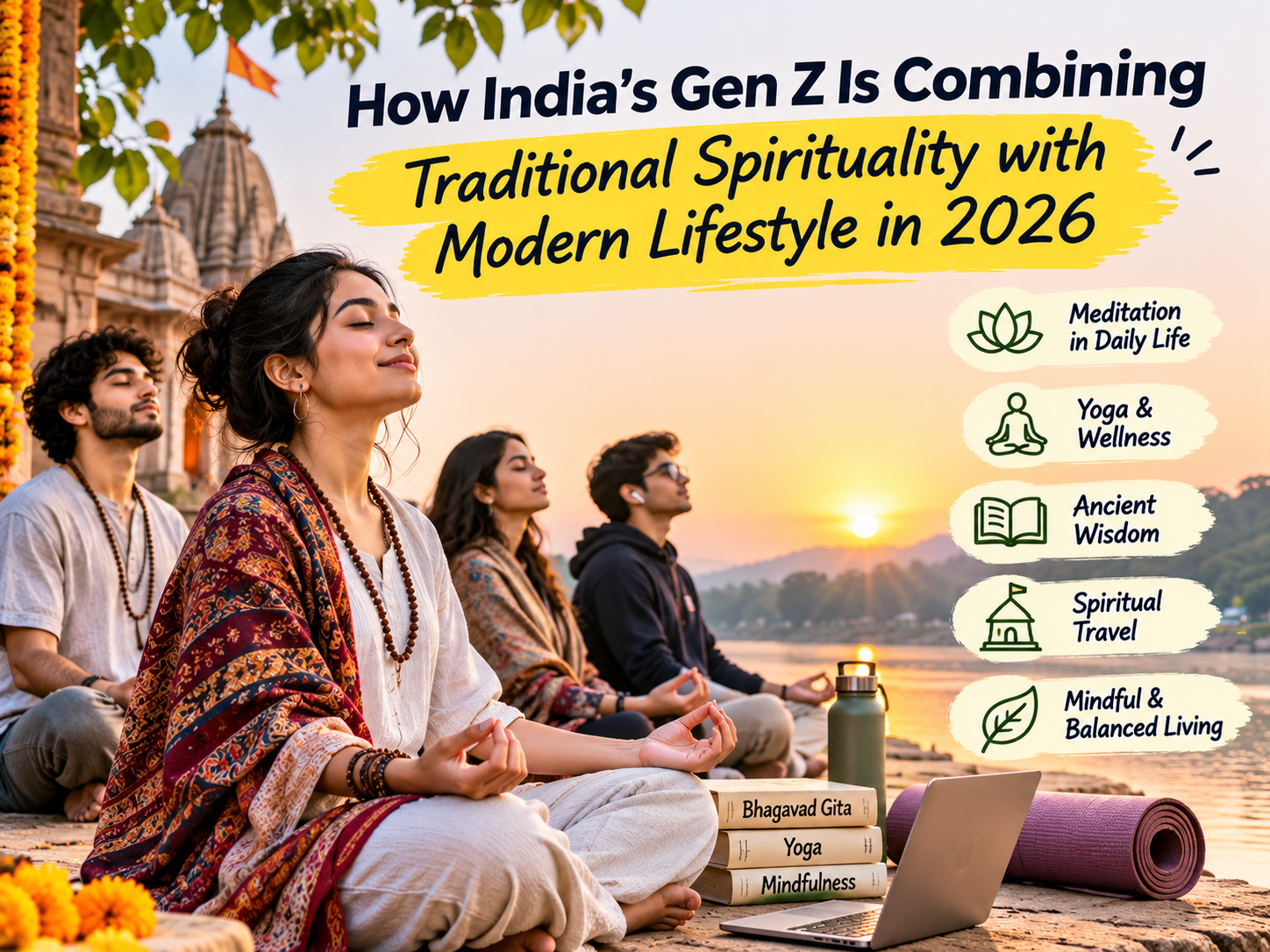
In 2026, many members of Gen Z are finding their own ways to balance traditional beliefs with modern lifestyles. Some begin their mornings with meditation before logging into work or attending college. Others visit temples, practise yoga, listen to spiritual podcasts or explore ancient Indian philosophies through digital platforms.
Interestingly, this generation is not necessarily following every traditional practice exactly as previous generations did. Instead, young people are choosing the beliefs and habits that make sense to them personally.
The growing interest in Modern spirituality in India reflects this shift. It brings together cultural traditions, personal wellbeing, self-awareness and the realities of contemporary life.
But what is encouraging young Indians to explore spirituality, and how are they making ancient practices relevant to their everyday routines?
Let’s understand this changing relationship between tradition and modern living.
1. Gen Z Is Exploring Spirituality in Its Own Way
For earlier generations, spirituality was often closely associated with family traditions, religious ceremonies and established cultural practices. Young Indians today are approaching the subject with a slightly different perspective.
They want to understand the meaning behind certain practices rather than simply following them because they have been part of family traditions.
For example, a young professional might start practising meditation to manage everyday stress. A college student may become interested in the Bhagavad Gita after discovering a discussion about its teachings online. Someone else might visit a temple because they find peace in the environment.
The reasons can be different, but the interest comes from a desire to understand oneself and develop a more meaningful lifestyle.
This does not necessarily mean that Gen Z is moving away from traditional religion. Many young people continue to respect family customs while exploring spirituality through personal experiences.
For them, Modern spirituality in India is becoming less about following a fixed routine and more about finding a personal connection with beliefs, values and everyday decisions.
2. Meditation Is Becoming Part of Everyday Routines
Meditation is one of the most recognised practices associated with Indian spiritual traditions. Although it has existed for centuries, its relevance is being rediscovered by younger generations.
Today, students and working professionals are exploring meditation as a way to create a little quiet time in their busy schedules.
Some prefer guided meditation through mobile applications, while others follow breathing exercises or practise mindfulness independently.
Even five to ten minutes of sitting quietly, focusing on breathing and allowing thoughts to settle can become a useful part of a daily routine.
For example, someone working from home might meditate before starting office work. A student preparing for competitive examinations may use breathing exercises before studying.
The attraction is simple: meditation does not require expensive equipment, a particular location or complicated arrangements.
It can be practised at home, in a garden or even during a quiet break at work.
As people become more interested in personal wellbeing, meditation is finding a place in modern Indian routines.
3. Ancient Indian Wisdom Is Finding New Audiences
The teachings of ancient Indian texts are also attracting attention among younger readers.
Books such as the Bhagavad Gita, Upanishads and other philosophical works explore subjects including duty, self-awareness, discipline, attachment and the meaning of life.
Earlier, many young people might have considered these subjects difficult or relevant mainly to religious discussions. Today, they are discovering these ideas through simplified books, podcasts, online discussions and contemporary interpretations.
For example, the Bhagavad Gita’s discussion of focusing on one’s actions rather than becoming overly attached to results can connect with the pressures of modern education and professional life.
Similarly, teachings about self-control and awareness can encourage people to reflect on their habits, reactions and priorities.
This renewed interest is not limited to reading religious texts. Young Indians are also exploring Indian philosophy through conversations, workshops and educational content.
The growing popularity of these discussions shows how traditional knowledge can remain relevant when people connect it with real-life experiences.
4. Yoga Is Becoming More Than a Fitness Activity
Yoga has become a familiar part of modern fitness culture, but its traditional meaning extends beyond physical exercise.
For many young Indians, yoga offers a combination of movement, breathing, concentration and self-awareness.
Some begin practising yoga to improve flexibility or physical fitness. Over time, they may also develop an interest in its breathing techniques and philosophical foundations.
Different styles of yoga are attracting different audiences. Hatha yoga, Vinyasa yoga, restorative yoga and traditional yoga practices provide options depending on individual interests and fitness levels.
Social media has also helped make yoga more accessible. Online classes and instructional videos allow beginners to explore basic practices from home.
However, yoga is not simply about performing difficult poses or sharing impressive photographs. Its deeper principles include balance, discipline and awareness.
This connection between physical wellness and traditional philosophy is another example of Modern spirituality in India becoming part of contemporary lifestyle choices.
5. Spirituality Is Becoming Part of Mental Wellbeing Conversations
Modern life offers many opportunities, but it also comes with its own challenges.
Academic pressure, career uncertainty, financial responsibilities, relationship concerns and constant digital exposure can make everyday life stressful.
Many young Indians are exploring mindfulness, meditation, prayer and reflective practices as ways to create moments of calm.
For some, visiting a religious place offers comfort. Others prefer journaling, spending time in nature or listening to spiritual music.
The important change is that spirituality is increasingly being discussed alongside emotional wellbeing and self-awareness.
It is worth remembering that spiritual practices are not replacements for professional mental healthcare when someone needs it. However, meaningful personal routines can complement other efforts to maintain wellbeing.
Young people are gradually becoming more comfortable discussing inner peace, emotional balance and personal values rather than focusing only on external achievements.
6. Temples and Spiritual Destinations Are Attracting Young Visitors
Temple visits and spiritual journeys continue to be important parts of Indian culture. However, younger travellers are increasingly exploring these destinations for different reasons.
Some visit famous pilgrimage locations with family, while others plan independent trips to experience the history, architecture and atmosphere of spiritual places.
Destinations such as Rishikesh, Varanasi, Haridwar, Amritsar and Tiruvannamalai attract visitors interested in spirituality, culture and heritage.
Rishikesh, for example, is known for yoga centres, meditation retreats and its connection with the Ganges. Varanasi offers a distinctive experience through its ghats, temples, traditional music and cultural history.
For many young visitors, these journeys are also opportunities to take a break from crowded city routines and experience a different environment.
Spiritual travel is therefore becoming an interesting combination of cultural exploration, personal reflection and tourism.
7. Social Media Is Changing How Spiritual Knowledge Is Shared
It may seem surprising that social media, often associated with distractions, is also helping young Indians discover spiritual ideas.
Instagram, YouTube and podcasts have created new ways for people to access discussions about meditation, Indian philosophy, yoga, mindfulness and traditional practices.
A short video explaining a philosophical idea can encourage someone to read an entire book. A podcast conversation about mindfulness might inspire a listener to try meditation.
Digital platforms also allow spiritual teachers, researchers and cultural educators to reach audiences beyond geographical boundaries.
However, not everything shared online is accurate. Spiritual content can sometimes be oversimplified, taken out of context or presented as guaranteed solutions to personal problems.
Young people should approach online spiritual advice thoughtfully, check reliable sources and understand the original context of traditional teachings.
Technology can introduce people to spiritual knowledge, but developing a deeper understanding requires curiosity and personal learning.
8. Traditional Festivals Are Finding New Meaning Among Gen Z
Indian festivals have always brought families and communities together. They represent religious beliefs, cultural traditions, regional identities and shared celebrations.
For Gen Z, festivals are also opportunities to reconnect with cultural roots.
Young people participate in Diwali celebrations, Navratri, Janmashtami, Ganesh Chaturthi, Baisakhi and other regional festivals while exploring their historical and spiritual significance.
Some are becoming more interested in traditional rituals, regional food, devotional music and cultural stories.
Others are choosing simpler and more environmentally conscious celebrations.
For example, celebrating Diwali with family, decorating the home and sharing meals can be meaningful without making the occasion unnecessarily expensive.
Similarly, participating in Navratri through traditional music, dance and community gatherings allows younger generations to experience cultural practices in a way that feels natural.
This renewed interest shows that tradition does not have to remain unchanged to stay meaningful.
9. Spirituality Is Influencing Everyday Lifestyle Choices
Spirituality is not limited to religious places, meditation sessions or special occasions. It can also influence small decisions made throughout the day.
Some young people are becoming more conscious about how they speak to others, how they manage their time and how they respond to difficult situations.
Others are exploring vegetarian food, mindful consumption, gratitude practices and simpler lifestyles as part of their personal values.
For example, someone might begin the day by expressing gratitude, avoid unnecessary arguments online or spend some time helping others.
These activities may appear ordinary, but they can reflect a deeper interest in living with awareness and responsibility.
There is also a growing conversation around sustainability and respecting nature, ideas that connect with several traditional Indian philosophies.
The purpose is not to make every lifestyle decision a spiritual activity. Rather, it is about allowing personal values to influence everyday behaviour.
10. Balancing Modern Ambitions with Traditional Values
One of the most interesting aspects of this generation is its ability to combine different worlds.
Young Indians are building careers in technology, business, marketing, entertainment and entrepreneurship while remaining interested in cultural traditions and spiritual learning.
A person might spend the day attending meetings, managing projects and working towards professional goals, then end the evening with prayer, meditation or reading.
There is no necessary conflict between modern ambition and traditional values.
In fact, some people find that spiritual ideas encourage them to think more carefully about success, relationships, responsibilities and personal priorities.
For instance, the idea of balancing ambition with contentment can help someone appreciate progress without constantly feeling dissatisfied.
This is what makes Modern spirituality in India an interesting lifestyle development. It allows individuals to remain connected to cultural traditions while creating their own understanding of modern life.
11. The Future of Spirituality Among India’s Younger Generation
The relationship between Indian youth and spirituality is likely to continue evolving.
Digital platforms will make traditional knowledge easier to access, while yoga studios, meditation centres, cultural organisations and spiritual retreats will continue offering different ways to explore these practices.
At the same time, younger people will probably continue questioning outdated assumptions and seeking meaningful explanations for the traditions they follow.
The future may not look exactly like the spiritual routines of previous generations, but that does not mean cultural connections are disappearing.
Instead, traditional knowledge is finding new audiences through books, conversations, technology, travel and everyday lifestyle choices.
The challenge will be maintaining authenticity while avoiding the commercialisation and oversimplification of spiritual practices.
12. New Indian Statement: Exploring the Connection Between Tradition and Modern India
At New Indian Statement, understanding the changing lifestyle, interests and values of modern Indians is an important part of exploring contemporary society.
The growing interest in spirituality among Gen Z represents an interesting cultural shift. It shows how younger generations are finding new ways to connect with traditions while adapting them to present-day lifestyles.
From meditation and yoga to temple visits, traditional festivals and philosophical discussions, these practices reveal that India’s cultural identity continues to influence everyday choices.
New Indian Statement believes that conversations about modern India should also recognise the importance of its cultural roots.
The interest in Modern spirituality in India is not simply about returning to old traditions. It is about understanding their meaning and discovering how they can contribute to a more thoughtful and balanced lifestyle today.
By highlighting changing perspectives, cultural interests and emerging lifestyle choices, New Indian Statement aims to bring readers closer to the ideas shaping contemporary Indian society.
Conclusion
India’s Gen Z is finding its own balance between traditional spirituality and modern living. Young people are exploring meditation, yoga, ancient philosophy, temple visits and cultural festivals while managing careers, education and digital lifestyles.
The change is not about choosing between tradition and modernity. It is about understanding how both can exist together.
As Modern spirituality in India continues to attract interest, younger generations are showing that ancient ideas can still have a place in contemporary life.
Ultimately, spirituality does not have to involve major lifestyle changes or complicated routines. Sometimes, it begins with a few minutes of meditation, a meaningful conversation, a visit to a temple or simply taking time to understand oneself.
And perhaps that is what makes this generation’s approach to spirituality different: they are not just inheriting traditions; they are finding their own meaning in them.
Frequently Asked Questions (FAQs)
1. What is modern spirituality in India?
Modern spirituality in India refers to the way people combine traditional Indian spiritual practices with contemporary lifestyles. It includes meditation, yoga, mindfulness, philosophical learning and cultural traditions.
2. Why is Gen Z becoming interested in spirituality?
Many young people are exploring spirituality to understand themselves, develop personal values, find meaning in everyday experiences and create a better balance between professional responsibilities and personal life.
3. How is Gen Z practising traditional spirituality?
Young Indians are exploring meditation, yoga, prayer, temple visits, reading Indian philosophical texts, attending spiritual retreats and participating in traditional festivals.
4. Is spirituality different from religion?
Yes. Religion generally involves organised beliefs, traditions, rituals and communities. Spirituality can be a more personal journey involving self-awareness, purpose, inner growth and a connection with something greater.
5. Why are young Indians interested in the Bhagavad Gita?
The Bhagavad Gita explores subjects such as duty, discipline, self-awareness, decision-making and attachment to outcomes. These ideas can connect with challenges faced in modern personal and professional life.
6. Can meditation become part of a busy modern lifestyle?
Yes. People can begin with five to ten minutes of meditation or breathing exercises each day. It does not require a special location or expensive equipment.
7. Which Indian destinations are popular for spiritual travel?
Rishikesh, Varanasi, Haridwar, Amritsar, Bodh Gaya and Tiruvannamalai are among India’s well-known destinations for spiritual and cultural experiences.
8. How is social media influencing spirituality among young Indians?
Social media helps young people discover spiritual books, meditation techniques, yoga practices and discussions about Indian philosophy. However, online information should be checked for accuracy and context.
9. Can modern lifestyles and traditional Indian values coexist?
Absolutely. People can pursue modern careers, use technology and follow contemporary lifestyles while respecting cultural traditions, practising mindfulness and maintaining personal values.
10. What is New Indian Statement’s perspective on modern spirituality?
New Indian Statement explores how traditional Indian culture, modern lifestyles and changing social interests influence one another. Its coverage of spirituality highlights how younger generations are finding new meaning in India’s cultural heritage.