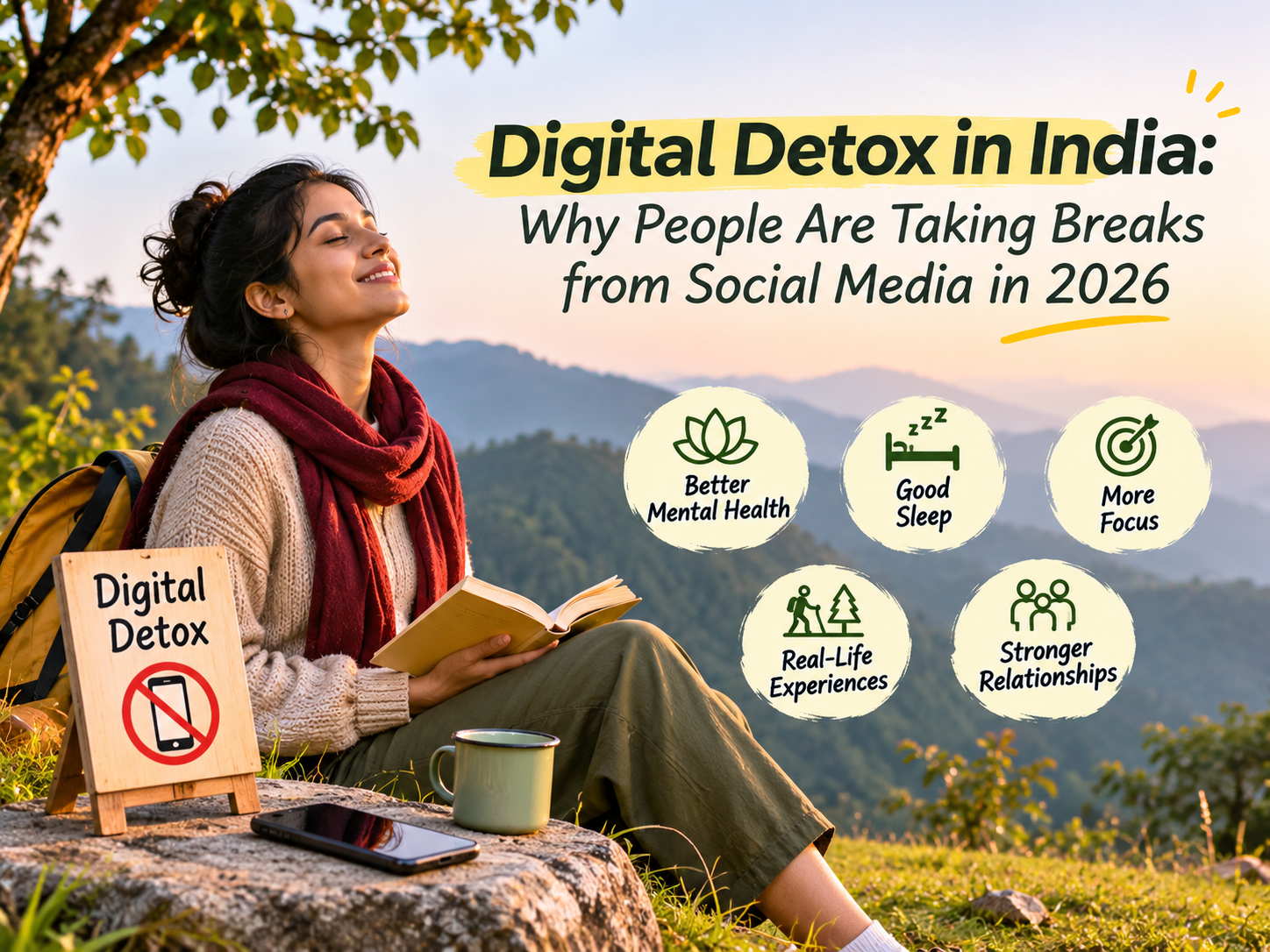
Digital Detox in India: Why People Are Taking Breaks from Social Media in 2026
Imagine waking up in the morning and reaching for your phone before even getting out of bed. You check WhatsApp, scroll through Instagram, watch a few reels and then open YouTube. Before you realise it, 30 minutes have passed, and your day has not even started.
For millions of people, this has become a familiar part of everyday life. Smartphones have made communication, entertainment and work easier, but they have also made it difficult to disconnect. From checking notifications during meals to scrolling through social media before sleeping, digital screens have gradually become a constant part of our routines.
However, something interesting is happening in 2026. More people are becoming conscious of how much time they spend online. Young professionals, students, content creators and even working parents are exploring ways to reduce screen time and spend more time away from their devices.
This growing interest in Digital detox in India reflects a wider lifestyle shift. People are beginning to realise that being available online all the time does not necessarily mean being more productive, connected or happy.
But why are people taking breaks from social media, and what makes digital detox important in today’s world? Let’s explore.
1. Why Are People Becoming Tired of Social Media?
Social media was originally designed to help people stay connected, share experiences and discover interesting content. Today, however, many users feel that opening an app has become an automatic habit rather than a conscious decision.
One minute, someone might be checking a message from a friend. A few minutes later, they are watching random videos, reading comments or scrolling through content without any particular purpose.
The constant availability of new content makes it difficult to stop.
Another reason is the pressure to stay updated. People often feel that they might miss something important if they do not check their social media accounts regularly.
Over time, this behaviour can become mentally exhausting.
Many users are now asking themselves whether spending several hours online every day is actually adding value to their lives. This question is encouraging people to reconsider their relationship with technology.
2. Social Media Comparison Is Affecting Everyday Happiness
One of the biggest challenges of social media is the tendency to compare our everyday lives with other people’s carefully selected moments.
Instagram and other platforms are filled with holiday photographs, expensive purchases, fitness transformations, successful careers and seemingly perfect relationships.
While these posts can be inspiring, constantly watching them can sometimes create unrealistic expectations.
A person working a regular nine-to-six job might compare their routine with someone travelling across the world. A student might feel unsuccessful after seeing another person’s academic achievements. Someone might even feel dissatisfied with their appearance after watching edited photographs and fitness videos.
The problem is that social media rarely shows the complete picture.
People usually share their happiest moments, not their everyday struggles, financial difficulties or personal challenges.
Taking a break can help individuals focus on their own progress rather than measuring their lives against what they see online.
This is one reason why Digital detox in India is becoming an interesting conversation around mental wellbeing and modern lifestyle choices.
3. Constant Notifications Are Reducing Focus
Have you ever started an important task and stopped working because your phone displayed a notification?
It might be a WhatsApp message, an Instagram update, a shopping offer or an email. Even when the notification is not important, the temptation to check it can interrupt concentration.
For students, this can affect study sessions. For professionals, frequent interruptions can make it difficult to complete tasks efficiently. Even during family time, phones can become an unnecessary distraction.
The habit of switching between multiple apps also makes it harder to remain focused on one activity.
This does not mean smartphones are responsible for every productivity problem. However, uncontrolled notifications and frequent checking can make daily routines more fragmented.
Reducing unnecessary alerts, keeping phones away while working and creating specific times for social media can help people regain control of their attention.
4. People Want Better Sleep and Healthier Routines
Another important reason people are reducing their screen time is the effect of late-night phone usage on their daily routines.
Many people intend to watch one short video before sleeping but end up scrolling for another hour. Bright screens, stimulating content and irregular bedtime habits can make it harder to maintain a consistent sleep schedule.
Using a smartphone immediately after waking up can also affect how people begin their mornings.
Instead of enjoying breakfast, exercising or planning the day, they may become occupied with messages and updates.
A healthier routine does not necessarily require giving up technology completely. Simple changes can make a difference.
For example, people can avoid using their phones during the first 30 minutes after waking up, keep devices away from their beds and establish a fixed time to stop scrolling at night.
The idea behind Digital detox in India is not to reject technology but to create healthier boundaries around its use.
5. Young Indians Are Exploring Life Beyond Their Screens
Young people are among the most active users of social media, but many are also becoming more conscious of how digital platforms influence their everyday lives.
Students are trying to improve their concentration, young professionals want more personal time after work, and content creators sometimes need breaks from constantly producing and consuming online content.
Some are replacing their usual scrolling habits with activities such as reading books, exercising, learning new skills, cooking, travelling and spending time with friends.
Even simple activities can feel refreshing when they are done without repeatedly checking a phone.
For example, going for an evening walk without headphones or notifications can allow someone to notice their surroundings and enjoy a little quiet time.
Similarly, having dinner with family without keeping a phone on the table can make conversations more meaningful.
These small lifestyle changes show that young Indians are increasingly interested in finding a balance between their online and offline lives.
6. What Does a Digital Detox Actually Mean?
A digital detox refers to consciously reducing the use of digital devices and online platforms for a specific period.
It does not always mean switching off every electronic device or deleting all social media accounts.
For some people, it might involve avoiding Instagram for a weekend. Others may decide to stop checking their phones during meals, reduce unnecessary screen time or spend one evening every week without social media.
There is no single approach that works for everyone.
A student preparing for examinations might need to reduce entertainment-related screen time while continuing to use educational applications. A working professional might need to remain available on email but can limit personal social media usage.
The important thing is to identify which digital habits are becoming unnecessary or disruptive.
A practical digital detox should make everyday life more comfortable, not create additional pressure.
7. Simple Ways to Start a Digital Detox in 2026
Starting a new routine can feel difficult, especially when checking the phone has become an automatic habit.
The best approach is to begin with small changes rather than making unrealistic promises.
Here are some practical ways to reduce unnecessary screen time.
Set a daily social media limit: Decide how much time you want to spend on entertainment and social networking applications. Use your phone’s built-in screen-time settings to monitor your usage.
Avoid checking your phone immediately after waking up: Give yourself some time to complete your morning routine before opening social media.
Create phone-free meal times: Keep devices away while eating breakfast, lunch or dinner. Use that time to talk with family or simply enjoy your food.
Turn off unnecessary notifications: Notifications from shopping applications, games and social media platforms do not always require immediate attention.
Spend more time outdoors: Walking, cycling, gardening and outdoor activities offer a natural alternative to spending free time scrolling.
Bring back offline hobbies: Reading, painting, dancing, cooking and playing sports can make your free time more enjoyable.
Take occasional social media breaks: Try spending one day without entertainment-based social media and observe how you feel.
The purpose of Digital detox in India is to encourage realistic changes that people can maintain over time.
8. Travelling and Nature Are Becoming Alternatives to Screen Time
For many people, travelling offers an opportunity to disconnect from their usual routines.
A weekend in the mountains, a quiet stay near a river or a visit to a peaceful village can provide a refreshing change from everyday screen exposure.
Instead of spending the entire trip taking photographs and uploading stories, travellers can focus on enjoying the actual experience.
They can watch a sunset, explore local markets, try regional food or simply sit outdoors without feeling the need to check their phones.
Nature-based activities such as trekking, camping, cycling and walking can also encourage people to spend more time away from digital devices.
However, digital detox does not mean avoiding technology when it is needed. Navigation, emergency communication and travel bookings remain useful.
The goal is to make technology a tool that supports the experience instead of allowing it to dominate every moment.
9. The Challenges of Staying Away from Social Media
Although taking a break sounds simple, maintaining it can be challenging.
Many people depend on smartphones for professional communication, online banking, education, shopping and daily planning. Completely avoiding digital devices may not be practical.
There is also the fear of missing out, commonly known as FOMO. People may worry about missing important messages, social events or updates from friends.
Another challenge is boredom. When someone is used to checking their phone whenever they have a free moment, spending time without a screen can initially feel uncomfortable.
This is why a gradual approach is more sustainable.
Instead of deleting every application, users can begin by removing unnecessary notifications, setting app limits and choosing specific periods when their phones remain out of reach.
The idea is not to create another strict lifestyle rule. It is to develop a healthier relationship with technology.
10. How Digital Detox Is Changing Modern Indian Lifestyle
The growing interest in Digital detox in India reflects a broader change in how people think about productivity, relationships and personal wellbeing.
Earlier, being constantly connected was often seen as a sign of being active and informed. Today, some people are beginning to value uninterrupted time, personal boundaries and meaningful offline experiences just as much.
Families are trying phone-free dinners. Friends are planning outings where everyone spends less time taking pictures. Professionals are setting boundaries between working hours and personal time.
Even workplaces are increasingly discussing digital wellbeing, healthy communication habits and the importance of taking breaks from screens.
These changes may seem small, but they can influence how people organise their everyday lives.
Technology will continue to be an important part of modern India. The challenge is learning how to use it without allowing it to control every available moment.
11. New Indian Statement: Understanding the Shift Towards Mindful Living
At New Indian Statement, exploring changing lifestyles, social habits and emerging interests is an important part of understanding modern India.
The growing conversation around digital wellbeing is particularly relevant because it reflects how people are reconsidering their priorities.
From young professionals reducing social media usage to families encouraging phone-free activities, these changes reveal a growing interest in more balanced ways of living.
New Indian Statement believes that modern lifestyle conversations should go beyond trending topics. They should also explore why people are changing their habits and how these changes influence everyday experiences.
The idea of taking a break from social media is not about considering technology harmful or rejecting the digital world. It is about recognising that personal time, real conversations and offline experiences deserve attention too.
As Digital detox in India becomes a more familiar lifestyle discussion, New Indian Statement aims to highlight the changing choices, interests and perspectives shaping everyday Indian life.
Ultimately, a healthier lifestyle does not require abandoning smartphones. Sometimes, it simply means knowing when to put them down.
Conclusion
Smartphones and social media have become essential parts of modern life, but constant connectivity is not always necessary.
In 2026, more people are thinking about how they spend their time online and whether their digital habits are supporting their personal goals.
Taking a break from social media, enjoying outdoor activities, spending time with family and developing offline hobbies can help create a more balanced routine.
Digital detox in India is ultimately about making conscious choices rather than following another lifestyle trend.
You do not need to delete every application or stop using your smartphone completely. Start with one phone-free meal, one evening without scrolling or a morning spent away from notifications.
Sometimes, the best way to reconnect with life is to disconnect from your screen for a little while.
Frequently Asked Questions (FAQs)
1. What is a digital detox?
A digital detox is the practice of reducing smartphone, social media and other digital device usage for a specific period. It helps people develop healthier technology habits and spend more time on offline activities.
2. Why are people taking social media breaks in 2026?
People are taking breaks to reduce unnecessary screen time, improve concentration, manage online distractions, maintain healthier routines and spend more time on personal interests and relationships.
3. How can I start a digital detox in India?
Start by setting daily app limits, switching off unnecessary notifications, avoiding phones during meals and creating specific screen-free hours. Gradually increase the time you spend away from social media.
4. Does a digital detox mean deleting social media?
No. A digital detox does not require permanently deleting social media accounts. It simply involves using digital platforms more consciously and reducing unnecessary screen time.
5. How long should a digital detox last?
There is no fixed duration. Some people prefer a few hours every day, while others take a weekend break or follow a weekly phone-free routine. The right duration depends on individual needs and responsibilities.
6. Can reducing screen time improve sleep?
Reducing late-night screen usage can support healthier bedtime habits. Avoiding stimulating content before sleep and maintaining a consistent sleeping schedule may also help improve sleep quality.
7. What are the best activities during a social media break?
Reading, walking, exercising, cooking, travelling, gardening, painting, dancing and spending time with friends or family are useful alternatives to excessive social media scrolling.
8. Is digital detox suitable for working professionals?
Yes. Working professionals can reduce personal social media usage while continuing to use essential work-related applications. Setting boundaries outside working hours can help create a healthier work-life routine.
9. What is the difference between digital detox and digital minimalism?
Digital detox usually refers to taking a temporary break or reducing screen usage. Digital minimalism is a longer-term approach that focuses on using only the digital tools that genuinely add value to everyday life.
10. How does New Indian Statement cover digital lifestyle trends?
New Indian Statement explores changing Indian lifestyles, modern habits and emerging social trends, helping readers understand how technology, personal choices and everyday experiences are shaping modern India.