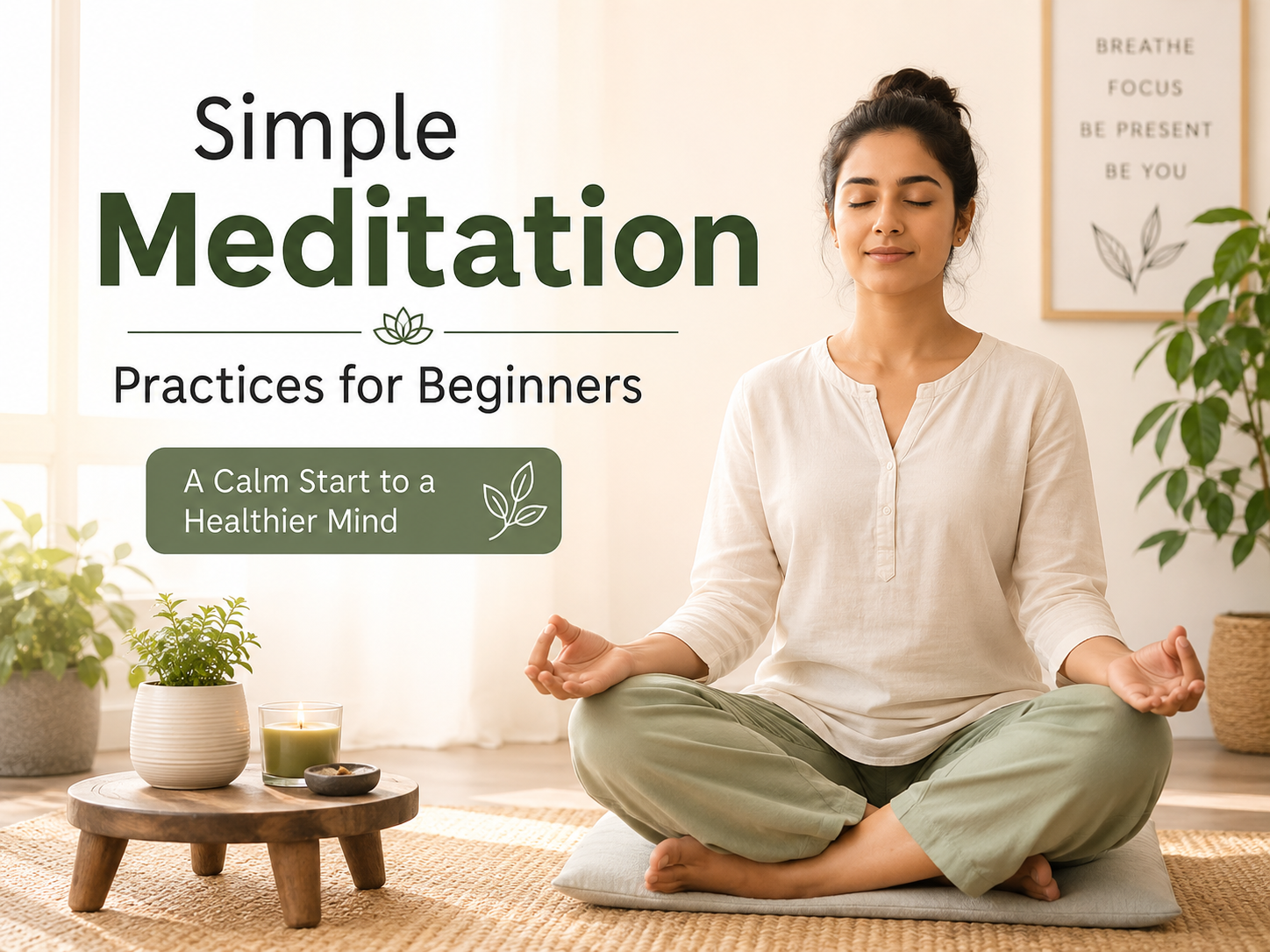
Simple Meditation Practices for Beginners: A Calm Start to a Healthier Mind
Life can feel busy even when nothing particularly stressful is happening. There are messages to answer, work to finish, responsibilities at home, and countless thoughts running through the mind. In the middle of all this, finding a few quiet minutes can make a surprising difference.
Meditation is one simple way to create that pause.
You do not need a special room, expensive equipment, or years of experience to begin. A comfortable place and a few minutes of your time are enough. For people who have never meditated before, starting with simple techniques can make the practice feel natural rather than difficult.
This guide to meditation for beginners covers easy practices that can be included in a daily routine, even if you have only five or ten minutes available.
What Is Meditation?
Meditation is a practice of paying attention to the present moment. Instead of allowing the mind to jump constantly between the past, future, worries, plans, and distractions, meditation encourages you to notice what is happening right now.
This can involve focusing on your breathing, observing your thoughts, listening to sounds around you, or paying attention to physical sensations.
An important thing to understand is that meditation does not mean having a completely empty mind. Thoughts will appear. That is normal. The goal is not to fight them but to notice them and gently bring your attention back to your chosen focus.
With regular practice, this process can become easier.
Why Should Beginners Try Meditation?
Meditation is often associated with relaxation, but its benefits can go beyond simply feeling calm for a few minutes.
A regular practice may help you become more aware of your thoughts and emotional reactions. It can also encourage better focus and give you a healthy way to pause during a stressful day.
Some people meditate before starting work, while others prefer the evening when they want to slow down. There is no single correct time.
The biggest advantage for a beginner is that meditation can be adapted to your lifestyle. You can practise for five minutes or twenty minutes. You can sit on a chair, on the floor, or even practise while walking.
Consistency matters more than making each session long.
1. Start With Simple Breathing Meditation
Breathing meditation is one of the easiest ways to begin.
Find a comfortable position and allow your shoulders to relax. You can close your eyes or keep them slightly open. Take a natural breath and notice how it feels as you inhale and exhale.
Do not try to control your breathing too much.
Simply notice the movement of your chest or abdomen. Feel the air entering and leaving your nose. If your attention moves to another thought, gently notice it and return to your breath.
Start with five minutes.
It may seem almost too simple, but that is exactly why breathing meditation works well for people starting out.
2. Try a Body Scan
A body scan is another useful practice when your mind feels busy.
Sit or lie down comfortably and bring your attention to different parts of your body. Start with your feet and slowly move your attention upward.
Notice whether you feel warmth, tension, heaviness, lightness, or other sensations. You do not have to change anything. Just observe.
Move from your feet to your legs, stomach, chest, shoulders, arms, neck, and face.
The exercise can help you become more aware of physical tension that you may not notice during a busy day. It can also provide a natural way to slow down before bedtime.
3. Practise Mindful Walking
Meditation does not always require sitting still.
Mindful walking is particularly helpful for people who find traditional sitting meditation difficult. Choose a quiet place where you can walk comfortably.
Walk slowly and pay attention to each step. Notice the movement of your feet and legs. Feel the ground beneath your feet. Pay attention to your surroundings without becoming caught up in every thought.
If your mind wanders, simply return your attention to walking.
Even a five-minute walk can become an opportunity to practise mindfulness.
4. Use a Short Guided Meditation
For many people, silence can feel uncomfortable when they first begin. A guided meditation can make the process easier.
A guide can tell you where to place your attention, when to breathe naturally, and how to respond when your thoughts wander.
Choose a short session rather than immediately committing to a long meditation. Five to ten minutes is enough when you are developing the habit.
Over time, you may find that you need guidance less often and can comfortably meditate on your own.
5. Try a Gratitude Meditation
Meditation can also be combined with gratitude.
Sit quietly and think of three things you genuinely appreciate. They do not need to be major achievements or life-changing events.
It could be a supportive friend, a peaceful morning, a good meal, your health, a comfortable home, or simply having a few quiet minutes for yourself.
Spend a little time noticing how each thought makes you feel.
Gratitude meditation can be especially useful when your attention has become focused mainly on problems and responsibilities.
6. Practise Loving-Kindness Meditation
Loving-kindness meditation focuses on developing feelings of kindness and goodwill toward yourself and others.
Begin by sitting comfortably. Take a few natural breaths and silently repeat simple wishes such as:
“May I be peaceful.”
“May I be healthy.”
“May I be happy.”
After a few minutes, extend the same wishes toward someone you care about. You can gradually include other people as well.
This practice is not about forcing yourself to feel a particular emotion. It is simply an opportunity to cultivate a more compassionate attitude.
7. Keep Your First Sessions Short
One of the most common mistakes beginners make is trying to do too much too quickly.
If you have never meditated before, sitting for thirty minutes may feel frustrating. You may become restless, distracted, or disappointed when your mind refuses to cooperate.
Instead, begin with five minutes.
Once five minutes feels comfortable, increase the time to ten minutes. Later, you can decide whether longer sessions suit you.
The purpose is to create a sustainable habit rather than win a competition against the clock.
What Should You Do When Your Mind Wanders?
This is probably the biggest question people have when starting meditation.
The answer is simple: let it wander and then come back.
Your mind may suddenly remind you about an email, a conversation from yesterday, something you need to buy, or something you need to do tomorrow.
Instead of getting annoyed, notice the thought.
You might silently say, “thinking,” and return your attention to your breathing.
Every time you notice that your mind has wandered and bring it back, you are practising. That moment is not a failure. It is actually an important part of meditation.
Creating a Simple Daily Meditation Routine
The easiest way to make meditation part of your lifestyle is to connect it with an existing routine.
You could meditate after waking up, before breakfast, after returning from work, or before going to bed.
Choose one time that you can realistically maintain.
A simple weekly routine could look like this:
Monday to Wednesday: 5-minute breathing meditation
Thursday: 5-minute body scan
Friday: 5-minute mindful walking
Saturday: 10-minute guided meditation
Sunday: 5–10 minutes of gratitude meditation
You do not have to follow this exact schedule. The idea is simply to experiment and discover what feels comfortable.
Creating the Right Environment
You do not need a perfect meditation space.
However, a few small changes can make your practice easier. Choose a place where you are unlikely to be interrupted. Keep your phone away or switch off unnecessary notifications.
Wear comfortable clothing and sit in a position that allows you to relax without becoming uncomfortable.
Some people prefer soft lighting, while others enjoy sitting near a window. The environment is a personal choice.
Remember that the goal is to practise meditation, not to create a picture-perfect meditation room.
Common Mistakes Beginners Should Avoid
When starting meditation for beginners, it is easy to develop unrealistic expectations.
You may expect to feel peaceful after every session. That will not always happen.
Some days you may feel relaxed. Other days your mind may seem unusually active. Sometimes you may even feel bored.
All of this is normal.
Avoid judging yourself based on whether a session felt “good” or “bad.” Instead, focus on showing up and practising.
Another common mistake is believing that meditation requires a particular posture. Comfort and stability are more important than copying a specific pose.
How Long Does It Take to Notice a Difference?
There is no universal timeline.
Some people notice that they feel calmer after a single session, while others need consistent practice before they notice meaningful changes.
Rather than looking for immediate results, think of meditation as a skill.
Just as physical fitness develops through regular exercise, mindfulness can become easier through repeated practice.
Five minutes every day may be more useful for building a habit than one long session once a week.
About New Indian Statement
New Indian Statement is a platform focused on sharing informative and engaging content across topics that are relevant to everyday life. From lifestyle and wellness to relationships, personal development, and other useful subjects, its content aims to provide readers with practical information in an accessible format.
Articles such as this one are designed to make everyday wellness practices easier to understand. Meditation does not have to be complicated or reserved for experienced practitioners. With simple guidance and a realistic routine, anyone can explore the practice at their own pace.
Readers can use these ideas as a starting point and gradually discover the meditation style and routine that works best for them.
Final Thoughts
Starting meditation does not require changing your entire lifestyle. Sometimes, all you need is a few quiet minutes and the willingness to slow down.
Begin with your breathing. Notice your thoughts without judging them. Try mindful walking when sitting feels difficult. Experiment with gratitude or a guided session when you want something different.
Most importantly, give yourself time.
The purpose of meditation for beginners is not to become perfect at sitting quietly. It is about learning to pay attention, creating moments of calm, and becoming more aware of what is happening within and around you.
Start with five minutes today. Keep it simple, stay consistent, and allow the practice to develop naturally.
Frequently Asked Questions
1. How long should a beginner meditate?
Five to ten minutes is a good starting point. Once you become comfortable, you can gradually increase the duration if you wish.
2. Can I meditate while sitting on a chair?
Yes. You do not need to sit on the floor. A comfortable chair can work perfectly well as long as you can sit comfortably and stay reasonably alert.
3. What if I cannot stop thinking during meditation?
You do not need to stop thinking. Thoughts are normal. Notice when your attention wanders and gently bring it back to your breathing or another chosen focus.
4. Is meditation better in the morning or at night?
Both can work. Morning meditation may help you begin the day calmly, while evening meditation can help you slow down. Choose the time you are most likely to maintain consistently.
5. Do I need special equipment for meditation?
No. A quiet space and a comfortable place to sit are usually enough. A cushion or meditation mat can be useful, but neither is essential.
6. Can beginners meditate every day?
Yes. A short daily practice can be a simple way to develop consistency. Even a few minutes can be used as a starting point.
7. Is meditation suitable for everyone?
Meditation is generally a low-risk wellness practice, but experiences can vary. If meditation causes significant distress or discomfort, stop the practice and consider speaking with a qualified professional.