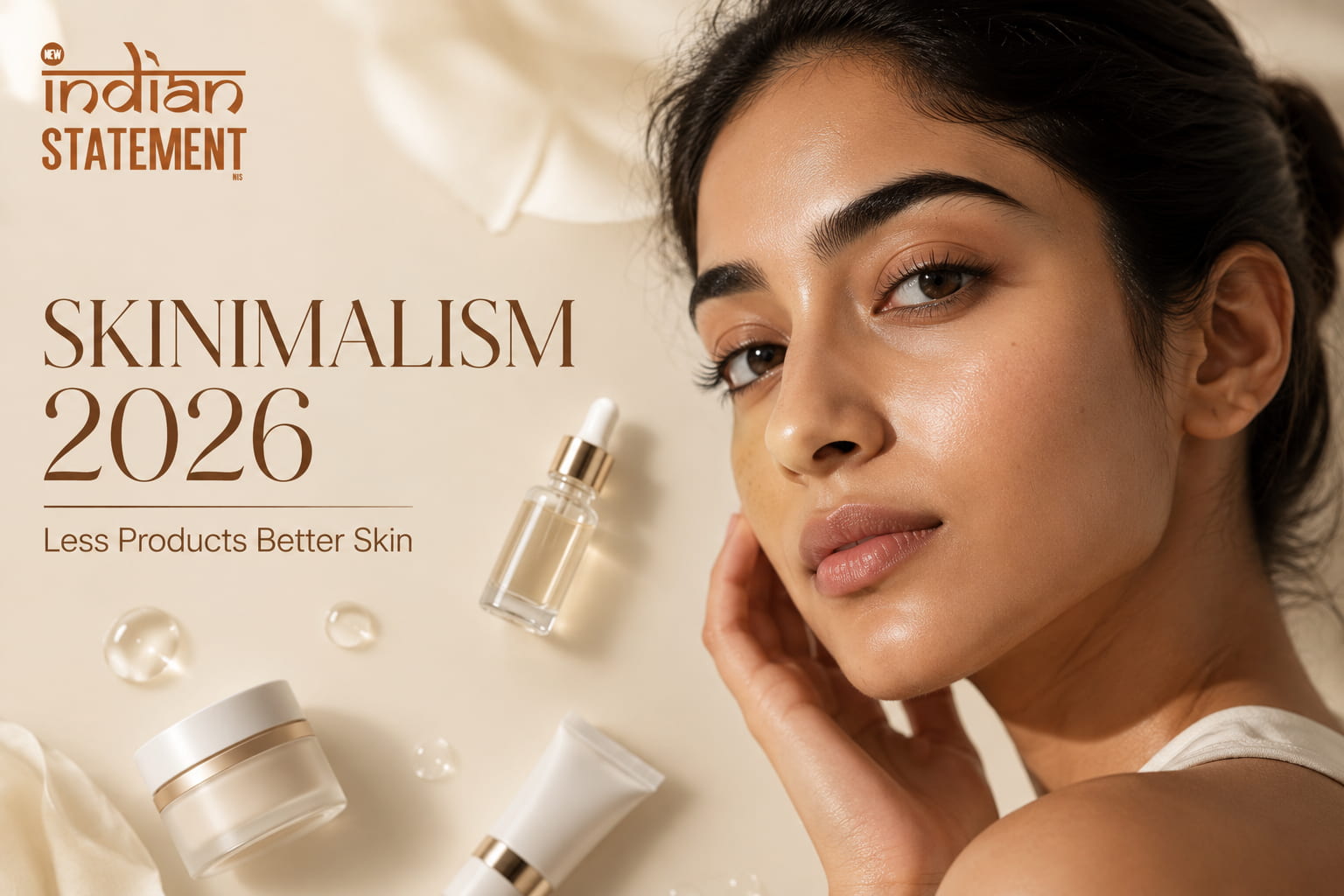
What is Skinimalism and How Does it Work For Indian Skin Types in 2026?

What is Skinimalism and How Does it Work For Indian Skin Types in 2026?

skincare By New_Indian_Statement

If your skincare shelf is filled with half-empty serums, toners and creams, you are not alone. The biggest beauty trends influencing skincare this year are skinimalism and Indian skin types in 2026. People are moving away from routines with 10 different products to simple habits that work for their skin instead. So what exactly is skinimalism, you might ask? With more individuals seeking a minimal skincare routine in India, this strategy proves to be an effective and practical response to busy schedules and shifting skincare requirements.

Less is more skincare 2026 also gained popularity due to the growing recognition that healthy skin does not always require a 10-step list of products. It turns out for many that less truly is more and using a select few carefully curated products can sometimes be far more effective than lavishly layering products. From oily skin and dry patches to pigmentation, skinimalism is a much-needed balanced and realistic method of skincare.

What Does Skinimalism Actually Mean?

Skinimalism simply refers to the minimalist approach to skincare. This does not mean neglecting your skin, or putting no product on it at all. Aligning with this notion, it emphasises picking the items that are actually benefiting your skin instead of having every trendy serum or treatment you find on the internet.

For a few years now, skincare routines have become complex. There were multi-step regimens plastered all over social media, and the feeling was that to get healthy skin you needed a dozen products. The problem is, too many products are sometimes more of a problem than they solve. Too much exfoliation, irritation, dryness and even surprising breakouts occur very often when the skin is overloaded.

It is the very reason why there is such a buzz around the less-is-more skincare 2026 movement. Skincare is supposed to be a long-term thing. Skinimalism is all about developing a regimen that suits the natural needs of your skin and sticking to it, not running after every new product launch.

How Indian Skin Types Require a Different Approach:

Indian skin is quite different when it comes to very specific challenges. When we talk of skinimalism Indian skin types 2026 it’s important to understand that the way skin behaves and reacts to products is influenced by four factors: the climate (wet, dry, hot or cold) pollution, sun exposure and levels of melanin.

Typically Indian skin is more tanned, dull & pigmented. This is why there are still concerns regarding hyperpigmentation in Indian skincare, regardless of age group. However, using excessive active ingredients can also aggravate these concerns as it irritates the skin and causes further damage to its protective barrier.

It is also largely influenced by the environment. The humidity levels in cities like Mumbai and Chennai can lead to increased oil production while the dry climate in every other part of the USA can dehydrate it. Add pollution and constant sun exposure to the mix, and one can understand why a lot of dermatologists now endorse a minimal skincare routine in India rather than zero-day-out with an overly convoluted regimen barely teeming with unnecessary products.

Good integrity means your skin processes environmental stress more effectively, while remaining hydrated and balanced when the barrier is strong. And this is one of the main reasons why skinimalism works perfectly for Indian skin.

The Skinimalism Routine: 3 Steps for Indian Skin

One reason why Skinimalism for beginners in India has gained popularity is that it is easy. You go from managing several products to a few product essentials that provide tangible value.

Step 1- cleansing. A gentle cleanser will wipe away dirt, sweat, sunscreen and pollution without drying the skin. Your best face wash should be something that cleanses without drying out your skin. Most face washes will dry the shit out of your skin, and although you might feel like you’re not oily anymore – they’re actually going to irritate your skin long-term and somehow (maybe) make it produce more oil.


Step 2 – Moisturiser and protection from sunshine. The key is to use a moisturiser appropriate for your skin type, right after cleansing but sunscreen should always be applied every day. The best SPF for Indian skin will literally save you all from the tragedy of tanning as well as pigmentation. It is more comfortable to use lightweight sunscreens that do not leave a white mark because they are easier for daily wear.

Step 3 – Targeted treatment is the last and final step. Instead of applying five different serums, find an ingredient that targets your main skin concern. Niacinamide for brown skin is recommended especially for pigmentation and oil control. When it comes to overall dullness, an appropriate vitamin C product can improve brightness gradually.

That is why skinimalism for beginners in India stays more feasible to follow than a long skincare routine that seems daunting after a few weeks.

Best Affordable Skinimalism Picks Available in India:

The myth around skinimalism is that it needs expensive skincare. In fact, the reverse is frequently the case. You will be using fewer products, allowing you to pick only the best and most appropriate to your skin and wider budget.

When building a routine, find products that do multiple jobs. A hydrating and barrier-supporting moisturiser providing all-in-one sealing, or a treatment serum with targeted multiple concerns can help minimise intensive care layers. This saves money and also helps mitigate the risk of ingredient overload.

The natural skincare India 2026 has also influenced the skinmalism movement. Consumers are getting more ingredient savvy and taking a harder look at what they put on their skin. Instead of buying products because of trends, people are searching for gentle formulas that deliver on their promises.

A lot of men and women searching for the best skincare routine Indian women can follow are realising that affordable skincare is also simple in most cases. Better to have a few wisely chosen products than an entire wardrobe of expensive items that live in the cupboard, collecting dust somewhere.

What to Get Rid of in Your Skincare Regime:

If skincare minimalism interests you, also knowing what to ditch is as important as knowing what to keep. Many overlapping products and others simply aren’t needed, in skincare routines.

The first category of products worth rethinking is multiple exfoliants. Overdoing the exfoliating acids can make your skin barrier thin and more sensitive. In a similar line of thought, multiple serums aimed at the same concern rarely offer much more than each other.

People wanting glass skin Indian skin, need to realise that healthy and glowy skin comes from anything used consistently rather than in large excess. Most people do a lot better when they cut down their routines and allow their skin some healing time.

This is another slip-up: switching products all the time. Your skin takes time to acclimatise, and rushing from regime trend to trend usually makes it more difficult to know something is working. In fact, if you had to come down to one simple routine, a shampoo that is based on hydration and protection supported by only one targeted treatment has been proven time and again to provide the best results.

A daily routine that is very simple to follow is usually better than a hell lot of steps as the best skincare routine Indian women can follow.

Conclusion:

There are two types of people, those who swear by Skinimalism and those who have no idea what it is. This practical angle nudges people to stop overthinking skincare and start focusing on the skin. In fact, as awareness around skin health withers gradually, individuals are opting for routines that would be simpler, more effective, and realistic.

Skinimalism is even more relevant in the Indian context. You often respond better to routine over ritual, with climate conditions, pollution and pigmentation. Whether you’re searching for natural skincare India 2026, a minimal skincare routine India or just trying to cut back on how many products line up on your shelf, skinimalism is a good medium.

Having healthy skin does not always require doing more. Sometimes it comes from doing less but doing that well.

FAQs

Is Skinmalism Good For Indian Skin?
Skinimalism, this is a straightforward skincare method that depends on fewer products and fits many Indian skins.

What is the ideal number of Steps in an Indian Skincare routine?
As for most people, your skin can be healthy if you simply wash it, moisturise it and protect it against the sun.

Is sunscreen a good substitute for moisturiser in India?
If your sunscreen is hydrating enough you can probably use it on oily skin, however dry skin may still require a moisturiser beneath.

Which ingredient is the best for pigmentation?
Niacinamide for brown skin and vitamin C are both well-known skincare staples for achieving an even skin tone.

Is skinimalism suitable for beginners?
Sure, skinimalism is certainly one of the simplest, most sustainable skincare tips for newbies.

 

Author

  • New Indian Statement Magazine is a modern lifestyle and culture platform that highlights fashion, travel, food, relationships, spirituality, and trending conversations. It brings fresh perspectives, celebrity features, and insightful stories that reflect contemporary Indian living.

Related Posts

Traditional Indian Festivals That Are Becoming Popular Worldwide

Traditional Indian Festivals That Are Becoming Popular Worldwide

India’s always been called a land of festivals. Honestly, it’s earned that label. Almost every season, region, and community has its own celebration. Its own food, music, rituals, stories. What’s genuinely interesting right now, these celebrations aren’t staying confined to Indian homes anymore. Holi gatherings splashing color across parks in Western cities. Massive Diwali events lighting up major international destinations. Traditional Indian festivals have quietly found a real place on the global cultural calendar. And this growing interest isn’t just Indians abroad keeping their traditions alive, though that’s a huge part of it. People from completely different backgrounds are getting genuinely curious about Indian traditions, because these festivals offer something that just translates universally. Color. Music. Family. Food. Spirituality. The simple joy of actually being together with people. The Indian diaspora carried these traditions overseas in the first place. Social media, international travel, and cultural events have done the rest, introducing them to audiences that never would’ve encountered them otherwise. This rise of Indian festivals worldwide really is more than a passing trend. Reflects how Indian culture travels, adapts, and genuinely becomes part of everyday life in places you wouldn’t necessarily expect. Why This Is Actually Happening A big part of it comes down to the growing Indian diaspora itself. Indians living in the US, UK, Canada, Australia, Singapore, the UAE, and several African and Caribbean nations keep celebrating their major festivals. With family. With local communities that have built up around them over the years. These celebrations tend to outgrow private gatherings too. Temples, cultural organizations, universities, and community groups regularly organize public events where people from completely different backgrounds actually get to participate, not just observe from a distance. Social media plays a massive role too. A short video of people dancing Garba, throwing Holi colors, or decorating a home with diyas can reach millions within hours. Festivals that used to be familiar mainly within Indian communities are now genuinely recognized by international audiences who’ve seen them online long before ever attending in person. There’s a growing appetite for cultural tourism too. Travelers increasingly want experiences that feel authentic rather than just checking off famous landmarks. Indian festivals genuinely offer that exact combination, tradition, hospitality, food, music, and visual spectacle, all wrapped into one. Diwali, the Festival of Lights Diwali’s probably the most recognizable Indian festival outside India at this point. Traditionally tied to light triumphing over darkness and good over evil. Celebrated with lamps, prayers, sweets, family gatherings, and genuinely stunning decorations. Its popularity internationally has grown a lot. Indian communities organize Diwali celebrations across cities in North America, Europe, Asia, and the Middle East. Public squares, cultural centers, and community venues often host performances, food festivals, fireworks, or lighting ceremonies that pull in crowds well beyond just Indian attendees. Diwali’s global significance got another real boost when Deepavali was inscribed on UNESCO’s Representative List of the Intangible Cultural Heritage of Humanity in December 2025. UNESCO describes it as a festival that genuinely brings together communities, families, and individuals both in India and across the diaspora. Part of what makes Diwali so easy to embrace internationally, honestly just how visually striking it is. Rows of diyas, intricate rangoli patterns, traditional clothing, festive sweets, creates an atmosphere people naturally want to experience and share, whether or not they know the deeper meaning behind it. Holi, the Festival of Colours Holi’s become one of the more exciting examples of Indian festivals worldwide. The traditional spring festival’s known for colored powders, music, dancing, and community celebration that pulls in a genuinely huge crowd wherever it’s held. International Holi events are pretty common now in cities with large Indian communities, but participation genuinely isn’t limited to Indians. Plenty of people who know very little about Indian mythology show up simply because of the energetic, inclusive atmosphere the festival creates. The traditional festival carries real cultural and religious depth. Stories tied to Prahlada and Holika. Celebrations connected with Krishna across northern India. At the same time, its colorful, playful character has made it genuinely easy for international audiences to connect with, even without knowing the full backstory going in. Travel publications have helped spread the word too. Lonely Planet, for instance, highlights Holi among India’s major festivals and points travelers toward celebrations in places like Mathura and Vrindavan specifically. Worth saying too, celebrating Holi respectfully genuinely matters. Understanding the traditions behind the colors makes the whole experience a lot more meaningful than treating it as just another color party. Navratri and Garba Navratri’s another festival that’s traveled far beyond India’s borders. The nine night celebration takes different forms across the country, but Gujarat’s Garba and Dandiya traditions specifically have become genuinely popular internationally. People dress in colorful traditional outfits, form circles, and dance to rhythmic music together. The energy’s genuinely enough to pull in younger generations who might not otherwise get involved in cultural activities regularly. Indian communities across the US, UK, Canada, Australia, and elsewhere organize Navratri nights that often bring together thousands of participants at once. Garba’s also received real international cultural recognition. UNESCO lists Garba of Gujarat among India’s intangible cultural heritage elements. Says something about how far this tradition’s actually traveled while still keeping its identity intact. Durga Puja Durga Puja holds a genuinely special place in Bengali culture, but its celebration’s no longer confined to West Bengal or even India itself. Bengali communities around the world organize elaborate pujas featuring beautifully decorated pandals, idols of Goddess Durga, cultural performances, music, traditional food, and real community gatherings that pull people together for days. In cities outside India, Durga Puja often becomes a genuinely major cultural occasion. Gives the diaspora a real chance to preserve regional traditions while introducing neighbors and friends to Bengali culture they might never encounter otherwise. The festival’s a great example of how Indian celebrations can become genuine community events rather than staying strictly religious occasions. Food, art, theater, music, and social gathering all become part of the experience. Ganesh Chaturthi Ganesh Chaturthi, dedicated

Read more β†’
Bollywood Celebrities Who Turned Entrepreneurs Successfully

Bollywood Celebrities Who Turned Entrepreneurs Successfully

Bollywood’s always run on glamour, films, fame, the whole spectacle of it. But over the last several years, a fair number of stars have quietly built something that has nothing to do with acting at all. Fashion labels. Beauty brands. Fitness companies. Restaurants. Tech investments. Hospitality ventures. The list keeps growing. What’s genuinely interesting here isn’t just that celebrities are putting their face on a product. That’s old news. A lot of them are actually becoming founders now. Investors. Brand builders in their own right. Their read on audiences, marketing, and personal branding gives them a real edge stepping into competitive industries most people would find intimidating to enter cold. This growing wave of Bollywood celebrity businesses says something bigger about India too. Consumers are increasingly connecting with the personalities they follow online, and celebrities have figured out how to turn that connection into something that actually lasts. Why Bollywood Actors Are Actually Turning Into Entrepreneurs There was a time when an actor’s income basically came from three places. Films, endorsements, public appearances. Not really the whole picture anymore. Social media changed a lot of this. An actor can now talk directly to millions of followers without traditional media as the middleman. That opens up a real opportunity, introducing products, explaining their vision, actually building a community around something rather than just slapping a name on a billboard. Financial diversification plays a role too. Films are genuinely unpredictable, one flop can shift everything, while a solid consumer brand can offer something a lot steadier. Celebrities understand staying relevant beyond acting matters more than it used to. And honestly, a lot of these stars are picking businesses based on what they’re genuinely into personally. Fitness fanatics heading into wellness. Fashion icons launching their own clothing lines. Beauty conscious celebrities building skincare and cosmetics brands that actually reflect their own interests, not just whatever seemed profitable. Alia Bhatt, Building a Modern Fashion and Lifestyle Brand Alia Bhatt’s one of the clearer examples of an actor turning personal influence into something genuinely entrepreneurial. Co-founded Ed-a-Mamma, a children’s clothing and lifestyle brand built around comfort and environmental consciousness. The idea behind it was pretty straightforward. Kids clothing could actually be stylish while also being thoughtful about sustainability. Picked up attention fast, partly because Alia’s involvement gave it real visibility among young parents scrolling their feeds. What’s genuinely interesting about her approach, the business wasn’t just her name slapped onto clothing racks. Built out its own identity and product philosophy that stands somewhat apart from her celebrity itself. Deepika Padukone, Bringing Mental Wellness Into Public Conversation Deepika Padukone expanded her influence into wellness through The Live Love Laugh Foundation, an organization working to build genuine awareness around mental health. Not a conventional consumer startup, sure. But represents a different kind of celebrity entrepreneurship, one built around purpose rather than product. Deepika’s used her platform to genuinely push conversations about mental health forward and chip away at the stigma around it. Her work shows celebrity led ventures don’t always have to revolve around selling something. A genuine personal mission can become the foundation for something with a lot broader social impact. Priyanka Chopra Jonas, From Entertainment Into Global Business Priyanka Chopra Jonas has built a career spanning Bollywood, Hollywood, and entrepreneurship all at once. Became involved with Sona, a restaurant drawing on Indian cuisine and culture, alongside other business and investment ventures. Her approach reflects her genuinely international career and audience. What’s notable about her journey, she’s built a personal brand that actually works across multiple markets. That’s a real lesson within Bollywood celebrity businesses more broadly, an international audience can become a genuine launchpad for expanding an Indian inspired concept globally. Katrina Kaif, Turning Beauty Into an Actual Business Katrina Kaif entered beauty through Kay Beauty, launched in partnership with Nykaa, built around inclusivity and products meant to actually work across a wide range of Indian consumers. Rather than treating beauty as just another endorsement she signed onto, Katrina became genuinely tied to the brand’s identity itself. Kay Beauty benefited from a mix of her visibility, an already established beauty retail ecosystem, and shifting consumer habits, beauty shoppers increasingly research products online before buying, which makes digital community and social presence genuinely important. Shah Rukh Khan, Where Entertainment Actually Meets Business Shah Rukh Khan’s one of Bollywood’s most recognizable faces, but his business interests reach well past acting. Through Red Chillies Entertainment, he’s been involved in film production and visual effects work. Also associated with the Kolkata Knight Riders cricket franchise. His journey really shows the power of building an entire ecosystem around entertainment rather than just collecting acting fees. Shah Rukh’s participated in production, sports, and other commercial ventures too. Worth noting, some successful celebrity entrepreneurs don’t build one single consumer product, they invest in or create businesses connected to expertise and audience they already had. Akshay Kumar, Exploring Food and Consumer Ventures Akshay Kumar’s also explored opportunities beyond acting, including investments and ventures tied to food and consumer products. His career itself actually offers a decent lesson here, he’s maintained an image tied to fitness, discipline, and consistency for years, and that identity’s genuinely helped him build a strong commercial presence. For celebrities, that kind of personal identity carries real weight. Consumers tend to pay more attention to a business when they can actually understand why the founder’s connected to what they’re selling. Hrithik Roshan, Making Fitness an Actual Business Hrithik Roshan’s long been associated with fitness, so wellness felt like a genuinely natural extension of his personal brand rather than a stretch. His involvement with HRX is a strong example of turning a genuine personal passion into a real commercial venture, the brand’s expanded across fitness products, clothing, and lifestyle categories. The real advantage here is authenticity. Hrithik didn’t suddenly jump into fitness because it looked commercially attractive, his public image had already been tied to training and healthy living for years before HRX existed. That makes it one of the

Read more β†’
Minimal Skincare Routine for Busy Professionals in 2026

Minimal Skincare Routine for Busy Professionals in 2026

Somewhere between the early meeting, the commute, the deadline due by lunch, and answering emails at eleven at night, skincare quietly slides off most people’s priority list. Not because people stop caring about their skin. Honestly, the real problem’s usually simpler than that. Most routines out there just feel like too much. Ten steps. Five serums. A mask for this, an exfoliator for that, a different product for every possible concern under the sun. Stops feeling like self care. Starts feeling like one more task competing with everything else on your plate. That’s really where a minimal skincare routine 2026 approach makes sense. Instead of collecting products, the whole point is picking a few things that actually work and sticking with them. Keeping skin clean, comfortable, and protected without eating up half your morning. For anyone juggling work and everything else life throws in, skincare genuinely should feel manageable. Not like a second job. Why Busy Professionals Are Actually Moving This Direction Skincare’s shifted a fair bit over the past couple years. A lot more interest now in simpler routines, products that pull double duty, and genuinely protecting the skin barrier instead of chasing whatever new ingredient’s trending that week. A busy professional probably doesn’t have thirty minutes every morning for their face. Realistically, maybe five minutes before they’re out the door. That’s genuinely enough. A routine that works doesn’t need every trending ingredient crammed into it. Just needs to happen consistently. The whole idea really comes down to this. Cleanse. Moisturize. Protect. You can layer in more depending on specific skin concerns, but the foundation itself doesn’t need reinventing every other week. The Morning Routine, Kept Under Five Minutes Mornings are rushed. That’s just reality. Checking email over breakfast, getting dressed, trying to beat traffic. Skincare shouldn’t be the thing slowing that down. Start with a gentle cleanser suited to your actual skin type. Face feels tight or dry right after washing, cleanser’s probably too harsh. Skin runs oily or combination, something lightweight helps clear overnight buildup and excess oil without stripping things afterward. And honestly, no need to scrub like you’re removing a layer of skin. Clean doesn’t have to mean squeaky. Warm water. Gently massage the cleanser in. Rinse. That’s genuinely it. From there, specific concern, dullness, uneven tone, dehydration, add one targeted product. One being the key word here. A lot of busy professionals stack several actives at once, which just muddies the water and can leave skin irritated without knowing which product caused it. Keeping it to one thing makes it a lot easier to tell what’s actually working. Moisturizer next, yes, even oily skin. Right formula keeps things comfortable and supports the barrier properly. Dry skin tends to prefer something richer, a proper cream. Oily or combination usually feels better with something lighter, a lotion or gel. Don’t judge a moisturizer by its price tag either, texture and how well it actually suits your skin matter a lot more than the number on the label. And sunscreen, genuinely the one step worth never skipping. Broad spectrum before you head out, especially if your day involves commuting, driving, walking between meetings, or just spending real time outside. People working from home skip this one too, no traditional commute reminding them, but daily sun protection matters just as much whether you’re heading to an office or staying home all day. Outside for extended stretches, reapplying becomes genuinely important too. The Evening Routine, Just Resetting Before Bed Evening routine shouldn’t feel like another project tacked onto an already exhausting day. Think of it more as resetting your skin before sleep. Start by actually removing sunscreen and makeup properly, whatever’s been on throughout the day. Depending on what you use, a cleansing balm, micellar water, or a proper cleanser before washing. Goal isn’t scrubbing until skin feels completely stripped, just genuinely clean. Then cleanse gently with your regular cleanser, clear out whatever’s left, sweat, oil, product residue. Skin runs dry or sensitive, you probably don’t need an aggressive double cleanse every single night. Skin should feel clean afterward, not raw. Moisturize again to finish. Night time’s a good chance to just keep it simple, apply something comfortable, let skin actually rest. Already using a dermatologist recommended treatment or a specific active, this is where it fits in. But genuinely no need to add a new serum just because it’s trending on your feed that week. What Actually Makes a Good Routine in 2026 The whole minimal skincare routine 2026 idea isn’t really about minimalism for its own sake. More about picking products that actually serve a purpose rather than collecting things because they looked good in a video. A genuinely useful routine should hold up against three questions. Does this product actually serve a real purpose. Does my skin tolerate it well. Can I actually keep using it consistently. Answer’s yes across the board, probably a real reason to keep it around. Five different products all doing basically the same job, usually a sign it’s time to simplify. Adjusting for Your Actual Skin Type A minimal routine works across pretty much every skin type, products just shift a bit. Oily skin does well with lightweight, non-heavy textures, a gentle cleanser, light moisturizer, sunscreen forming the core. Avoid the temptation to wash constantly to control oil though, over-cleansing usually just leaves skin dry and uncomfortable, which then triggers even more oil to compensate. Dry skin benefits from gentle cleansing and moisturizing products that actually help prevent excessive dryness rather than fighting it. Cream based moisturizer usually feels a lot more comfortable here than a lightweight gel. Combination skin often needs a bit of balancing, oily T-zone paired with drier cheeks is genuinely common. Lightweight moisturizer overall tends to work, extra hydration added to specific drier areas when needed. Sensitive skin generally does better with less, not more. Avoid introducing several new products at once. Fragrance free or genuinely gentle formulations tend to work better for a lot of

Read more β†’