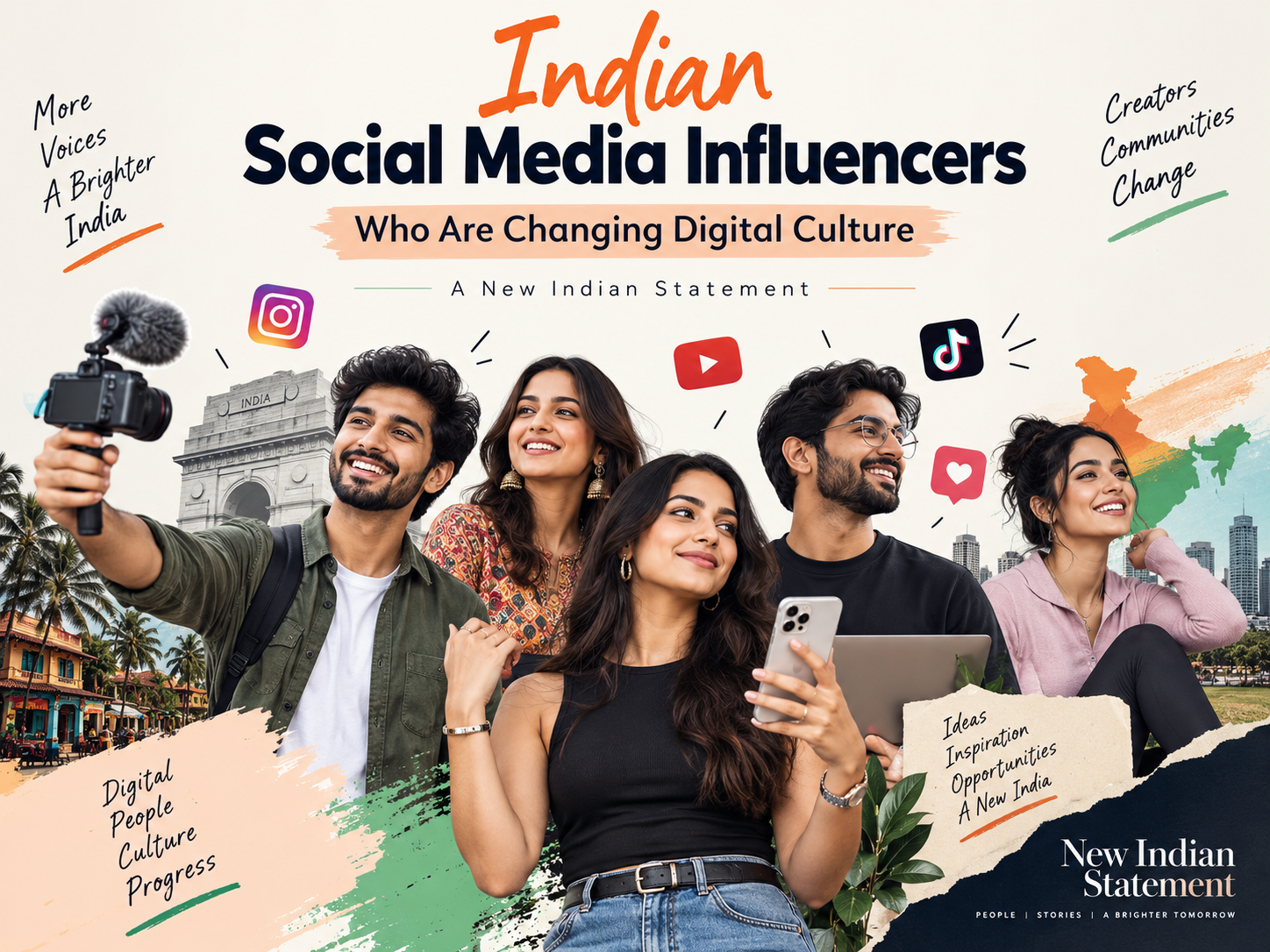
Indian Social Media Influencers Who Are Changing Digital Culture
Social media in India stopped being just a place for photos, funny videos, and keeping tabs on friends a while back, honestly. It’s become somewhere opinions actually form, trends get born, businesses get built from scratch, and cultural conversations start in the first place. Right at the center of all that sit Indian Social Media Influencers, people who’ve taken their own voices, their own experiences, their own creative instincts, and turned all of it into genuinely powerful digital communities.
What’s interesting here is that influence in India doesn’t belong exclusively to film stars, TV personalities, or sports celebrities anymore, the way it used to. Someone with a smartphone, a strong point of view, and a loyal audience can become a genuinely recognizable voice within a specific community now, without ever needing a studio or a network behind them.
Research into India’s digital landscape has found influencers spread across entertainment, sports, business, journalism, civil society, and various “digital-first” categories, which really shows just how broad the country’s online influence ecosystem has grown.
And none of this is really about follower counts, that’s the easy metric everyone reaches for first. The more interesting question is what these creators are actually changing underneath the numbers.
From language and fashion to food, entrepreneurship, and social conversation more broadly, creators are shifting how Indians discover information and connect with each other online.
From Celebrity Culture to Creator Culture
For decades, Indian popular culture sat largely in the hands of a handful of industries. Bollywood, cricket, television, these decided who got famous and who didn’t. Becoming any kind of public figure usually meant getting noticed by an established media organization first, which was its own gatekeeping problem.
Social media flipped that whole equation on its head.
YouTube, Instagram, and other platforms gave ordinary people a direct line to an audience. No more waiting around for a channel or magazine to notice you, creators could just build their own communities from scratch, on their own terms.
That’s made fame feel a lot more accessible, and in a lot of cases, a lot more personal too.
Someone talking from their bedroom, their kitchen, a street corner near their house, can feel a lot more relatable than a heavily produced celebrity ad ever could. Audiences aren’t just following a polished finished product anymore, they’re following the actual personality behind it, warts and all.
That sense of familiarity’s really one of the biggest reasons creators have become so influential across Indian digital culture at this point.
The Rise of Relatable Content
One of the biggest shifts Indian Social Media Influencers have brought is just how much relatability matters now.
Indian audiences have genuinely embraced creators talking about everyday stuff, family situations, relationships, careers, travel, food, fashion, personal finance, the small everyday frustrations that never used to make it onto television.
Comedy creators especially tend to turn familiar Indian moments into content people instantly recognize. The strict parent. The awkward family gathering. Office politics that everyone’s lived through in some form. Wedding drama that somehow feels universal no matter which state you’re in.
What comes out of that is a different kind of entertainment entirely, one that doesn’t necessarily need a huge production budget behind it. Sometimes an honest, well-timed observation is genuinely enough to land.
That’s really why smaller creators can build surprisingly loyal followings, even without anywhere near the reach of mainstream celebrities backing them up.
Regional Languages Are Reshaping the Internet
Maybe one of the more important shifts in Indian digital culture right now is how much regional-language creators have grown in influence.
India was never really a single-language market to begin with. Hindi and English remain important, sure, but millions of people communicate primarily in Tamil, Telugu, Bengali, Marathi, Punjabi, Malayalam, Kannada, Gujarati, and plenty of other languages and dialects that never got much space in mainstream media before.
Creators have picked up on this reality pretty quickly.
A cooking video in a regional language. A comedy sketch built around a local dialect. A travel creator explaining a destination in the exact language their audience actually speaks at home. All of it feels a lot more authentic than generic content built to try and please everyone at once.
This has also chipped away at the old metro-centric model of digital influence, where being famous online basically meant living in Mumbai, Delhi, or Bengaluru. A creator doesn’t need any of those addresses to find a real audience anymore.
Digital culture’s increasingly getting shaped by voices coming out of different cities, small towns, and communities that never used to have this kind of platform.
Recent conversations around Indian social media have also pointed to the rise of these regional creators, and how important localized content’s become for actually connecting with an audience that’s genuinely diverse.
Influencers Are Becoming Entrepreneurs
The creator journey doesn’t always stop at just making content anymore.
A growing number of creators are turning their online communities into actual businesses. Clothing labels. Beauty products. Food brands. Digital services. All kinds of ventures springing up from what started as just posting online.
Makes sense when you think about how influencer marketing actually works underneath. A creator spends years genuinely understanding what their audience likes, what problems they’re dealing with, what kinds of products they respond well to.
That audience knowledge turns into a real business advantage over time, one that’s hard to replicate without years of that same direct relationship.
The shift from creator to entrepreneur is already pretty visible across India, with influencers increasingly launching brands specifically in categories like beauty and fashion, where their audience’s trust translates most directly.
In other words, the creator isn’t just promoting somebody else’s product anymore. In a lot of cases now, the creator is the brand itself.
That’s genuinely changing the relationship between personal branding, advertising, and entrepreneurship in ways that are still being figured out.
The Power of Short-Form Video
Short-form video’s probably had the biggest single impact on how content actually gets consumed these days.
Instagram Reels and YouTube Shorts have trained audiences to make extremely fast decisions. A creator might only get a couple seconds to stop someone mid-scroll before they’re gone entirely.
That’s genuinely changed how stories get told.
Creators now experiment constantly with strong opening lines, quick cuts, serialized storylines, collaborations with other creators, and cliffhangers built specifically to bring people back for the next part. Mint’s reported that India’s crowded creator ecosystem has pushed influencers to lean heavily into hooks and short-form storytelling, specifically to turn casual viewers into actual followers.
There’s a downside though, worth naming honestly.
When everyone’s racing to be interesting in the first few seconds, content starts blurring together. The same audio clip, the same editing style, the same joke format or trend showing up hundreds of times across completely different accounts.
The creators who genuinely stand out tend to be the ones who can ride a trend without losing whatever made them distinct to begin with.
Influencers Are Shaping How People Actually Buy Things
Think about how people discover products now, really think about it.
Someone might see a skincare routine on Instagram, a restaurant recommendation on YouTube, a fashion review in a Reel, and a tech comparison on some other creator’s channel entirely, all before ever landing on a brand’s actual website.
That’s a genuinely major shift in how people buy things.
People increasingly want to see a product being used by someone they already trust, before spending their own money on it. A recommendation ends up feeling a lot less like an ad and a lot more like advice from a friend who actually knows what they’re talking about.
That trust is valuable, genuinely, but it also comes with real responsibility attached.
Creators need to be upfront when content’s sponsored, and audiences need to understand that not every glowing recommendation is entirely independent, however it’s framed.
The line between a genuine recommendation and paid advertising can get genuinely hard to spot sometimes, especially when personal storytelling and brand promotion get blended together seamlessly.
Digital Culture Runs on Opinions Too, Not Just Products
Influence doesn’t stop at entertainment and shopping, not even close.
Creators increasingly show up in conversations around education, careers, social issues, politics, technology, and public life more broadly. Their posts can introduce topics to audiences who’d probably never encounter them through traditional media at all.
Academic research published in 2026 describes influencers as genuine contemporary opinion leaders, and argues their role in digital India involves credibility, trust, algorithmic visibility, and real audience engagement all wrapped up together.
That influence can genuinely be positive. A creator can make an unfamiliar issue a lot easier to actually understand, or nudge people toward participating in a conversation that matters.
But it gets complicated too, worth saying plainly.
A large following doesn’t automatically mean expertise on a topic. Viral content spreads a lot faster than carefully researched information usually can. Which makes media literacy more important for audiences than it’s ever been.
The Algorithm Has Quietly Become Part of the Culture
There’s another player shaping digital culture that doesn’t get talked about enough, the algorithm itself.
Creators aren’t just making content for people anymore, honestly. They’re making content for recommendation systems too, whether they mean to or not.
Wanting to land on an Explore page, or make it into someone’s recommended feed, ends up shaping everything, video length, captions, thumbnails, even how often someone posts throughout the week.
A 2026 study of Indian social media users found people have actually developed their own theories about how algorithms work, seeing them both as powerful tools for discovering content and as systems tied up with advertising and surveillance at the same time.
Which means the modern creator’s constantly balancing two audiences at once, the actual human one, and the platform sitting underneath everything.
The real challenge is keeping content engaging enough for the algorithm without it ever feeling artificial or hollow to the real people watching it.
New Indian Statement: Giving Digital Culture a Wider Voice
This is really where New Indian Statement becomes an interesting part of this whole conversation.
New Indian Statement presents itself as a lifestyle-focused publication with a real emphasis on sensitive journalism and stories about people, culture, and achievement. Coverage spans travel, cinema, photography, literature, success stories, startups, and pioneers across different fields.
The approach fits naturally into this changing creator ecosystem, because digital culture was never only about viral numbers. It’s also about actually finding people with stories genuinely worth telling.
The internet’s created thousands of individuals who don’t fit the traditional definition of celebrity but are shaping their own communities in genuinely meaningful ways.
A regional entrepreneur. A photographer. A filmmaker. A travel creator. An artist. A startup founder. Any of them might have a smaller audience than a mainstream celebrity and still carry a powerful cultural impact within their own space.
Publications like New Indian Statement can help put those stories into a broader context that pure follower counts never really capture.
Rather than just chasing whoever’s trending this week, the conversation can shift toward why someone’s actually influential, what they represent, and what their work says about modern India more broadly.
That distinction genuinely matters.
Digital culture moves so fast that yesterday’s viral personality can vanish from the feed by tomorrow morning. Stories with real substance behind them tend to stay relevant a lot longer than that.
What Actually Makes an Influencer Truly Influential
Follower count’s an easy number to point at, sure, but it’s genuinely not the only measure of influence, not even close.
A creator can have a fairly small audience and still create real change within a specific niche community.
Real influence tends to come from trust built between creator and audience over time, genuine consistency, original ideas rather than recycled trends, cultural relevance, strong storytelling instincts, real community engagement, actual subject knowledge, and the ability to start conversations that genuinely matter to people.
Which is really why the future of influence might belong less to whoever has the biggest follower count, and more to whoever has the strongest actual relationship with the people following them.
Where India’s Creator Culture Is Headed
The next phase of India’s digital culture will probably get even more diverse than it already is.
Creators will keep moving between platforms as trends shift. Regional-language content will keep growing steadily. AI will change how content actually gets produced behind the scenes. Influencers will keep launching more businesses off the back of their audiences. Brands will increasingly look toward smaller, more specialized communities instead of leaning purely on celebrity endorsements the way they used to.
At the same time, audiences are likely to get more selective about who they follow and trust.
People are already surrounded by an overwhelming amount of content constantly. India has millions of influencers all competing for the same finite attention, which makes authenticity and genuine differentiation matter more than ever.
The creators who actually survive that competition won’t necessarily be the loudest ones in the room. They’ll be the ones who genuinely understand their audience and actually have something distinctive worth saying.
Ultimately, the story of Indian Social Media Influencers is bigger than just Instagram or YouTube. It’s really a story about how Indians communicate, discover new ideas, build businesses, and express who they are in a digital society that keeps changing faster than anyone can fully track.
And maybe the most exciting part of all this is that the story’s still very much being written.
Frequently Asked Questions
Who are Indian Social Media Influencers?
Creators, personalities, experts, and digital-first individuals who build real audiences through platforms like Instagram, YouTube, and other social networks. Their influence stretches across entertainment, fashion, business, education, travel, food, and social issues.
How are influencers actually changing Indian digital culture?
They’re changing how people consume entertainment, discover products, communicate in regional languages, and participate in public conversations. Their direct relationship with audiences has also closed a lot of the old gap between celebrities and everyday users.
Why are regional creators becoming so important?
They can communicate cultural references, humour, and everyday experiences in the languages audiences actually use day to day. That makes their content genuinely relatable, and lets digital influence spread well beyond India’s major metro cities.
Are influencers actually becoming entrepreneurs?
Yes. Plenty of creators are using their personal brands and audience relationships to launch real businesses, particularly in fashion, beauty, and lifestyle, where that built-up trust translates most naturally into sales.
What is New Indian Statement?
A lifestyle-focused publication that describes its own editorial approach as combining lifestyle coverage with sensitive journalism. Coverage spans travel, cinema, photography, literature, startups, success stories, and people making a real impact in their fields.
Does having more followers automatically mean more influence?
Not necessarily. Engagement, trust, real expertise, and relevance to a specific community can matter a lot more as indicators of genuine influence than raw follower numbers alone.
What’s the biggest challenge for creators right now?
Standing out. India’s creator ecosystem is genuinely competitive, and creators need to keep producing content that feels original while also adapting to constantly shifting platform algorithms and audience expectations at the same time.
Will influencers keep shaping Indian culture going forward?
Almost certainly, yes. As social platforms keep weaving deeper into everyday life, creators will keep influencing entertainment, buying decisions, entrepreneurship, language, and public conversation generally. The exact shape that influence takes will keep evolving though, probably faster than anyone expects.