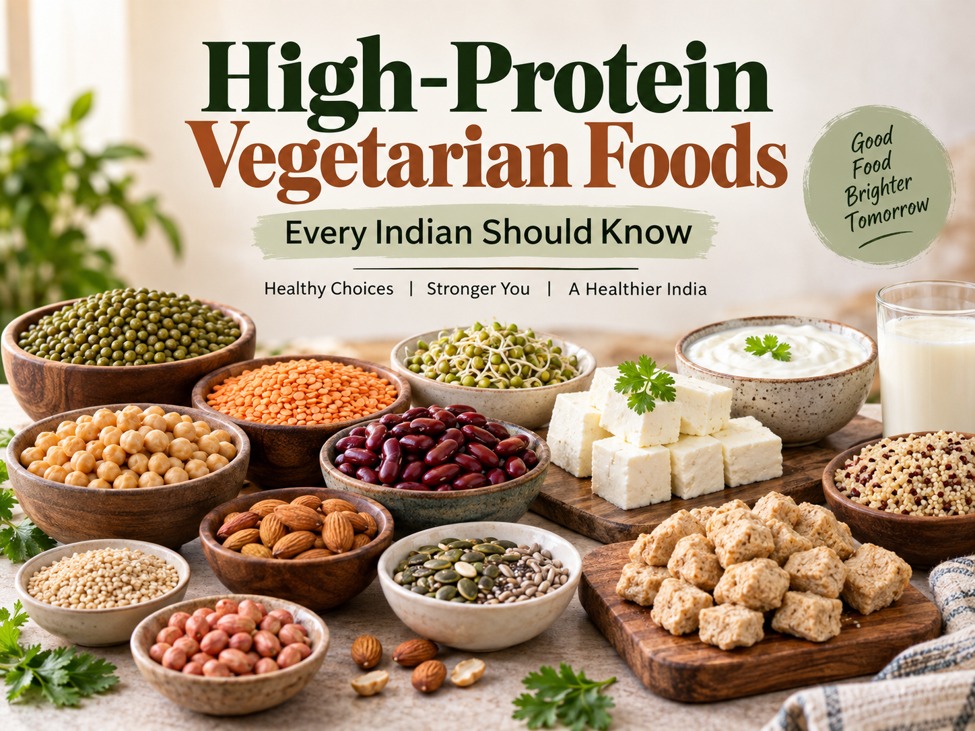
High-Protein Vegetarian Foods Every Indian Should Know
Everyone’s suddenly obsessed with protein. Gym bros, aunties doing intermittent fasting, college kids on some influencer’s meal plan, it’s everywhere right now. And most of the advice online still assumes you’re eating chicken breast six times a day, which is useless if you’re vegetarian, and honestly most of India is.
Here’s the thing though, Indian vegetarian food was never protein-poor to begin with. Dal, chana, paneer, soy, curd, we’ve had this stuff on the table for generations. Nobody needed a Western diet plan to figure out high protein vegetarian foods India already had sitting in the kitchen. What’s actually changed is people paying attention to it on purpose instead of eating it because that’s just what dinner was.
Why bother with protein in a vegetarian diet anyway?
Short answer, it’s what your body uses to build and repair basically everything, muscle, skin, enzymes, hormones. It also keeps you full longer than carbs do, which matters more than people think. Ever notice how a big plate of just rice leaves you hungry again in two hours but a bowl of rajma doesn’t? That’s protein doing its job.
If you work out, you probably need more of it than someone who doesn’t, that’s not controversial. Older folks need to watch it too since muscle naturally drops off with age whether anyone likes it or not. A vegetarian diet handles all of this fine as long as it’s not just roti and sabzi on repeat, legumes, dairy, soy, nuts, seeds, grains, mix it up.
Dal, obviously
Can’t write this article without starting here. Moong, masoor, toor, chana, urad, doesn’t really matter which, they’re all solid. A regular bowl with rice or roti already does the job, and if you want to push it further, dal cheela, dal khichdi, even a thinner dal in dosa batter works.
Honestly if you’re short on time, just make your dal portion slightly bigger than usual and don’t overthink it.
Paneer, the easy button
Paneer’s popular because it requires zero creativity, throw it in a curry, grill it, stuff it in a wrap, done. It’s got calcium too, though the fat content swings a lot depending on whether you’re buying store paneer or making it fresh at home.
If you’re trying to keep it lighter, skip the butter paneer route and just grill it with some veggies instead. Tastes different, still works.
Soy, underrated by basically everyone
Soy chunks specifically don’t get enough credit. Cheap, lasts forever in the pantry, soaks up whatever flavor you throw at it. Works in curry, pulao, even biryani if you’re feeling ambitious.
Tofu’s the same story, marinate it, grill it, crumble it into a bhurji like scrambled eggs, whatever. If protein without a bigger plate is the actual goal, soy’s probably your best bet out of everything on this list.
Chickpeas beyond just chole
Everyone stops at chole and that’s a shame. Kala chana works great cold in a salad or chaat. Kabuli chana goes into hummus, curries, even grain bowls if you’re into that.
A basic chana salad, onion, tomato, cucumber, a squeeze of lemon, is genuinely one of the most underrated snacks out there. Fills you up more than it looks like it should, mostly because of the fiber.
Rajma isn’t just a Sunday thing
Rajma chawal gets all the fame but kidney beans work outside that context too, wraps, salad bowls, even a homemade veggie patty if you’re bored one weekend. Same deal as other legumes, protein plus fiber plus a bunch of micronutrients you’re not thinking about.
One actual tip here, soak the beans properly and cook them all the way through. Undercooked rajma isn’t just unpleasant, it’s genuinely bad for digestion.
Curd and Greek yogurt, the lazy option that actually works
Dairy makes hitting your protein number way easier than most people realize. Regular curd’s already on most Indian dinner tables, but Greek or strained yogurt has noticeably more protein per serving if you’re specifically chasing numbers.
Eat it plain, turn it into raita, blend it into a smoothie, whatever’s easiest. Thick curd with some roasted seeds and fruit is a legitimate breakfast on its own. Quick warning though, check the label on packaged yogurt before assuming it’s automatically high protein, some brands barely have more than regular curd.
Peanuts, cheap and honestly kind of a cheat code
Peanuts are dirt cheap and pack real protein and fat. Roasted as a snack, sprinkled over poha, blended into chutney, all fair game.
Peanut chutney with dosa or idli is one of those combos that’s been protein-smart the whole time without anyone marketing it that way. Just don’t go overboard, peanuts are calorie-dense and it’s easy to eat way more than you meant to.
Sprouted moong for something lighter
Moong sprouts are a nice break from heavier legumes, work well cold in a salad or chaat. Cucumber, tomato, coriander, lemon, a pinch of chaat masala, done in five minutes.
Worth flagging though, raw sprouts carry a real food-safety risk if they’re not stored or washed properly. Pregnant women, elderly folks, young kids, anyone immunocompromised, better off cooking the sprouts lightly instead of eating them raw.
Quinoa and other grains, optional but useful
Quinoa’s had its moment in Indian kitchens over the last few years, mostly among people looking for something beyond rice and wheat. It’s got more protein than most refined grains and slots into pulao or salads fine.
Doesn’t mean you need to ditch rice or roti though, that’s not the point. Millets and oats can just sit alongside your usual grains, with legumes and dairy or soy still doing the heavy lifting on the protein side.
Seeds, small but they add up
Flax, pumpkin, sunflower, chia, sesame, all bring something, protein, fat, minerals, a bit of crunch. Toss them on curd, oatmeal, salads, smoothies, wherever.
They’re concentrated though, so a spoonful’s usually plenty. Don’t expect seeds alone to replace an actual protein source, they’re more of a topping than a main event.
Besan doesn’t get nearly enough respect
Besan chilla might genuinely be the easiest high-protein breakfast in the entire Indian kitchen, and somehow it’s still underrated compared to oats and smoothie bowls. Add veggies, paneer, tofu, or just a side of curd and it’s a full meal.
Also shows up in kadhi and a bunch of savory pancake-style dishes. It’s a good reminder that you don’t need some imported “superfood” when gram flour’s been doing this job for decades already.
Putting together a high protein vegetarian meal without a spreadsheet
Nobody needs to track grams obsessively here. Rough formula, protein source, whole grain, vegetable, a bit of fat.
Dal with roti, sabzi, curd. Rajma with rice and salad. Paneer with roti and mixed veg. Tofu with millet and stir-fried vegetables. Chana with veg and curd. Besan chilla with paneer filling. Soy chunk pulao with raita. None of this requires giving up what you already eat, just shifting the ratio a bit.
Do vegetarian meals actually give you complete protein?
Plant proteins can run a little short on one or two amino acids compared to animal protein, that part’s true and worth acknowledging honestly. But it doesn’t mean every single meal has to be some carefully balanced equation.
A varied diet across the whole day covers this without much effort. Dal with rice, beans with roti, legumes with dairy, these combos have been working for generations without anyone needing a nutrition degree to plan them.
Mistakes people actually make with vegetarian protein
Eating a mountain of one food and assuming that’s enough, common trap, variety beats volume every time. Trusting a package just because it says “high protein” on the front, also common, check the actual label instead of the marketing copy.
Underestimating portions happens constantly too. A spoon of seeds isn’t replacing a real serving of dal or paneer, it’s just extra. And protein’s one piece of the puzzle, not the whole thing, vegetables, fruit, whole grains, fats, water, calories overall, all of it still counts.
Making this part of normal eating instead of a whole project
The diet that actually works is the one you’ll stick with without hating your life. Increasing protein doesn’t mean abandoning Indian food, not even slightly.
Small stuff adds up, curd with lunch, dal more often, paneer or tofu worked into whatever sabzi you’re already making, chana instead of chips for a snack, besan chilla instead of cereal. Anyone looking for high protein vegetarian foods India has genuinely affordable, familiar options for basically every meal of the day. The goal was never to complicate things, just to stop protein being an afterthought.
About New Indian Statement
New Indian Statement covers the stuff modern Indian readers actually care about, lifestyle, wellness, culture, trends, the everyday things that matter more than people admit. Nutrition’s a bigger part of that conversation than it used to be, especially with more people getting serious about fitness and eating better without going to extremes.
The idea is pretty simple, highlight food that’s already familiar and make healthy eating feel doable instead of overwhelming.
Frequently Asked Questions (FAQ)
What are the best high protein vegetarian foods India actually offers?
Dal, chickpeas, rajma, soy chunks, tofu, paneer, curd, Greek yogurt, peanuts, besan and seeds. Most of it’s already in your kitchen.
Is dal enough on its own for protein?
Not really, on its own. It’s great, but pairing it with dairy, soy, nuts or seeds across your other meals works a lot better than relying on dal alone.
Is paneer a genuinely good protein source?
Yes, plus it brings calcium. Fat content depends heavily on how it’s made and cooked, so it’s worth being a bit mindful of preparation.
Which vegetarian food has the most protein?
Soy, soy chunks and whole soybeans especially. Paneer, Greek yogurt, lentils and chickpeas aren’t far behind.
Can Indian vegetarians hit their protein needs without supplements?
Usually, yes. A varied diet of legumes, dairy, soy, grains, nuts and seeds covers most people. Supplements are convenient for some, not necessary for everyone.
What’s an easy high protein vegetarian breakfast?
Besan chilla with curd, paneer paratha with yogurt, moong dal chilla, or tofu bhurji with toast. All quick, all genuinely filling.
Can nuts replace dal?
Not really a fair swap, nuts bring more fat and calories along with the protein. Better as an addition than a substitute for legumes.
What’s the easiest way to add more protein to daily meals?
Bigger dal portion, curd with lunch, paneer or tofu in your sabzi, chana or peanuts as a snack, besan at breakfast. Small changes, stack them over a week and it adds up more than people expect.
One last thing worth saying honestly, protein needs aren’t the same for everyone, age, activity level, body size and specific goals all change the number. If there’s an actual medical concern involved, talk to a dietitian rather than trusting a generic list like this one.