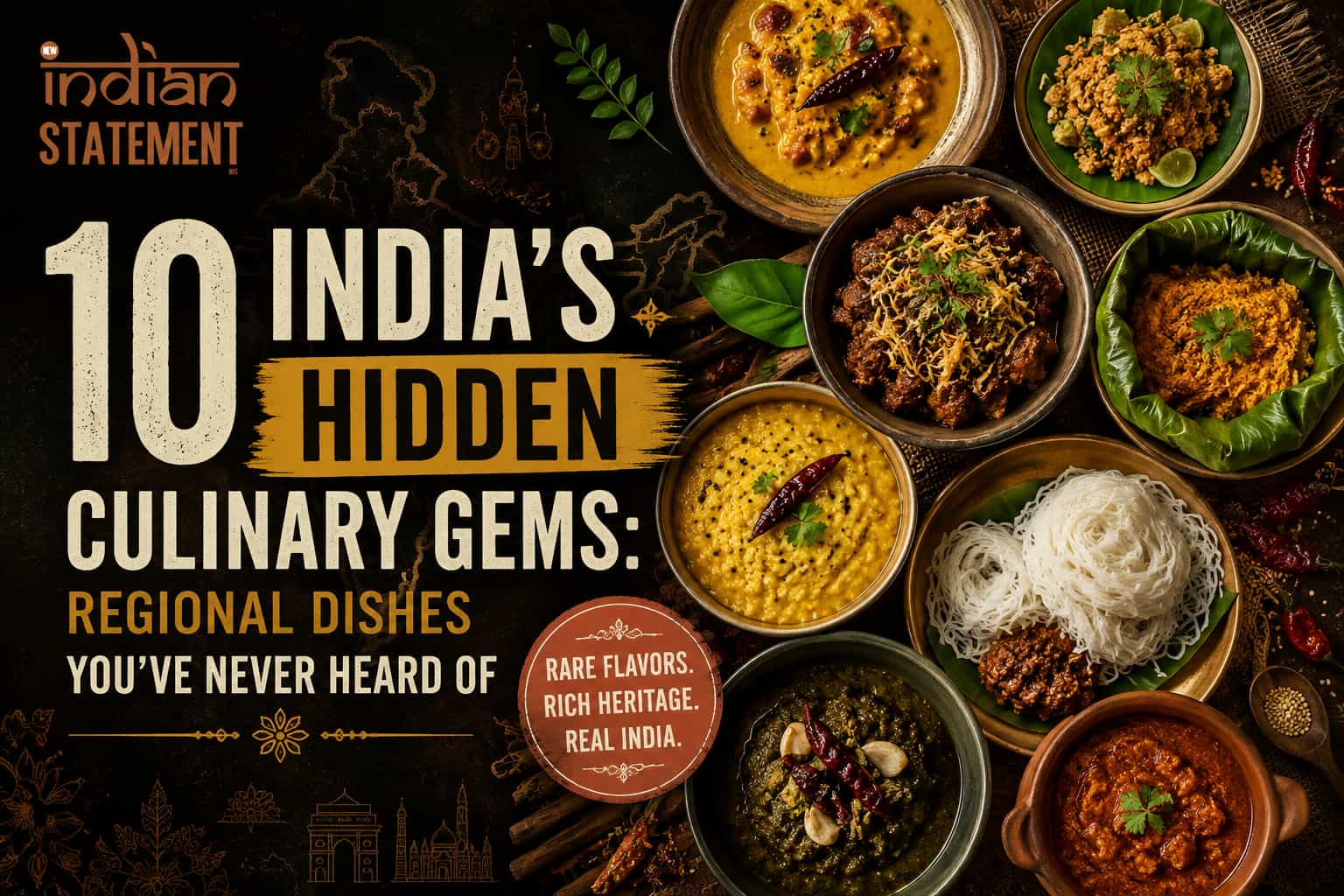
India’s Hidden Culinary Gems: Regional Dishes You’ve Never Heard Of
Food By New_Indian_StatementIndia is often recognised for butter chicken or Hyderabad biryani, dosa and chole bhature but there is indeed a world beyond the well-known Indian regional dishes. Many of these recipes live in distant small villages, tribal communities and family kitchens that have kept food heritage and traditions alive for centuries. This is an ideal guide for anyone looking to rediscover Indian recipes or planning a food trip. Behind their presence are local stories, fresh produce, and uncomplicated techniques that need the spotlight.
Why India’s Lesser Known Regional Foods Are So Special:
The method to cook varies in every Indian state. The food people eat daily is influenced by the climate, the crops and even local traditions and spices. Many family recipes do not go beyond their region while popular dishes can be found anywhere.
Such dishes generally use locally grown ingredients paired with recipes passed through generations within families of this region less well-known in the world culinary map. Most are quick, healthy and mainly from scratch. Getting off the tourist trail to find these places is like getting a close-up view of another facet of India that most tourists will never be in contact with.
1. Eromba – Manipur:
Among the most adored Manipuri food preparations, Eromba is a preparation of boiled potatoes, seasonal vegetables, fermented fish or vegetarian substitutes and local chillies.
It has a unique smoky, spicy and earthy flavour which is very different from food eaten in other parts of India. Eromba is a must for authentic northeast India food guide recommendations.
2. Pandi Curry – Coorg:
One of the bright spots in Coorg cuisine in India, is Pandi Curry, which is a brown pork dish made with local spices that also uses a kind of black vinegar called kodampuli fruit.
This curry itself is one of the most famous dishes of Coorg as it delivers a very deep flavour to food. Tourists visiting food tourism India destinations find themselves travelling to Coorg just for the great local meals it has to offer.
3. Wazwan – Kashmir:
The well known Kashmiri Wazwan is more than just food. Wazwan is a traditional meal, served in weddings and celebrations, which consists of various dishes.
The feast consists of lots of leisurely, slow-cooked meat dishes created by chefs who know their spices (saffron, fennel, dry ginger). This meal is a reflection of Kashmir’s rich history and hospitality, which ends up being one of the finest food traditions in India.
4. Chila and Faraa – Chhattisgarh:
Chhattisgarh cuisine gives lots of tasty rice recipes & local grains but it’s always talked about less. These are a few staple dishes that make up the food culture of Chhattisgarh.
Faraa is a rice flour dough stuffed with lentils. Chila is a white rice or lentil pancake served with chutney. There are healthy meals that demonstrate one can have indulgent food without complications.
5. Dalma – Odisha:
Dalma is the most underrated yet highly required item in Odisha Cuisine. It is made with lentils and seasonal vegetables and mild spices for comfort eating.
Dalma is unlike most spicy Indian curries, with far more subtle flavour allowing the vegetables to shine. It is a traditional simple home food from Odisha available all through the year.
6. Smoked Pork – Nagaland:
Nagaland food dishes are characterised by strong flavours and straightforward cooking methods. One of the state’s favourites is smoked pork with bamboo shoots.
The meat is smoked over fires for extended periods resulting in a flavour somewhere between bacon and chicken that goes exceptionally well with bamboo shoots and local chillies. No northeast India food guide can be complete without mention of this famous recipe.
7. Red Ant Chutney – Odisha:
Red ant chutney, made by tribal groups in areas of Odisha, is one of India’s weirdest dishes.
Ants contain natural acids that give the chutney a sour-spicy flavour. Surprising as it sounds, this has been tried and tested for generations, a typical example of how local communities use all those ingredients prepared by nature in the best way possible.
8. Siddu – Himachal Pradesh:
Siddu is a steamed bread made from walnuts, poppy seeds or lentils and served with ghee or local curries. The dish makes its way to Himachal Pradesh, and it is a winter season favourite. It is one of those most comforting Indian recipes that deserves more attention.
9. Chak-Hao Kheer – Manipur:
Another gem in the crown of Manipuri cuisine is the Chak-Hao Kheer. Black rice, milk, sugar and dry fruits are the necessities to make it.
It’s the black rice that gives the dessert its natural yet deep purple colour without any artificial food colours. It is luxurious, it is creamy, and it uses local ingredients to make something wonderful.
10. Jadoh – Meghalaya:
Jadoh is a meat and local spice rice dish. This dish has gained one of the highest levels of popularity as a regional comfort food of Meghalaya.
Compared to biryani which has a much heavier, spicier profile when it comes to flavour, Jadoh is a much lighter dish that lays emphasis on the freshness of ingredients over what one might call ‘heavily-spiced Indian cuisine’. It signifies the exquisite simplicity of regional Indian food heritage across the unique platter found in the Northeast.
Why These Regional Dishes Matter:
A number of these recipes are gradually fading away as younger generations migrate towards town and choose contemporary fast-food alternatives to conventional home cooking. This is one of the reasons why preservation of regional Indian food heritage is vital.
Supporting local recipes helps farmers, home cooks and small food businesses too. Each time you opt for one of these classic dishes, you are preserving the ancient ways of preparing food for the next generation.
Best Places to Experience India’s Hidden Food Cuisine:
When you are fond of tasting local food, skip the big restaurant chains and choose family-run eateries or try to find your way into some local market, village food festival or even traditional homes with locals when it is possible.
Some of the best food tourism destinations in India are Coorg, Kashmir, Nagaland, Manipur, Odisha, Chhattisgarh and other northeastern states. These places give an opportunity to taste the unknown regional cuisine of India that a lot of tourists never get to know.
Here is What Makes These Dishes Come Back In Vogue:
Thanks to social media, travel bloggers and food creators who have begun revealing to people rare Indian dishes 2026 that only the locals knew.
However, quite a few chefs are also very much reviving forgotten Indian recipes in restaurants while paying respect to time-honoured cooking techniques. These secret dishes are on the rise too as travellers search for authentic experiences rather than getting their photo taken at iconic tourist sites. This newfound rare Indian dish in 2026 is conserving India’s diversity over decades of time.
Final Thoughts:
The story of food in India is much larger than these dishes that grace our tables, every day. Be it the decadent Kashmiri Wazwan dishes to the smoky flavours of Nagaland food, from the comfort of Manipuri food to such simple yet satisfying spreads that Odisha cuisine always gets underrated for, each Indian region has its own specialty.
Next time while you are travelling, ditch the go-to menu and try out some of these lesser-known Indian regional dishes. Engagingly, you will know about the amazing culinary methods of India and its native food culture which might end up being your new favourite dish.
FAQs
- Which is the unique regional dish of India?
Regional delicacies are far more different such as Eromba, Dalma, Jadoh, Siddu and Smoked Pork. - What is the rarest food to taste in North East India?
Some of the featured rare and traditional dishes are Red Ant Chutney and Eromba. - Where can I experience local Indian food?
Travel to state-by-state family-run restaurants, local towns and markets in India.