Unique Cultural Experiences Every Traveller Should Experience in India
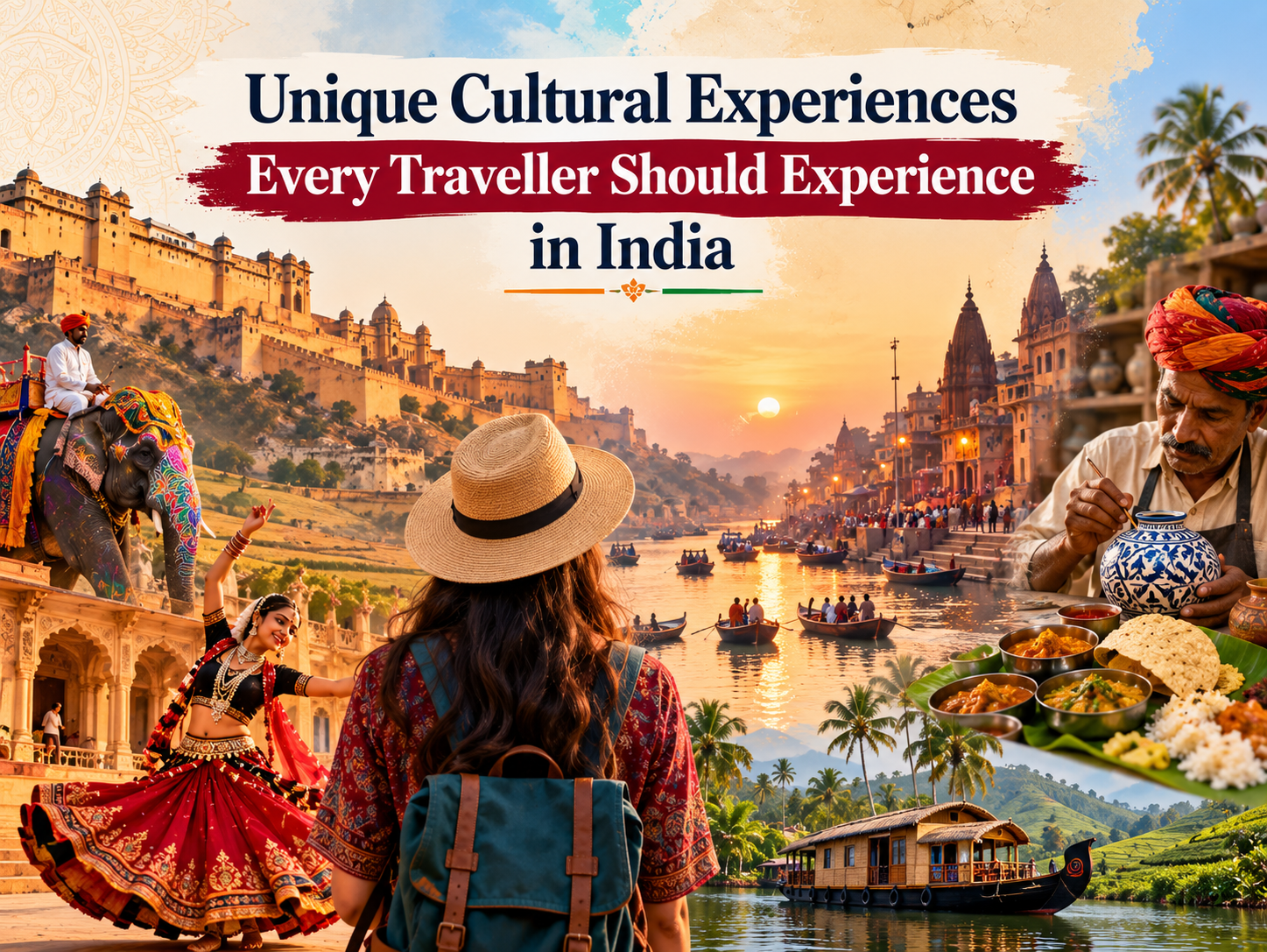
India is a country that reveals itself differently at every turn. A journey through its cities, villages, mountains, and coastal regions introduces travellers to different languages, food traditions, architectural styles, music, festivals, and ways of life. One day, you might find yourself listening to devotional songs beside a river; the next, you could be learning how a local artisan transforms a simple piece of clay into a work of art.
For travellers who want more than photographs of famous monuments, India offers countless opportunities to experience its culture firsthand. The most memorable journeys often happen when visitors sit down for a homemade meal, explore a traditional market, participate in a local celebration, or spend time understanding the customs of a community.
The best cultural experiences in India are not limited to popular tourist attractions. They can be found in everyday moments, from sharing tea with local residents to watching a centuries-old craft being practised by skilled hands.
Whether you are visiting India for the first time or rediscovering your own country, these cultural experiences can help you see India beyond its usual tourist destinations.
1. Experience the Spiritual Atmosphere of Varanasi
Varanasi, one of India’s oldest continuously inhabited cities, offers an unforgettable introduction to the country’s spiritual traditions. Situated along the River Ganga in Uttar Pradesh, the city attracts pilgrims, students, artists, and travellers from around the world.
A walk along the ghats reveals a rhythm of life that has continued across generations. People gather for prayers, priests perform rituals, musicians sing devotional songs, and families visit the river as part of their religious practices.
One of the most memorable experiences is witnessing the evening Ganga Aarti. Lamps illuminate the riverfront while devotional chants and bells create a powerful atmosphere. Visitors can observe respectfully from the ghats or from a boat where permitted.
The city’s narrow lanes also offer glimpses of traditional sweet shops, silk weaving, temples, and everyday neighbourhood life.
Varanasi is best experienced without rushing. Spend time walking, speak with local guides, and learn about the significance of the rituals rather than treating them simply as photographic opportunities.
2. Discover Rajasthan’s Living Heritage
Rajasthan is famous for its forts, palaces, colourful clothing, folk music, and desert landscapes. Yet its cultural richness extends far beyond its architectural landmarks.
In cities such as Jaipur, Jodhpur, and Udaipur, visitors can explore traditional markets selling block-printed textiles, jewellery, pottery, leather goods, and handmade decorations. Each region has its own artistic traditions, often passed from one generation of craftspeople to the next.
Attending a folk music or dance performance is another wonderful way to understand Rajasthan’s cultural identity. Traditional performances may feature instruments such as the sarangi and dholak, along with storytelling through music and movement.
Travellers can also learn about regional cooking, from dal baati churma to local preparations using millet and seasonal ingredients.
For those searching for the best cultural experiences in India, Rajasthan offers a particularly rich combination of history, craftsmanship, cuisine, and community traditions.
Whenever possible, purchase handmade products directly from artisans or reputable cooperatives. This gives you a better understanding of the work involved and can help support traditional livelihoods.
3. Take Part in Kerala’s Traditional Food and Village Life
Kerala offers a cultural experience shaped by its coastline, waterways, agriculture, religious diversity, and long-standing connections with international trade.
While the state’s backwaters attract many visitors, spending time in local communities can provide a deeper appreciation of everyday life.
A traditional Kerala meal served on a banana leaf is an excellent place to start. Depending on the region and occasion, the meal may include rice, vegetable preparations, pickles, lentils, and other dishes that reflect local ingredients and cooking techniques.
Visitors can also explore coir-making, traditional fishing practices, spice cultivation, and regional handicrafts through responsible community-based experiences.
Kathakali, Kerala’s distinctive classical dance-drama tradition, combines expressive gestures, elaborate costumes, music, and storytelling. Watching a performance can be especially rewarding when visitors learn a little about its characters and symbolic movements beforehand.
Kerala demonstrates how food, art, work, and landscape come together to shape a region’s cultural identity.
4. Celebrate India’s Festivals with Local Communities
Festivals offer travellers an opportunity to understand India’s cultural diversity through shared celebrations, music, rituals, food, and public gatherings.
Holi is associated with the arrival of spring and is widely celebrated through colours, music, and social gatherings. Diwali brings homes and streets to life with lamps, decorations, prayers, and family traditions.
Other celebrations reveal different regional identities. Durga Puja in West Bengal features elaborate artistic installations and community celebrations. Onam in Kerala brings together floral decorations, traditional food, and cultural programmes. Ganesh Chaturthi is marked by public celebrations and devotional activities in Maharashtra.
The best cultural experiences in India often happen when travellers understand the meaning behind a festival instead of simply attending its most crowded events.
Before participating, learn about local customs, appropriate clothing, photography restrictions, and community expectations. Some ceremonies are open to visitors, while others are intended primarily for worshippers or members of a particular community.
Responsible participation allows travellers to appreciate the celebration without disrupting the people for whom it holds personal or religious significance.
5. Learn Traditional Indian Crafts from Local Artisans
India’s handicraft traditions reflect the knowledge, creativity, and patience of generations of craftspeople. Different regions are known for distinctive techniques, materials, designs, and artistic styles.
In Kutch, Gujarat, visitors can discover embroidery, textile work, and regional craft traditions. Jaipur is associated with block printing, blue pottery, and gemstone work. Kashmir is known for papier-mâché, carpet weaving, and intricate textile craftsmanship.
Depending on the location, travellers may be able to visit a workshop, observe a demonstration, or participate in a short craft session.
Learning directly from an artisan changes the way you see a handmade object. You begin to appreciate the time required to create a pattern, the precision involved in weaving, or the knowledge needed to prepare natural materials.
These experiences can also help visitors understand the economic challenges faced by traditional craft communities.
When buying souvenirs, ask about the making process, materials, and origin. Choose products transparently sourced from local makers, and remember that not every workshop permits photography or hands-on participation.
6. Explore India’s Classical Music and Dance Traditions
Indian classical music and dance are among the country’s most distinctive cultural expressions. Their traditions combine technique, storytelling, rhythm, improvisation, and spiritual or philosophical themes.
Hindustani classical music has strong associations with northern India, while Carnatic music is particularly prominent in the south. Both traditions feature complex musical structures and long histories of teacher-student learning.
Dance forms such as Bharatanatyam, Kathak, Odissi, Kuchipudi, and Kathakali express stories and emotions through movement, rhythm, facial expressions, and carefully developed techniques.
Travellers can look for public performances, cultural festivals, music gatherings, and introductory workshops. In cities with active arts communities, smaller performances may provide a more intimate experience than large commercial shows.
You do not need extensive knowledge of Indian music to enjoy a performance. Reading a short introduction to the art form and its instruments can help you recognise details that might otherwise go unnoticed.
Experiencing live music or dance also reminds visitors that India’s cultural heritage is not confined to museums. It remains a living practice, sustained by performers, teachers, students, and audiences.
7. Experience the Community Life of India’s Villages
India’s villages offer a different perspective from its busy metropolitan centres. Agricultural practices, local markets, traditional homes, community celebrations, and regional food habits reveal how culture is connected to daily life.
A responsible village visit may include a guided walk, a cooking session, a demonstration of traditional skills, or an opportunity to learn about local farming.
Experiences vary widely across the country. A village in Himachal Pradesh may reflect mountain agriculture and regional architecture, while a settlement in Nagaland may have its own distinctive food traditions, crafts, and community practices.
Travellers should avoid assuming that all rural communities share the same lifestyle. India’s villages differ according to geography, language, history, economy, and local customs.
Choose community-led experiences that seek consent, respect privacy, and provide fair compensation to local hosts. Ask before photographing people or entering private spaces.
For travellers who want to understand the best cultural experiences in India, a village visit can offer valuable insight into the everyday relationships and practices that shape regional identity.
8. Explore India’s Food Culture Beyond Restaurants
Food is one of the easiest ways to discover India’s cultural diversity. Each region has its own ingredients, cooking methods, festive dishes, and everyday meals.
In Punjab, visitors may encounter hearty meals featuring makki di roti and sarson da saag during the winter season. Gujarat offers a wide range of vegetarian preparations and snacks. Tamil Nadu is known for dishes such as idli, dosa, and regional rice-based meals, while Bengal has distinctive fish preparations and sweets.
Street food and local markets can also provide an introduction to regional flavours. A guided food walk may explain the origins of particular dishes, the spices used in cooking, and how food habits relate to climate, agriculture, religion, and migration.
Home-cooking experiences can be especially meaningful because they offer a chance to learn family recipes and understand the stories behind them.
Choose food vendors who maintain good hygiene, and communicate dietary requirements clearly. Travellers with allergies or dietary restrictions should ask about ingredients and preparation methods rather than relying on assumptions.
Food is not merely something to consume while travelling. It is a way to understand a place and the people who call it home.
9. Discover the Cultural Diversity of India’s Northeast
India’s northeastern states are home to a remarkable range of languages, communities, artistic traditions, cuisines, and festivals.
In Assam, visitors can learn about the cultural significance of Bihu, traditional weaving, and the region’s tea-growing heritage. Meghalaya offers opportunities to discover Khasi and Garo cultural traditions, local food, music, and community life.
Nagaland is known for its diverse Naga communities and distinctive artistic and cultural practices. Arunachal Pradesh also has a rich variety of Indigenous traditions, languages, and celebrations.
These regions should not be treated as a single cultural destination. Each state, and often each community within it, has its own identity and customs.
Travellers should research local requirements, seasonal conditions, and any applicable permits before planning a visit. They should also seek guidance about photography, sacred spaces, and community events.
Exploring the Northeast with knowledgeable local guides can help visitors appreciate the region’s diversity while supporting locally led tourism.
10. Stay in a Heritage Home or Homestay
Accommodation can shape how deeply a traveller experiences a destination. While hotels provide comfort and convenience, a well-managed homestay or heritage property can offer a closer connection to local life.
Depending on the destination, guests may learn about regional cooking, household traditions, architecture, farming, or local celebrations. Hosts may recommend neighbourhood markets and lesser-known places that visitors might otherwise miss.
Heritage homes can also illustrate how people have adapted traditional architectural features to changing lifestyles. Courtyards, local building materials, carved wooden elements, and regional design choices often reflect the climate and history of the area.
A homestay does not guarantee an authentic cultural experience, so research the property carefully and choose hosts who communicate clearly about what is included.
Respect household routines, ask before entering private areas, and be open to differences in food, schedules, and customs.
Often, the conversations shared over a cup of tea become the most memorable part of a journey.
How to Travel Respectfully and Make Your Experience Meaningful
Cultural travel is most rewarding when visitors approach a destination with curiosity rather than expectations.
Learn a few local greetings, ask questions politely, and be willing to listen. Dress appropriately for religious or community spaces, follow photography rules, and avoid interrupting ceremonies for pictures.
Support local businesses where possible, but do not assume every cultural practice or handmade product is available for tourist participation. Some traditions are private, sacred, or restricted to particular occasions.
Plan enough time to explore slowly. Instead of visiting several destinations in a hurry, spending an extra day in one place may allow you to discover a local market, attend a performance, or learn about a craft.
The best cultural experiences in India are not necessarily the most expensive or elaborate. They are the ones that leave you with a deeper understanding of a community and a greater appreciation for its traditions.
How New Indian Statement Connects Travellers with India’s Cultural Identity
Travel is not only about reaching a destination. It is also about understanding the people, customs, histories, and changing social realities that make each place distinctive.
New Indian Statement can contribute to this understanding by exploring India’s cultural heritage, regional identities, traditional arts, food, festivals, and contemporary travel experiences through informative articles and thoughtful perspectives.
By highlighting the best cultural experiences in India, New Indian Statement can encourage readers to look beyond popular attractions and discover the stories behind the places they visit.
Its coverage can also promote responsible tourism by drawing attention to local artisans, community-led experiences, regional diversity, and the importance of respecting cultural practices.
For readers planning their next journey, such perspectives can help turn a simple holiday into an opportunity for learning and connection.
India’s culture is too diverse to be understood through a single trip or a handful of famous landmarks. Every region offers another perspective, another story, and another reason to explore with an open mind.
Conclusion
India’s cultural richness lies not only in its monuments and historic cities but also in the everyday lives of its people. A traditional meal, an artisan’s workshop, a classical music performance, a village walk, or a festival celebrated with a local community can reveal details that guidebooks often overlook.
The most rewarding journeys are those that leave room for genuine encounters. When travellers listen to local stories, respect community traditions, and support the people who preserve cultural knowledge, travel becomes more meaningful.
Whether you are exploring the ghats of Varanasi, the markets of Rajasthan, the backwaters of Kerala, or the diverse communities of the Northeast, India offers endless opportunities to discover its living heritage.
With its focus on culture, society, and the experiences that shape contemporary India, New Indian Statement invites readers to approach travel as more than sightseeing. It is an opportunity to learn, appreciate diversity, and return home with a broader understanding of the country.
Frequently Asked Questions (FAQs)
1. What are the best cultural experiences in India for first-time travellers?
First-time visitors can explore Varanasi’s ghats, attend a traditional music or dance performance, try regional cuisine, visit local craft workshops, and experience a festival with appropriate guidance.
2. Which Indian destinations are best for cultural tourism?
Varanasi, Jaipur, Udaipur, Jodhpur, Kolkata, Kochi, Madurai, and destinations across India’s Northeast offer varied cultural experiences. The best choice depends on your interests, travel dates, and preferred region.
3. How can travellers experience authentic Indian culture?
Travellers can choose local guides, community-led tours, responsible homestays, traditional craft workshops, regional food experiences, and cultural performances. Spending time listening to local people can be just as valuable as visiting famous attractions.
4. What is the best time to experience Indian festivals?
Festival dates vary by region and often follow religious or lunar calendars. Research the dates in advance, check local arrangements, and make accommodation plans early for popular celebrations.
5. Are cultural experiences in India suitable for international tourists?
Yes. Many cultural activities welcome international visitors, including food walks, craft workshops, guided heritage tours, and public performances. Visitors should follow local customs and check whether particular activities require advance arrangements.
6. How can travellers support local Indian communities?
Choose locally owned accommodation, purchase fairly sourced crafts, hire knowledgeable local guides, participate in community-led experiences, and respect residents’ privacy and cultural practices.
7. Why should travellers explore India’s regional cultures?
Regional experiences help visitors understand India’s linguistic, artistic, culinary, and historical diversity. They also provide opportunities to appreciate traditions that may not be represented in mainstream tourist itineraries.
8. How does New Indian Statement help readers discover Indian culture?
New Indian Statement can share articles and perspectives about India’s cultural heritage, regional traditions, travel experiences, and evolving society, helping readers explore the country with greater awareness and curiosity.
Explore more stories about India’s culture, traditions, travel, and society with New Indian Statement.