Are Indian Festivals Losing Their Traditional Meaning in the Modern Era?
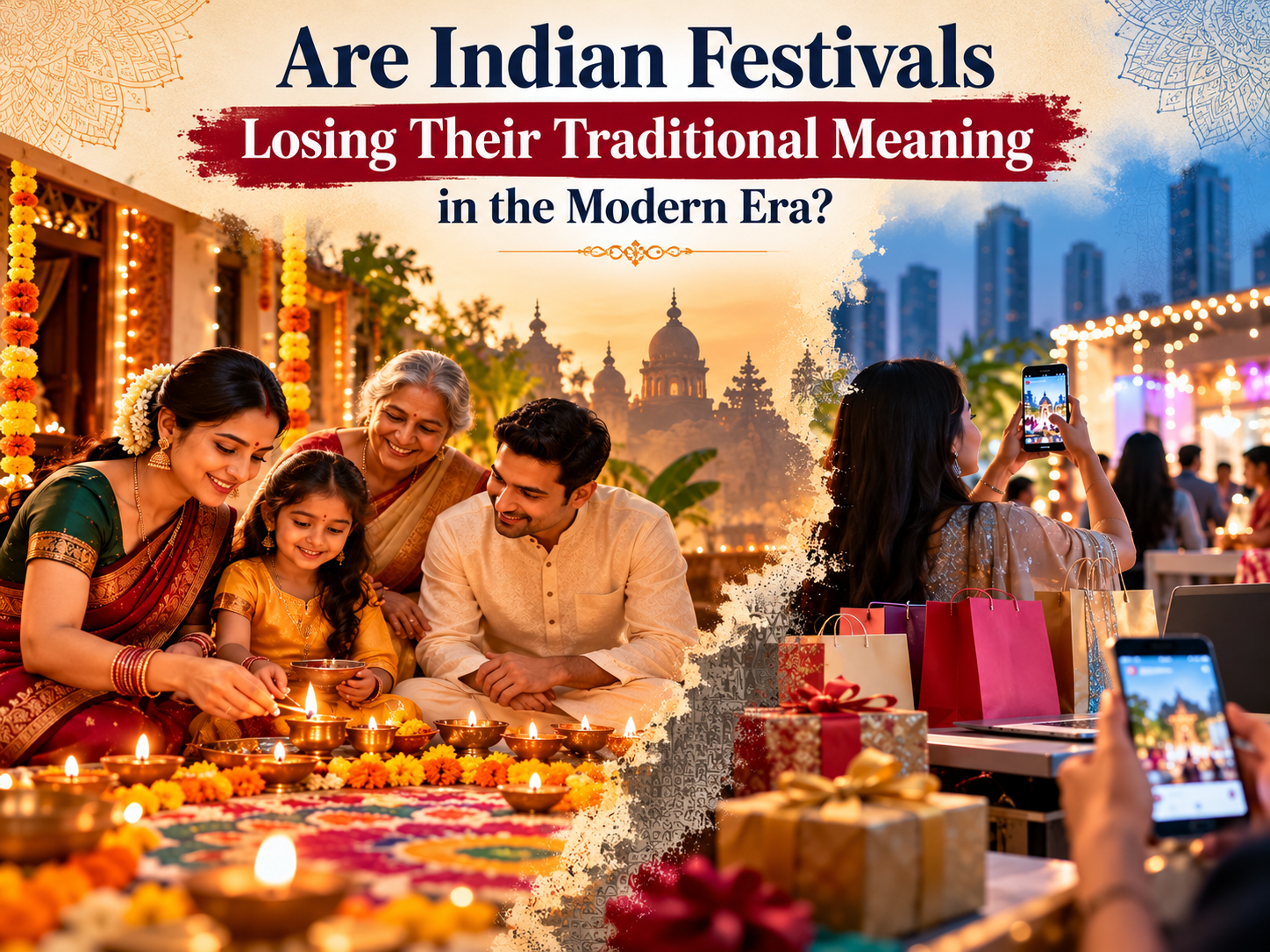
Indian festivals have always been about more than celebrations. They bring families together, strengthen relationships, preserve cultural values, and remind people of the traditions passed down through generations. From the colourful celebrations of Holi to the glowing diyas of Diwali, every festival carries a story, a belief, and a connection to India’s rich cultural heritage.
However, the way people celebrate festivals has changed significantly over the years. Today, social media posts, online shopping, extravagant decorations, and commercial promotions have become a major part of many celebrations. While these changes make festivals more accessible and exciting, they also raise an important question: are we slowly forgetting the traditional meaning behind our favourite festivals?
The discussion around Indian cultural festivals losing traditions is not simply about whether modern celebrations are good or bad. It is about finding the right balance between embracing change and preserving the values that make Indian festivals meaningful.
The Traditional Meaning Behind Indian Festivals
Traditionally, Indian festivals were closely connected to religion, agriculture, seasonal changes, family relationships, and community life. Celebrations were often simple, but they carried deep emotional and cultural significance.
Families prepared food together, elders shared stories, children learned traditional rituals, and neighbours participated in celebrations regardless of their financial background. Many festivals also encouraged generosity, gratitude, forgiveness, and respect for nature.
For example, Diwali has long been associated with the victory of light over darkness and good over evil. Holi celebrates joy, togetherness, and the arrival of spring, while Makar Sankranti and Pongal recognise the importance of harvest and agricultural life.
Different regions have their own customs, languages, rituals, and ways of celebrating these occasions. This diversity is one of the most beautiful aspects of Indian culture.
The concern today is that people sometimes participate in these celebrations without understanding why the traditions began in the first place. When rituals become routine activities rather than meaningful experiences, an important part of their cultural value can be lost.
How Modern Lifestyles Have Changed Festival Celebrations
Modern life has transformed the way Indian families celebrate festivals. Urbanisation, busy work schedules, smaller households, and changing social habits have influenced traditional customs.
In earlier times, festival preparations often started several days in advance. Families cleaned their homes, prepared homemade sweets, decorated their surroundings, and visited relatives. These activities created opportunities for people to spend time together.
Today, many people manage festival preparations around office commitments, school schedules, and other responsibilities. Ready-made sweets, online gift deliveries, and digital greetings offer convenient alternatives to traditional preparations.
There is nothing wrong with making celebrations easier. In fact, these changes help people living far from their families remain connected. The problem arises when convenience completely replaces participation.
Buying sweets is convenient, but preparing a family recipe together can create lasting memories. Sending a greeting online is thoughtful, but visiting an elderly relative may carry a deeper emotional meaning.
Modern lifestyles are not necessarily destroying traditions. However, they are changing the ways people experience them.
Social Media: Connecting People or Changing Traditions?
Social media has become an important part of modern festival celebrations. Instagram, Facebook, and other platforms are filled with festive photographs, decoration ideas, traditional outfits, recipes, and greetings.
These platforms can play a positive role in keeping cultural traditions alive. Young people can discover regional festivals, learn about forgotten customs, and explore the stories behind traditional celebrations.
At the same time, social media can sometimes shift the focus from celebrating a festival to displaying it.
People may feel pressure to organise elaborate decorations, wear expensive outfits, visit popular locations, or create attractive photographs. The experience can become more about capturing the perfect moment than enjoying the occasion itself.
For some families, the most memorable festival moments are not the ones shared online. They are the conversations around the dining table, the laughter during preparations, and the familiar rituals that make a house feel like home.
The challenge is not to stop sharing festive moments but to remember that a celebration does not become more meaningful simply because more people see it.
The Growing Commercialisation of Indian Festivals
Festivals have also become major commercial events. Retailers, shopping websites, restaurants, and brands launch special offers and promotional campaigns around Diwali, Raksha Bandhan, Eid, Christmas, and other celebrations.
Seasonal shopping can support businesses and create employment. Gifts, new clothes, sweets, and home decorations are also established parts of many festive customs.
However, commercialisation can sometimes create unrealistic expectations. Expensive gifts, luxury products, elaborate parties, and costly decorations may become symbols of a successful celebration.
Families with limited budgets can feel unnecessary pressure to spend beyond their means simply to match what they see around them.
The traditional spirit of festivals often places greater importance on affection, generosity, gratitude, and sharing than on the price of a gift.
A handmade present, a home-cooked meal, or a sincere visit can be just as meaningful as an expensive purchase.
When we begin measuring celebrations by how much we spend, we risk overlooking the values that originally made them special.
Are Younger Generations Moving Away from Traditional Values?
It is common to hear older generations express concern that young people are becoming less connected to traditional customs. Some younger people may know the names of major festivals but have limited knowledge of their history, regional significance, or rituals.
There are several reasons for this change. Education, careers, migration, digital entertainment, and exposure to different cultures have influenced how younger generations understand their identity.
However, it would be unfair to suggest that young people no longer care about Indian traditions.
Many are rediscovering regional clothing, folk music, traditional recipes, handmade crafts, and local festivals. Some prefer environmentally responsible celebrations, while others use social media to share cultural knowledge with wider audiences.
Their approach may look different from that of their parents or grandparents, but the interest in cultural identity remains.
The real opportunity lies in making traditions relevant to younger generations. Instead of asking them to follow every custom without question, families can explain the meaning behind rituals and encourage them to participate willingly.
When a young person understands why a tradition matters, it becomes easier to preserve it.
The Importance of Family and Community in Keeping Traditions Alive
Family and community have always played an important role in passing cultural values from one generation to the next.
Children often learn traditions by observing their parents and grandparents. They remember the way sweets were prepared, how prayers were performed, which relatives were visited, and which stories were shared every year.
These experiences create a sense of belonging that cannot be replaced entirely by digital communication.
Community celebrations are equally important. Local fairs, cultural performances, neighbourhood gatherings, folk dances, and traditional food festivals bring people together and provide opportunities to learn about different customs.
Unfortunately, some traditional community activities receive less attention as people become increasingly occupied with individual routines.
We can help preserve these customs by involving children in preparations, listening to elders’ experiences, supporting local artisans, and participating in community events.
Keeping a tradition alive does not always require a grand celebration. Sometimes, it begins with something as simple as asking a grandparent to explain a family custom.
Environmental Awareness and the Need for Responsible Celebrations
Another important change in modern festival celebrations is the growing awareness of environmental concerns.
Some traditional and modern practices can generate significant waste, air pollution, water pollution, or excessive consumption. Plastic decorations, disposable items, chemical colours, and certain types of fireworks can create environmental challenges.
Fortunately, many families are choosing more responsible ways to celebrate.
They are using reusable decorations, natural colours, locally made products, clay diyas, and thoughtfully prepared meals. Communities are also exploring celebrations that reduce waste and respect public spaces.
These changes demonstrate that preserving culture does not mean repeating every practice exactly as it was followed in the past.
Traditions can evolve while retaining their essential values. In many cases, protecting nature and avoiding unnecessary waste are consistent with the broader principles of respect, responsibility, and harmony that many Indian cultural traditions encourage.
A meaningful festival should bring happiness without creating avoidable difficulties for other people or the environment.
How Can We Preserve the Meaning of Indian Festivals?
Preserving cultural traditions does not require rejecting technology, modern lifestyles, or new ideas. It requires making conscious choices about which values we want to carry forward.
Here are a few practical ways to make celebrations more meaningful:
- Learn the stories behind festivals. Take time to understand their historical, religious, agricultural, and regional significance rather than following rituals without context.
- Involve children in preparations. Let them help prepare traditional food, decorate the home, make crafts, and participate in age-appropriate family customs.
- Prioritise relationships over appearances. Spend time with family, reconnect with friends, and visit people who may feel isolated during festive occasions.
- Support local artisans and businesses. Buying handmade decorations, regional sweets, and traditional crafts can help sustain cultural skills and livelihoods.
- Celebrate within your means. Avoid unnecessary financial pressure and remember that thoughtful gestures often mean more than expensive gifts.
- Respect regional diversity. Learn about festivals beyond your own community and encourage conversations about the different traditions that contribute to India’s cultural richness.
- Use technology to preserve culture. Record family recipes, document elders’ stories, share regional customs, and create digital resources that younger generations can access.
Small efforts, repeated year after year, can help ensure that traditions remain part of everyday life rather than becoming memories of the past.
The Role of New Indian Statement in Preserving Cultural Conversations
At a time when lifestyles and cultural practices are changing rapidly, platforms that encourage thoughtful conversations about Indian identity and society have an important role to play.
New Indian Statement can contribute to this discussion by exploring the relationship between India’s traditional values and its evolving modern identity. Topics such as festival celebrations, cultural heritage, changing family relationships, regional customs, and generational differences offer opportunities to understand how society is transforming.
Through meaningful articles and discussions, New Indian Statement can encourage readers to look beyond the surface of everyday celebrations and reflect on the stories, people, and values that give them significance.
Rather than presenting tradition and modernity as opposing forces, the conversation can focus on how both can coexist. India’s culture has always evolved through regional influences, changing social circumstances, and new ideas.
The goal is not to preserve every custom unchanged, but to help people recognise which traditions remain meaningful and how they can be passed on thoughtfully.
By bringing attention to these conversations, New Indian Statement can help readers reflect on cultural identity while appreciating the diversity and complexity of contemporary India.
Are Indian Festivals Really Losing Their Traditional Meaning?
The answer is not entirely straightforward. Some traditions are becoming less common, while others are finding new life through digital platforms, community initiatives, and renewed interest in regional culture.
The concern about Indian cultural festivals losing traditions is valid when celebrations become disconnected from their cultural roots. However, changing customs do not automatically mean that traditions are disappearing.
A family that celebrates Diwali with fewer rituals but spends meaningful time together may still preserve its essential spirit. A young person who learns a traditional dance through an online video may help keep an important cultural practice alive.
What matters is whether people understand, value, and thoughtfully continue the customs that connect them to their heritage.
Indian festivals do not need to remain frozen in time to retain their meaning. They need people who are willing to carry their stories forward.
Conclusion
Indian festivals are changing, just as Indian society is changing. Modern technology, commercial influences, busy lifestyles, and evolving family structures have transformed many aspects of celebration. Some changes have made festivals more accessible, while others have encouraged people to focus on appearances and spending rather than cultural meaning.
The solution is not to return completely to the past or reject modern life. It is to find a balance between convenience and connection, innovation and heritage, and celebration and understanding.
Festivals become truly meaningful when they bring people closer, preserve valuable stories, encourage generosity, and create memories that last beyond a single day.
As New Indian Statement explores questions about India’s changing society, this conversation reminds us of something important: traditions survive not simply because they have existed for centuries, but because each generation chooses what to learn, appreciate, and pass on.
The future of Indian festivals depends on how we celebrate them today.
Frequently Asked Questions (FAQs)
1. Are Indian festivals losing their traditional meaning?
Some celebrations are becoming more commercialised and focused on social media, shopping, and entertainment. However, many families and communities continue to preserve traditional rituals, regional customs, and cultural values.
2. What are the main reasons behind changing Indian festival traditions?
Urbanisation, busy work schedules, migration, digital communication, commercialisation, and changing family structures have influenced the way people celebrate festivals.
3. How does social media affect traditional Indian festivals?
Social media helps spread cultural knowledge and connect families across distances. However, it can also encourage people to prioritise photographs, online attention, and appearances over personal experiences.
4. How can young people preserve Indian cultural traditions?
Young people can learn regional languages, explore traditional recipes, participate in community celebrations, speak with elders, support local artisans, and share cultural stories through digital platforms.
5. Can modern celebrations preserve traditional values?
Yes. Modern celebrations can retain their cultural significance when people understand the meaning behind their customs and continue values such as family connection, generosity, gratitude, and respect for nature.
6. Why is it important to preserve Indian festivals?
Indian festivals preserve cultural knowledge, strengthen community relationships, celebrate regional diversity, and connect younger generations with the history and values of their families and communities.
7. What is the role of New Indian Statement in this discussion?
New Indian Statement can encourage conversations about Indian culture, traditions, and changing social values through informative articles and perspectives that help readers understand the relationship between heritage and modern life.
Discover more thoughtful perspectives on Indian culture, society, and changing traditions with New Indian Statement.