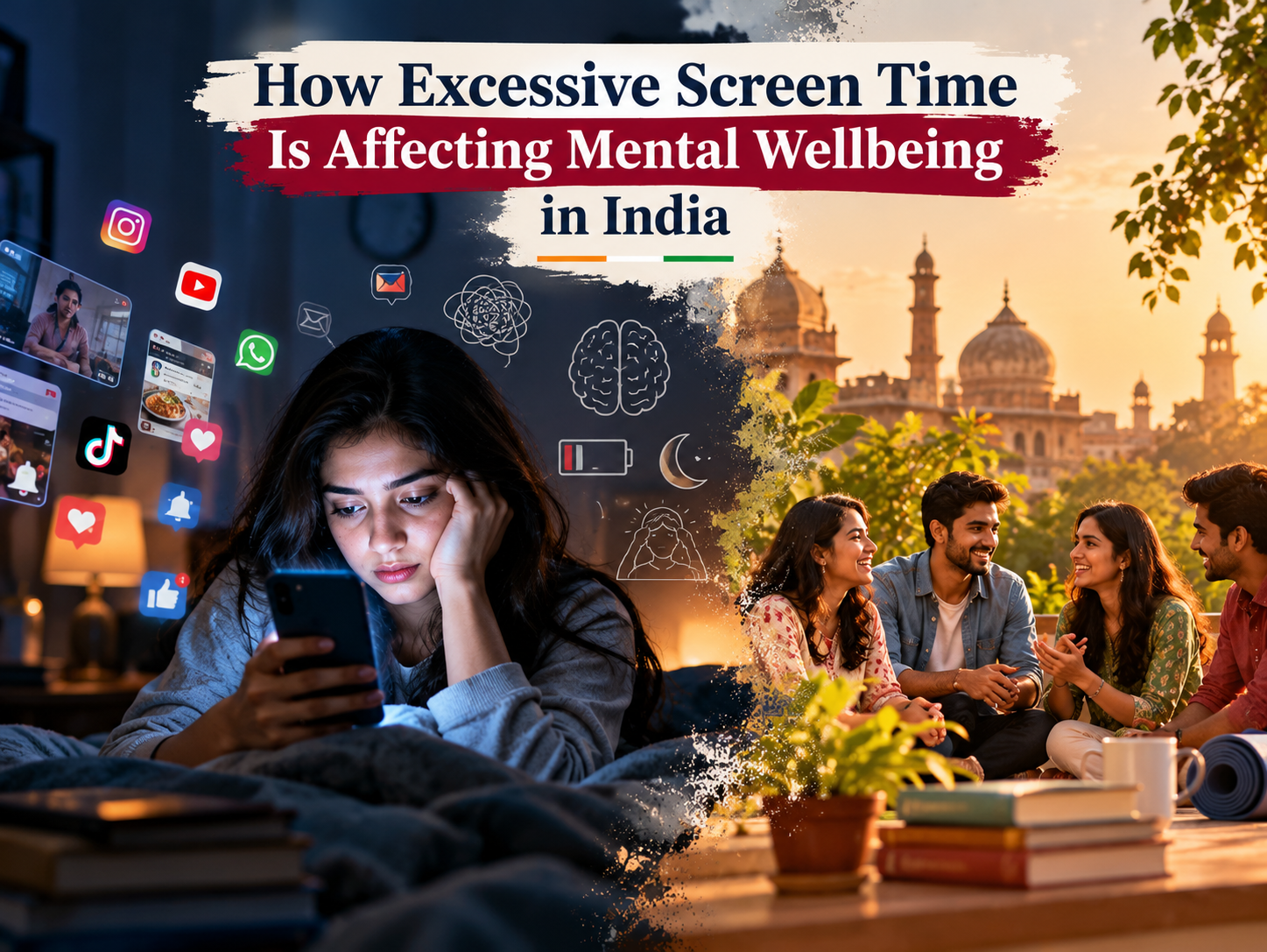
How Excessive Screen Time Is Affecting Mental Wellbeing in India
Smartphones have become an inseparable part of everyday life in India. From checking messages in the morning to watching videos before sleeping, screens occupy a large part of our daily routine. Students attend online classes, professionals work on laptops for hours, and families use social media to stay connected with friends and relatives. Technology has made life easier in many ways, but it has also raised concerns about how much time we spend looking at screens.
Have you ever picked up your phone to check one message and realised that half an hour had passed? Or gone to bed feeling tired but continued scrolling through social media? These small habits may seem harmless, but when they become part of everyday life, they can affect our mood, sleep, concentration, and relationships.
The growing discussion around screen time and mental wellbeing India reflects an important question for modern society: how can we enjoy the benefits of technology without allowing it to take over our lives?
Understanding the Growing Screen Time Problem in India
India has experienced a significant transformation in digital access over the past decade. Affordable smartphones, inexpensive mobile data, digital payments, online education, and entertainment platforms have made the internet accessible to millions of people.
For many Indians, a smartphone is no longer just a communication device. It is a workplace, classroom, shopping centre, entertainment hub, and source of news, all in one place.
This convenience comes with a challenge. People often switch between work emails, WhatsApp messages, short videos, news updates, and personal conversations throughout the day. Even when they are not actively using their phones, notifications can interrupt their attention.
The relationship between screen time and mental wellbeing India is particularly important because digital technology serves different purposes for different people. A student attending an online lecture, a professional completing office work, and someone watching videos for several hours may all record substantial screen time, but their experiences are not the same.
The amount of time spent online matters, but so does the type of activity, the reason for using a device, and whether it interferes with sleep, physical activity, work, or personal relationships.
How Excessive Screen Time Can Affect Mental Health
Screen use does not automatically cause mental health problems. Technology can provide education, entertainment, social support, and access to useful information. However, excessive or poorly managed use may contribute to difficulties for some individuals.
1. Increased Stress and Anxiety
Many people feel an urge to check their phones whenever they receive a notification. News alerts, work messages, online arguments, and constant updates can make it difficult to relax.
Social media may add another source of pressure. People frequently see carefully selected photographs of holidays, career achievements, expensive purchases, and seemingly perfect relationships. Comparing everyday life with these edited images can leave someone feeling inadequate or dissatisfied.
For young people in particular, concerns about likes, comments, online acceptance, and missing out on social activities can become emotionally exhausting.
Understanding screen time and mental wellbeing India requires recognising that the issue is not simply about technology. It is also about how online experiences influence our thoughts, expectations, and sense of self-worth.
2. Poor Sleep and Constant Tiredness
Sleep is essential for emotional balance, memory, concentration, and overall health. Yet bedtime scrolling has become a common habit.
A person may intend to watch one video before sleeping but continue for another hour. Exciting content, notifications, and the habit of constantly checking updates can delay bedtime.
Even when the screen is not the only reason for poor sleep, late-night use can replace the time needed for rest. Bright light from devices can also influence the body’s natural sleep timing, particularly when exposure occurs late in the evening.
Poor sleep may leave people feeling irritable, anxious, distracted, or emotionally overwhelmed the following day. This can create a cycle in which tired people use digital entertainment to relax, only to lose more sleep.
Keeping phones away from the bed and creating a regular bedtime routine can help break this pattern.
3. Reduced Concentration and Productivity
Have you ever tried completing an important task while repeatedly checking your phone? Each interruption can make it harder to maintain focus.
Frequent switching between applications, messages, and work can fragment attention. After checking a notification, a person may need time to return to the original task.
For students, this can affect study routines and make revision less effective. For professionals, constant interruptions can increase the time required to finish assignments.
The effects of screen time and mental wellbeing India are also visible in everyday routines when people struggle to remain present during conversations, meals, or family activities.
The solution is not necessarily to stop using digital devices. Instead, people can create periods of uninterrupted work, silence unnecessary notifications, and check messages at planned intervals.
4. Loneliness Despite Being Connected
One of the most interesting aspects of modern technology is that people can communicate with hundreds of contacts and still feel lonely.
Online communication helps friends and families remain connected across cities and countries. For Indians living away from home, video calls can be especially valuable.
However, digital interaction does not always provide the same emotional experience as spending time together in person. Endless scrolling may replace opportunities for meaningful conversations, outdoor activities, and shared experiences.
A family sitting together while everyone looks at a separate screen may be physically present but emotionally disconnected.
This does not mean online friendships are less valuable. Many people find genuine support through digital communities. The important distinction is whether technology strengthens relationships or gradually replaces the interactions that a person needs.
Why Children and Teenagers Need Special Attention
Children and teenagers are growing up in an environment where digital devices are part of education, entertainment, and social life. Screens can support learning and creativity, but unrestricted use may create difficulties when it displaces sleep, exercise, schoolwork, or face-to-face interaction.
Social media can expose young people to unrealistic beauty standards, online bullying, harmful content, and pressure to gain approval from others. Some teenagers may find it difficult to disconnect because they fear missing conversations or being excluded from their peer group.
Parents sometimes respond by banning devices entirely. While boundaries can be necessary, a more effective approach often combines clear rules with open communication.
Parents can discuss online safety, establish device-free meals, encourage outdoor activities, and agree on reasonable bedtime limits. They should also model the behaviour they expect from children.
It is difficult to convince a teenager to put away a phone during dinner if adults are constantly checking their own devices.
Families should remember that children’s needs vary according to their age, development, educational requirements, and circumstances. The focus should be on healthy habits and the quality of digital experiences rather than relying on one screen-time number for every child.
The Impact on Working Professionals
The problem is not limited to students. Many Indian professionals spend most of their working hours using laptops and then turn to smartphones for entertainment after work.
Remote work and hybrid arrangements have made digital communication more convenient, but they can also blur the boundary between professional and personal life.
Messages arriving after office hours may create a feeling that employees must remain available throughout the evening. People may find themselves checking emails during dinner or responding to work requests just before sleeping.
Over time, the lack of separation between work and personal time can contribute to stress and emotional exhaustion.
Employers can help by setting reasonable communication expectations, respecting non-working hours, and encouraging regular breaks. Individuals can benefit from signing out of work applications after the working day and creating a routine that includes movement, hobbies, and time with family.
A healthier digital routine is not only an individual responsibility. Workplace culture also plays a significant role.
How Social Media Influences Self-Esteem
Social media often presents an edited version of reality. People usually share achievements, celebrations, attractive photographs, and exciting experiences rather than everyday disappointments.
When viewers repeatedly compare their lives with these carefully selected moments, they may feel that everyone else is happier, more successful, or more attractive.
This can be especially challenging during periods of career uncertainty, academic pressure, financial difficulty, or personal change.
However, social media is not harmful for everyone. It can help people discover supportive communities, learn new skills, express themselves, and find others with similar experiences.
A useful step is to review the accounts you follow. If certain content consistently leaves you feeling anxious, discouraged, or dissatisfied, consider muting or unfollowing those accounts.
The wider conversation about screen time and mental wellbeing India should encourage people to use technology intentionally instead of treating online engagement as a measure of personal value.
Practical Ways to Build Healthier Screen Habits
Reducing unnecessary screen use does not require abandoning smartphones or deleting every social media account. Small changes can make digital habits more manageable.
- Check your daily usage. Review your device’s screen-time report to identify which applications consume the most time. Look for habits you genuinely want to change.
- Create screen-free periods. Keep meals, family conversations, and the final part of your bedtime routine free from unnecessary device use.
- Turn off non-essential notifications. Alerts from shopping applications, games, and social platforms do not always require immediate attention.
- Take regular breaks. During long periods of computer work, pause regularly, stretch, look away from the screen, and move around. This can reduce physical discomfort and help refresh your attention.
- Make room for offline activities. Walking, reading, cooking, exercising, practising music, or meeting friends can provide enjoyable alternatives to scrolling.
- Avoid using your phone as the first and last activity of the day. Start your morning with a simple routine and give yourself time to unwind before sleeping.
- Choose content deliberately. Ask yourself whether you are using your device for a specific purpose or scrolling automatically out of boredom.
These steps can help people take control of their habits without feeling that technology must be completely removed from their lives.
When Should You Seek Professional Support?
Occasional tiredness, distraction, or frustration after using a phone does not necessarily indicate a mental health condition. However, it is worth paying attention when digital habits repeatedly interfere with everyday life.
Consider seeking professional guidance if you experience persistent anxiety, low mood, sleep difficulties, social withdrawal, or an inability to reduce device use despite significant negative consequences.
If these problems affect school, work, relationships, or daily functioning, speaking with a qualified mental health professional can help you understand the underlying causes and identify appropriate support.
It is also important to remember that excessive screen use may sometimes be a response to existing stress, loneliness, or emotional difficulties rather than the original cause. A thoughtful assessment can help distinguish between these possibilities.
Reducing screen time may be one useful step, but it should not replace professional care when someone needs it.
The Role of New Indian Statement in Promoting Digital Wellbeing
As India becomes increasingly connected, conversations about technology need to go beyond internet access and digital convenience. They should also consider how digital habits affect families, young people, workplaces, and everyday social life.
New Indian Statement can contribute to this conversation by exploring the relationship between modern lifestyles and personal wellbeing. Articles about digital habits, social media pressures, changing family relationships, youth experiences, and mental health awareness can help readers reflect on the challenges that accompany a rapidly changing society.
By discussing screen time and mental wellbeing India in an accessible and balanced way, New Indian Statement can encourage readers to make informed choices about technology without creating unnecessary fear or guilt.
The aim should not be to portray smartphones or social media as the enemy. Instead, the discussion should help people understand when digital tools are useful, when their use becomes excessive, and how healthier habits can support a more balanced life.
Through thoughtful perspectives on contemporary Indian life, New Indian Statement can encourage meaningful conversations about the role technology should play in our homes, schools, workplaces, and communities.
Conclusion
Screens are now part of almost every aspect of modern Indian life. They help us learn, work, communicate, and stay entertained. Removing them entirely is neither practical nor necessary.
The real challenge is recognising when useful technology begins to consume time and attention that should be available for sleep, relationships, physical activity, and personal growth.
The discussion around screen time and mental wellbeing India is ultimately about balance. It encourages us to think about why we use our devices, how we feel afterward, and whether our digital habits support the lives we want to lead.
A few thoughtful changes can make a difference: putting the phone aside during meals, taking a walk without constantly checking notifications, spending time with loved ones, or allowing the mind to rest before bedtime.
Technology should help us live better, not leave us feeling that we are constantly available but rarely present.
As New Indian Statement continues to explore the realities of modern India, digital wellbeing deserves a place in the conversation. A healthier relationship with technology begins not by rejecting the digital world, but by learning how to make room for life beyond the screen.
Frequently Asked Questions (FAQs)
1. How does excessive screen time affect mental wellbeing in India?
Excessive or poorly managed screen use may contribute to sleep disruption, stress, reduced concentration, social comparison, and difficulties maintaining personal relationships. Its effects vary according to the individual, content, and purpose of use.
2. How much screen time is considered excessive?
There is no single limit that applies to every adult. Screen time should be considered alongside its purpose, the person’s age, sleep quality, physical activity, and whether it interferes with daily responsibilities. Children and teenagers may need age-specific guidance.
3. Can screen time cause anxiety and depression?
Screen use does not automatically cause anxiety or depression. However, certain patterns, including cyberbullying, compulsive checking, harmful content, and sleep disruption, may contribute to emotional difficulties in some people. The relationship can work in both directions.
4. How can students reduce unnecessary screen time?
Students can schedule study sessions, disable non-essential notifications, take planned breaks, keep phones away while studying, and balance online learning with exercise, hobbies, and in-person social interaction.
5. Does social media affect self-esteem?
It can affect self-esteem when people frequently compare themselves with idealised online images or depend heavily on likes and comments for validation. Curating social feeds and setting boundaries may help.
6. How can parents encourage healthier screen habits?
Parents can establish consistent routines, encourage offline activities, discuss online safety, set reasonable device boundaries, and demonstrate balanced technology use themselves.
7. What can New Indian Statement do to promote digital wellbeing?
New Indian Statement can publish accessible articles about digital habits, mental health awareness, social media pressures, and changing lifestyles to encourage informed discussions about technology and wellbeing.
8. What is the first step towards healthier screen use?
Start by checking your daily screen-time report. Identify one habit that interferes with sleep, concentration, or relationships, and make a manageable change rather than attempting to change everything at once.
Stay connected with New Indian Statement for thoughtful perspectives on Indian society, modern lifestyles, and the issues shaping everyday life.