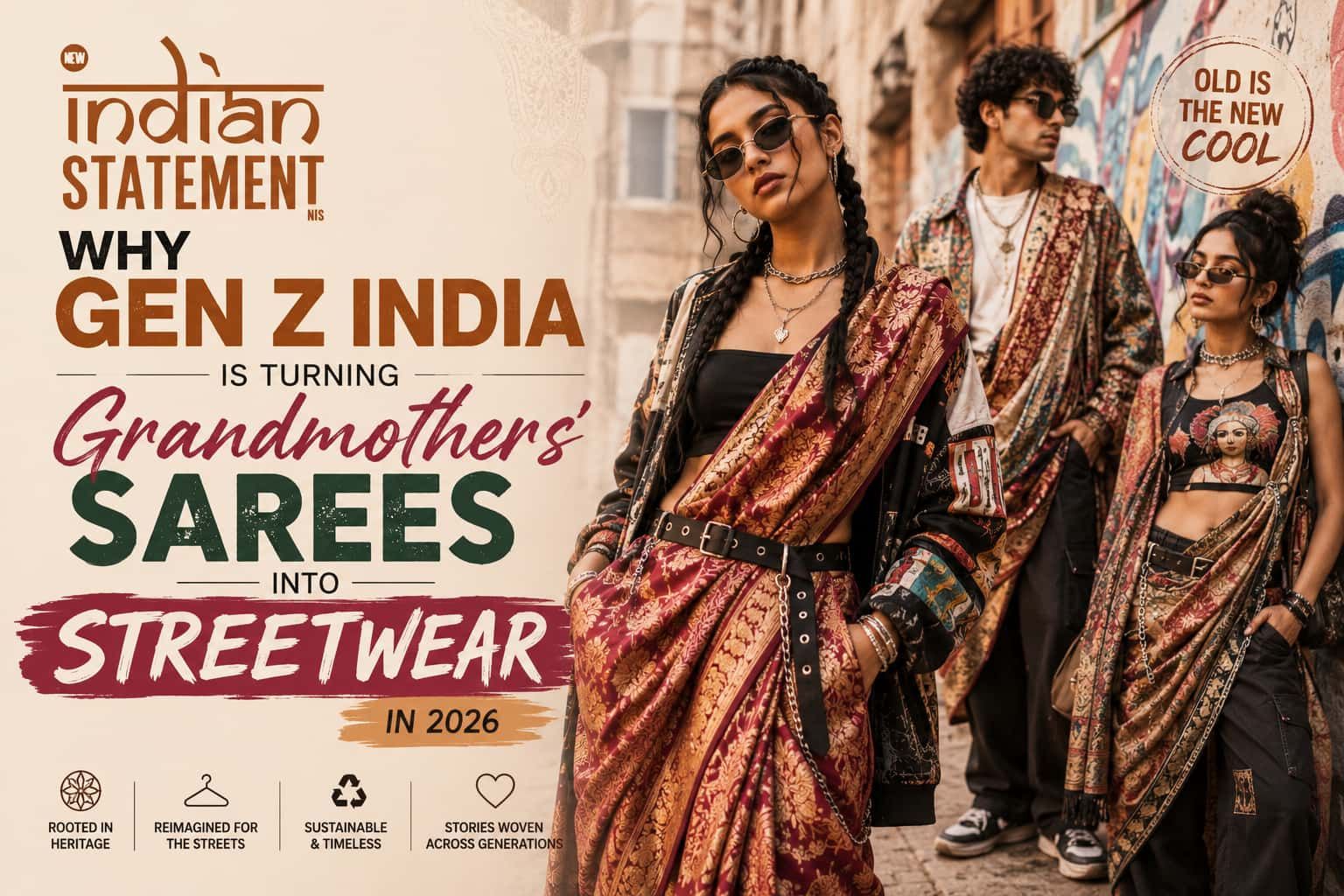
Why Gen Z India is Turning Grandmothers’ Sarees Into Streetwear in 2026
Fashion & Style By New_Indian_StatementMy cousin Ria did something last Diwali that made her mother gasp and her grandmother tear up, but not for the reason you’d think. She walked into the living room wearing her Nani’s forty-year-old Kanjeevaram, except it wasn’t draped the traditional way. The pallu was cropped into a corset top. The rest of the fabric was tied at the waist like a wrap skirt, paired with chunky sneakers and a denim jacket thrown over one shoulder. Her grandmother’s first reaction was shock. Her second reaction was pulling out three more sarees from an old trunk, asking, “Can you do something with these too?”
That trunk in the attic, the one every Indian household has, filled with silk sarees nobody wears anymore, has quietly become the most exciting wardrobe in the country. Across Mumbai, Bangalore, Delhi and smaller towns too, Gen Z is raiding grandma’s almirah and turning six yards of fabric into crop tops, jackets, pants, and everything in between. This isn’t a passing phase. It’s a full-blown movement, and it’s called vintage saree streetwear India, and it’s reshaping how young Indians think about fashion, family, and identity all at once.
The Rise of Vintage Fashion Among Indian Gen Z
Every generation rebels against something. For Gen Z, the rebellion isn’t against tradition itself, it’s against fast fashion and the sameness of shopping mall racks. Scroll through any college fest in 2026 and you’ll spot more thrifted pieces than branded ones. Vintage isn’t just cool anymore, it’s the flex.
thrifted sarees India have become a genuine subculture. Thrift stores in Bandra, Indiranagar, and Hauz Khas Village now stock rare Banarasis and Chanderis sourced from old family collections, sold at fractions of their original price. Young shoppers line up not for logos, but for stories stitched into the border of a fifty-year-old saree.
There’s also something deeply personal about this shift. Buying a mass-produced outfit feels forgettable. Wearing your grandmother’s wedding saree, reworked into something you’d actually wear to a café, feels like carrying a piece of her with you. That emotional pull is exactly why this trend has legs and won’t fade after one Instagram cycle.
Why Old Sarees Are Becoming the New Streetwear Statement
Here’s the thing about old sarees, the fabric quality is often better than anything you’ll find in a fast fashion store today. Real silk, hand-woven zari, natural dyes that have aged into gorgeous, muted tones you simply cannot buy new. Designers and stylists across India will tell you the same thing: you cannot replicate a forty-year-old Kanjeevaram’s drape with a modern polyester blend.
This is where saree upcycling Gen Z really shines. A single saree can become a co-ord set, a flowy kimono jacket, wide-leg pants, or a halter top. The six yards that once meant one specific outfit for one specific occasion now stretch into an entire capsule wardrobe.
There’s a practicality angle too. Sarees are expensive to buy new, and a lot of young people simply cannot afford them, or don’t see the point of owning something they’ll wear twice a year. Repurposing an heirloom means getting a wardrobe upgrade without spending a rupee on new fabric. It’s smart, it’s stylish, and it comes with built-in sentimental value nobody can put a price tag on.
The Emotional Thread Behind the Trend
Talk to anyone doing this and the conversation rarely stays about fashion for long. It turns into stories about their grandmother’s wedding day, or the saree she wore to their parents’ engagement, or the one she saved for “special occasions” that never quite came. Wearing these pieces, even reworked ones, feels like keeping a conversation with family history alive. That’s not something a shopping app can replicate.
Social Media and the Saree Revival
None of this would have spread as fast without Instagram and YouTube Shorts. saree draping trends 2026 are practically a genre of their own online. Creators post “grandma’s saree glow-up” reels that rack up millions of views, showing a plain folded saree transform into a structured blazer dress within sixty seconds of editing.
Pinterest boards titled “heirloom fashion inspo” are overflowing with mood boards mixing old silk borders with combat boots and gold hoops. Fashion pages that used to only feature Western brands are now regularly reposting local tailors and small-batch designers who specialize in saree redesigns.
There’s a community aspect too. Gen Z isn’t just consuming this content, they’re participating. Comment sections turn into styling advice sessions. People tag their tailor, share measurements, and swap tips on how to preserve delicate zari work while cutting into it. It’s fashion as a shared project, not a solo purchase decision.
Creative Ways Gen Z Is Styling Heirloom Sarees
If you’re wondering what this actually looks like in real life, here are some of the styles trending right now.
The Corset Crop Top
The pallu, usually the most decorative part of a saree, gets tailored into a fitted corset or bustier top. Paired with jeans or trousers, it instantly becomes a going-out outfit that feels both bold and rooted in tradition.
The Saree Jacket
Older, heavier sarees with rich borders are being converted into open-front jackets, worn over slip dresses or basic tees. This one’s a favourite for winter weddings and festive season street style.
The Co-ord Set
A saree cut and stitched into a matching top and skirt or top and pants set, keeping the print and border intact but losing the drape entirely. It’s practical, wearable, and instantly Instagrammable.
The Draped Skirt with Modern Top
Instead of altering the fabric permanently, some stylists simply drape the saree bottom half like a skirt, cinched at the waist, and pair it with a cropped shirt or bralette. Zero stitching required, fully reversible.
This blend of old and new fabric philosophy is what people mean when they talk about indo-western streetwear. It’s not a costume, it’s daily wear that happens to carry decades of history in its threads.
Why Sustainable Fashion Is Driving This Trend
Let’s be honest, fast fashion has a serious image problem right now, and Gen Z knows it. They’ve grown up watching climate anxiety headlines, and a lot of them genuinely care about where their clothes come from and what happens to them after.
sustainable fashion India as a movement has found an unexpected champion in the humble saree. Instead of buying a new outfit for every event, reworking an existing one cuts down on textile waste dramatically. One saree can outfit an entire semester’s worth of college fests if styled differently each time.
There’s also a quieter form of activism happening here. Every reworked saree is one less order placed with a fast fashion brand known for questionable labour practices and synthetic fabrics that take centuries to decompose. Young Indians are realising that sustainability doesn’t have to mean sacrifice, it can mean better quality and better stories, all in one outfit.
How to Style Old Sarees as Streetwear in 2026
If you’ve got a stash of old sarees sitting untouched, here’s how to actually wear them without needing a full wardrobe overhaul.
Start small. You don’t need to cut anything right away. Try draping the saree as a wrap skirt over a plain white tee and sneakers. It’s a low-commitment way to test the look before you commit fabric to scissors.
Mix textures deliberately. Pair a silk saree jacket with denim, or a cotton saree top with leather boots. The contrast between traditional fabric and casual streetwear pieces is exactly what makes this style pop.
Keep accessories minimal. Old sarees already carry visual weight through their borders and prints, so let the fabric do the talking. A pair of gold hoops or a stack of bangles is usually enough.
Find a tailor who understands heirloom fabric. Not every tailor knows how to handle delicate zari or old silk without damaging it. Ask around, check reviews, and always request a small test piece before committing your favourite family saree to a full redesign.
heirloom saree styling works best when it feels personal rather than trend-chasing. Pick pieces with a story, not just pieces that look good on camera.
The Future of Saree Streetwear in India
This trend shows no sign of slowing down. Fashion weeks across India are already seeing collections built entirely around deconstructed sarees, and small designers are building entire brands around the concept of heirloom redesign.
What’s exciting is how this is also creating income for local tailors and small ateliers who specialize in this exact craft. A skill that was almost fading, hand-finishing delicate fabric work, is finding new relevance because Gen Z wants it done right.
Expect to see more collaborations between grandmothers and grandchildren too, family projects where an elder shares the saree’s history while a younger family member decides its next chapter. That kind of cross-generational collaboration is rare in fashion, and it’s part of what makes this trend feel so different from anything that’s come before it.
Final Thoughts
Fashion trends usually come and go within a season. This one feels different because it’s not really about fashion at all, it’s about memory. Every reworked saree carries a wedding, a festival, a decade of someone’s life folded into its silk. When Gen Z turns that into something they can wear to a café or a concert, they’re not erasing that history, they’re extending it.
So if there’s a trunk sitting somewhere in your house, full of sarees nobody’s touched in years, maybe it’s time to open it. Not to store it away safer, but to give it a second life. Heritage doesn’t have to sit behind glass. Sometimes it looks best walking down a street in sneakers.
FAQs
1. What is saree streetwear and why is it trending in 2026?
Saree streetwear is the practice of reworking old or heirloom sarees into modern outfits like crop tops, jackets, and co-ord sets. It’s trending because Gen Z is drawn to sustainable fashion, unique styling, and the emotional value of wearing family heirlooms.
2. Can any saree be turned into streetwear, or does it need to be a specific type?
Most sarees can be reworked, but heavier silks like Kanjeevaram or Banarasi hold structure well for jackets and tops, while lighter cottons work better for skirts and casual wear. A good tailor can guide you based on the fabric you have.
3. Is it disrespectful to cut and redesign an old family saree?
Not at all, when done thoughtfully. Many families see it as giving new life to a cherished piece rather than letting it sit unused. It’s worth having a conversation with the saree’s original owner before making any permanent changes.
4. Where can I find tailors in India who specialize in saree upcycling?
Look for local tailors with experience in bridal or heavy fabric work, and check social media for stylists who specifically showcase saree redesign projects. Many cities now have small studios dedicated entirely to this craft.
5. How does saree upcycling support sustainable fashion in India?
It reduces the need to buy new clothing for every occasion, cuts down textile waste, and keeps well-made fabric in circulation instead of ending up in landfills. It’s a practical and stylish way to shop more consciously.