Indian Millennials Lifestyle 2026: Work & Social Trends
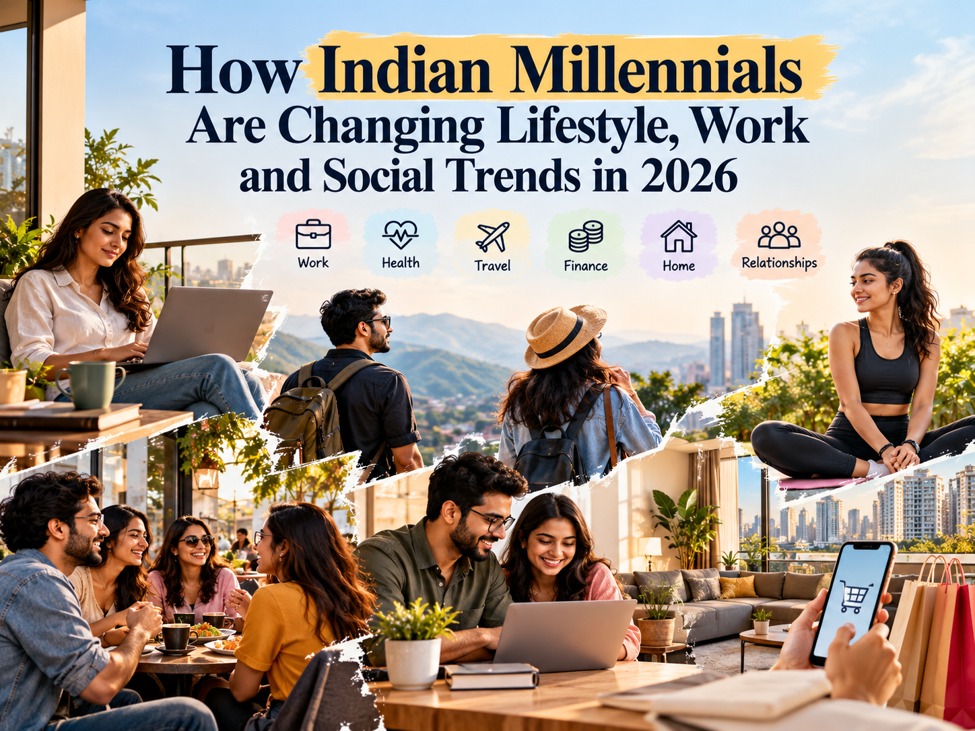
Indian Millennials Lifestyle 2026: What 30-Somethings Are Doing Differently
Open any family WhatsApp group and you can see it. The uncle who still sends good morning posters. The cousin who just quit a corporate job to run a cloud kitchen. The friend who now works from Coorg three weeks a month. All of them, in one way or another, belong to the generation that grew up between two Indias.
We went from STD booths to UPI. From Orkut scraps to Instagram reels. And now, in 2026, most of us are somewhere in our thirties or early forties, which is exactly the age when life gets expensive and complicated. This is what the Indian millennials lifestyle 2026 looks like from where we stand, and why New Indian Statement thinks it’s worth writing about.
We Don’t Define “Settled” the Way Our Parents Did
Ask your father what a good life is and he’ll probably say a secure job, a house, kids settled. Fair enough. He worked hard for that, and he wasn’t wrong.
But a lot of millennials look at that list and say, okay, and then what? Plenty of us have seen colleagues earn well and still look exhausted at 35. Nobody wants that. So we negotiate. A slightly lower salary for a better manager. A smaller flat closer to office. No meetings after seven.
Is that being less ambitious? Honestly, I don’t think so. It’s just ambition with a few more conditions attached.
Offices Are Optional, Sort Of
Work from home started as a COVID scramble and never really went away. For people in tech, marketing, design and consulting especially, it changed what a job looks like.
Some moved back to Lucknow or Indore or Kochi to be near parents. Some work from a rented place in the hills for a month each year. A few simply won’t take a job that says five days a week in office, and they’ve said so in interviews.
Pay still matters, obviously. But ask a millennial why they left their last company and nine times out of ten the answer is a boss, a culture or burnout. Rarely just the money.
Everyone Has a Second Thing Going On
Look around your own circle. Someone does freelance design on weekends. Someone sells homemade pickles on Instagram. Someone teaches Excel on YouTube. Someone runs paid ads for local shops after work.
Part of it is cost of living, no question. Rent and school fees don’t care about your appraisal. The other part is that after a few rounds of layoffs, depending on one salary feels risky. A second income, even a small one, helps people sleep better.
The Money Part Is Contradictory, and That’s Fine
Millennials get told they waste money on coffee and holidays. Meanwhile many of them are running SIPs, buying term insurance and arguing about NPS versus mutual funds at dinner. UPI and apps like Groww and Zerodha made investing so easy that your cousin who never studied finance now explains the stock market at weddings.
At the same time, nobody wants to skip the Goa trip. People watch every rupee in some areas and spend freely in others. [Add a real example or survey figure here if you have one.]
Travel Became Medicine
For our parents a holiday was an annual event with a fixed itinerary and a lot of luggage. For us it’s often a Friday night bus, a long weekend, or a laptop in a homestay.
Instagram sends everyone to the same few spots, but I notice people getting tired of that. They’re asking for quieter villages, local food, a place with no queue for photos. And plenty of them will tell you, quite plainly, that the trip kept them from quitting their job.
Gym, Sleep and Therapy
Fitness used to be a New Year’s resolution. Now there’s a smartwatch buzzing to tell you to stand up. People lift weights, walk ten thousand steps, count protein, argue about sleep schedules.
The bigger change is that it’s okay to say you’re stressed. Ten years ago nobody at the office would admit to burnout. Now people talk about it over chai, and some even see a counsellor and say so out loud.
Marriage Can Wait, but Family Can’t
A lot of millennials do want to get married. They just don’t want to do it by thirty because someone said so. They’d like to finish a degree, build a career, maybe buy a house first.
When it happens, the conversation looks different. Who handles money? Do both of us keep working? What about her parents and mine? In big cities both partners earn, and housework is slowly being shared, though not always smoothly.
And let’s not pretend we’ve broken from family. Most of us still call our mothers every day and feel guilty when we don’t.
The Phone Is the Office, the Bank and the Market
Cabs, food, bills, tickets, jobs, friends. It all sits in one device. But there’s a little pushback building, too. People mute groups, uninstall apps for a week, and think twice before posting a holiday photo.
Social media has also turned into a place where work happens. Small sellers find customers there. Freelancers find clients. A guy with a good camera and an idea can build a following without anyone’s permission.
Buying a Home Is Still the Dream, Just With More Questions
Home ownership hasn’t gone out of fashion. If anything, it feels more urgent because prices keep climbing. What’s different is how people shop. Does it have to be in a metro? Do I really need three bedrooms? Is a working corner more useful than a drawing room nobody sits in?
Some buyers are now eyeing tier-2 cities where money goes further. Interiors are simpler, brighter and more practical than the heavy furniture many of us grew up with.
Shopping Has Turned Into Research
Blinkit, Zepto, Swiggy: ten minutes and your milk arrives. Yet when it’s a big purchase, like a phone or a mattress, millennials spend days reading reviews, watching videos, asking friends. They don’t automatically buy the cheapest. They buy what feels reliable.
Where This Leaves Us
The Indian millennials lifestyle 2026 doesn’t look like one neat trend. It looks like millions of small decisions, made by people who want security but also some freedom, who love their families but need their own space, and who rely on phones but are slightly afraid of them.
Nobody has it figured out. That’s probably the honest summary. But what this generation chooses will shape offices, housing, shopping, travel and family life in India for a long time.
About New Indian Statement
New Indian Statement writes about modern India: how people live, work, spend and think. We cover lifestyle, culture, business, education and everyday trends, and we try to keep it readable and real. Millennials are a big part of that story, so expect more from us on this.
Frequently Asked Questions
What are the main trends in the Indian millennials lifestyle 2026?
Flexible work, side income, UPI and app-based investing, travel, fitness, mental health awareness, later marriage and careful but selective spending.
How are Indian millennials changing the workplace?
They want hybrid or remote options, decent managers and room to grow. Many also have a second income.
Do they still want to buy homes?
Yes. Some are picking smaller flats or cheaper cities.
Why does travel matter so much to them?
It’s how many of them rest. They see it as part of staying healthy.
What has technology changed?
Pretty much everything: banking, shopping, work, food and how people meet. Many are also trying to cut down screen time.
What does the Indian millennials lifestyle 2026 say about India?
That daily life is becoming more flexible and personal, though family and culture still matter a great deal.
What is New Indian Statement?
A content platform that publishes stories and opinions on contemporary India, from lifestyle and culture to business and social trends.
Conclusion
Indian millennials aren’t just reacting to change anymore. They’re creating it, one job decision, one SIP, one long weekend at a time. The Indian millennials lifestyle 2026 shows a generation that wants stability and freedom together, and is still figuring out how. Watch how they live and you’ll learn a lot about where India is going. That’s the story New Indian Statement will keep following.